
Suprem thermoplastic composites contribute to pressure vessel expansion
High-quality, high-performance UD thermoplastics are dedicated to industrializing recyclable Type III, IV and V pressure vessels.


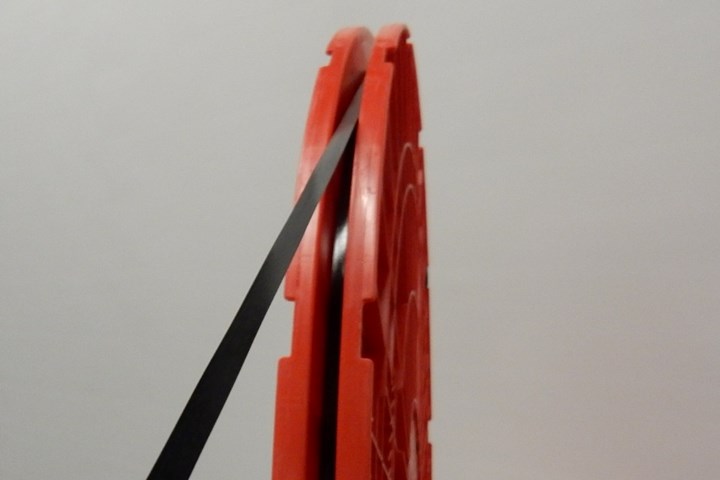
Photo Credit: Suprem SA
Suprem SA (Yverdon-les-Bains, Switzerland) is developing high-quality, high-performance thermoplastic composite materials to support the expanding use of pressure vessels for CO2 emission reduction.
Relying on 35 years of experience in producing unidirectional (UD) thermoplastic tapes for pipe and tank reinforcement, Suprem says it is dedicated to the industrialization of new, recyclable solutions for Type III,
IV and V pressure vessels.


Suprem’s low-porosity tape can be wound and consolidated in one step with no post-treatment, eliminating costly and time-consuming post curing inherent to thermoset materials. Moreover, the company says the clean, automated and continuously controlled winding process reduces down time. The thermoplastic tape offers consistent quality and high mechanical performance, reducing the amount of material needed to manufacture high-pressure tanks, and offers opportunities for recycling and reuse after service.
Pressure vessels developed with Suprem’s thermoplastic composite materials can be used for compressed natural gas (CNG), renewable natural gas (RNG) and hydrogen gas (H2) in marine and space applications.
“It is a privilege for Suprem to contribute to the reduction of CO2 emissions,” says Dr. Anatole Gilliot, Suprem CEO. “Suprem’s thermoplastic composite materials are ideal to reduce parts weight and to manufacture pressure vessels, which will both reduce CO2 emission. The intrinsic recyclability of thermoplastic is also contributing to the circular economy, which needs to be adopted.”
Related Content
-
Plant tour: Airbus, Illescas, Spain
Airbus’ Illescas facility, featuring highly automated composites processes for the A350 lower wing cover and one-piece Section 19 fuselage barrels, works toward production ramp-ups and next-generation aircraft.
-
Development of a composite liquid hydrogen tank for commercial aircraft
Netherlands consortium advances cryogenic composites testing, tank designs and manufacturing including AFP, hybrid winding, welding of tank components and integrated SHM and H2 sensors for demonstrators in 2025.
-
Low-cost, efficient CFRP anisogrid lattice structures
CIRA uses patented parallel winding, dry fiber, silicone tooling and resin infusion to cut labor for lightweight, heavily loaded space applications.


