
IFW realizes complex composite sandwich structures with AFP
SHOREliner project demonstrates automated manufacture of topology-optimized aircraft fuselage structures showcasing digital process chain.


Source | IFW, phi magazine
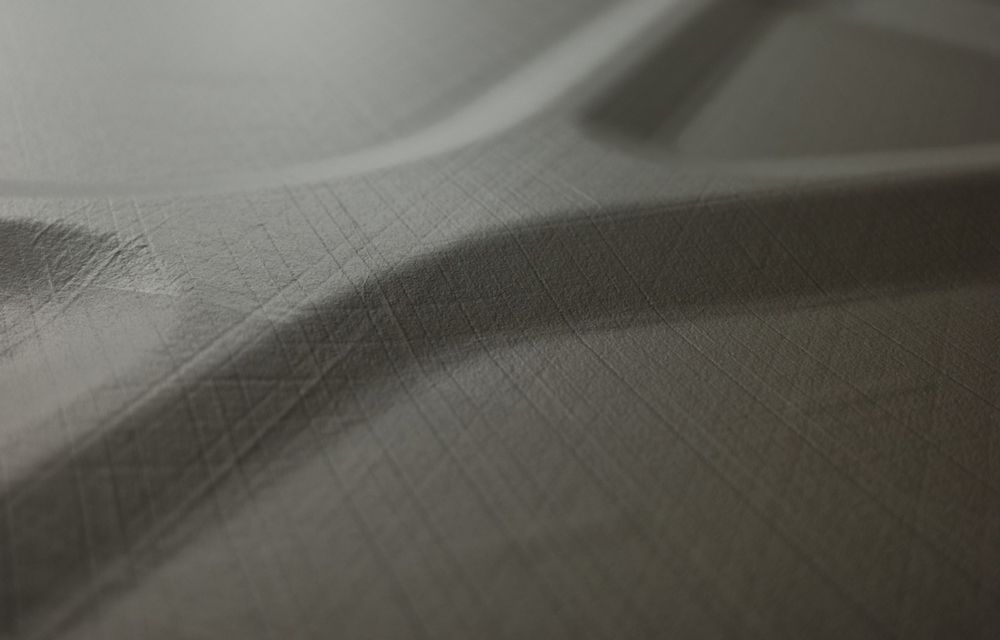
Researchers at the Institute for Production Engineering and Machine Tools (IFW) at Leibniz University Hannover (Garbsen, Germany) have demonstrated fully automated manufacture of a highly complex, topology-optimized carbon fiber-reinforced polymer (CFRP) sandwich structure using automated fiber placement (AFP).

Aircraft fuselage manufacturing process in SHOREliner project using the IFW cell at SCALE in Garbsen, Germany. Source | phi magazine
Developed as part of the SHOREliner project, the structure serves as a functional demonstrator for a highly loaded fuselage section of an electrically powered aircraft and was designed using a continuous, simulation-based digital process chain linking topology optimization, material modeling and manufacturing planning in collaboration with TU Braunschweig’s Institute of Aircraft Design and Lightweight Construction (IFL, Braunschweig, Germany).


SHOREliner
Development of a climate-neutral fiber composite aircraft with robust aerodynamic and STOL characteristics for use as a multi-purpose commuter aircraft

Source | MD Group
In the SHOREliner project, the IFW is developing the basis for the CO2-neutral and resource-efficient serial production of the 100% battery-electric MDA1 eViator from consortium partner MD Aircraft (Friedeburg, Germany). Especially for small- and medium-sized enterprises (SME), manufacturing aspects are often considered late in the process, increasing cost. Thus, the IFW is focusing on a multidisciplinary method using digital twins and manufacturability analyses, so that process chains are optimized from the start, shortening the development process and reducing resource consumption.
Team: Tim Tiemann, David Garthe
Funding: BMWE (LuFo VI-3)
Duration: January 2023 – December 2026
As described in a January 2026 article by Christopher Schmitt and Maximilian Kaczemirzk in phi magazine, the demonstrator was produced using thermoset prepreg tapes placed onto a forming tool using AFP for the inner skin, followed by precise positioning of foam cores for integrated stiffening elements and automated layup of outer skin plies. After autoclave cure, the resulting lattice-based sandwich structure demonstrated a significantly improved stiffness-to-mass ratio and high geometric accuracy, validating AFP for geometrically demanding fuselage applications and confirming the feasibility of a fully digitized design-to-manufacture workflow.
TheSaLab
Fundamentals of manufacturing thermoplastic sandwich structures using laser-based in situ thermoplastic AFP.
CFRP structures offer high lightweight potential due to their high specific strength. A shift from thermoset to thermoplastic composite (TPC) materials is gaining momentum due to the recyclability of these materials and the ability to join components by welding via locally melting the matrix. A particularly good ratio of mechanical properties to weight is being explored and achieved with sandwich structures.

Source | IFW
Team: Christopher Schmitt
Funding: German Research Foundation (DFG)
Duration: October 2023 – October 2026
Building on this work, IFW’s TheSaLab project aims to replace thermoset sandwich structures with thermoplastic systems manufactured via laser-based AFP with in situ consolidation. By eliminating autoclave curing and enabling direct joining during placement, the approach targets shorter cycle times, lower energy consumption and improved recyclability. Key research areas include laser-based thermal process control; bonding mechanisms between thermoplastic face sheets and foam cores; and the mechanical, ecological and economic assessment of the resulting sandwich structures.
Together, SHOREliner and TheSaLab establish a technological foundation for scalable, automated production of lightweight, durable and more sustainable composite structures for future mobility.
Related Content
-
Assembling the Multifunctional Fuselage Demonstrator: The final welds
Building the all-thermoplastic composite fuselage demonstrator comes to an end with continuous ultrasonic welding of the RH longitudinal fuselage joint and resistance welding for coupling of the fuselage frames across the upper and lower halves.
-
Braided thermoplastic composite H2 tanks with co-consolidated molded boss areas to fit EV battery space
BRYSON project demonstrates possible designs, automated manufacturing and low permeability concepts, including EVOH liner and novel PPA matrix.
-
Development of a composite liquid hydrogen tank for commercial aircraft
Netherlands consortium advances cryogenic composites testing, tank designs and manufacturing including AFP, hybrid winding, welding of tank components and integrated SHM and H2 sensors for demonstrators in 2025.


