
STRUCTeam presentation explores advances in multi-material battery enclosures
Roman Hillermeier, transportation market sector lead, addressed latest battery enclosure developments, identified key design enablers at the Battery Systems in Car Body Engineering Conference in June.


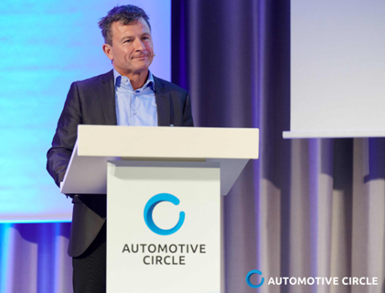
Roman Hillermeier presenting at Battery Systems in Car Body Engineering Conference. Photo Credit: STRUCTeam Ltd.
In June 2022, Dr.-Ing. Roman Hillermeier, transportation market sector lead for STRUCTeam Ltd. (Cowes, U.K.), was invited by the Automotive Circle to present “Advances in the design of multimaterial EV battery” at this year’s Battery Systems in Car Body Engineering Conference in Bad Nauheim, Germany.
Hillermeier’s presentation addressed the latest developments in battery enclosures and identified the key enablers of multi-material design, considering both engineering and commercial aspects. While evolving vehicle architectures continue to make composites an attractive material option — whether it’s battery, fuel cell or hydrogen electric vehicles (BEV, FCEV, HEV) — Hillermeier cites ongoing challenges, such as:
- Many and evolving requirements;
- Evolving battery cell chemistry and formats;
- Complexity in design and development;
- And more.
Moreover, things like safety, thermal management solutions, cost, size and weight reduction, and improved functional and structural integration are key areas that need continued development.
To learn more about STRUCTeam’s early battery enclosure concept studies, the reason behind multi-material composite designs and additional information, see the complete presentation here.
Related Content
-
Bcomp ampliTex makes appearance in Cupra EV Cup Bucket seats
The entire Cupra Born VZ line-up features all-natural fiber front seats that highlight functionality, aesthetics and reduced CO2 emissions.
-
Composites end markets: Automotive (2025)
Composites manufacturing intelligence drives circular economy solutions as automotive industry balances technical demands with sustainability mandates.
-
Moving toward sustainable automotive parts manufacturing
How can the automotive supply chain prepare for future sustainability requirements? Tier 1 Kautex Textron discusses emissions reduction, design for circularity and transition to recycled/bio-based plastics.


