
Series A funding expands production for Lingrove’s Ekoa natural fiber materials
Carbon-negative Ekoa composite, a substitution for wood and plastics in furniture, interiors and automotive applications, will be scaled up to deliver to far-reaching global customers.


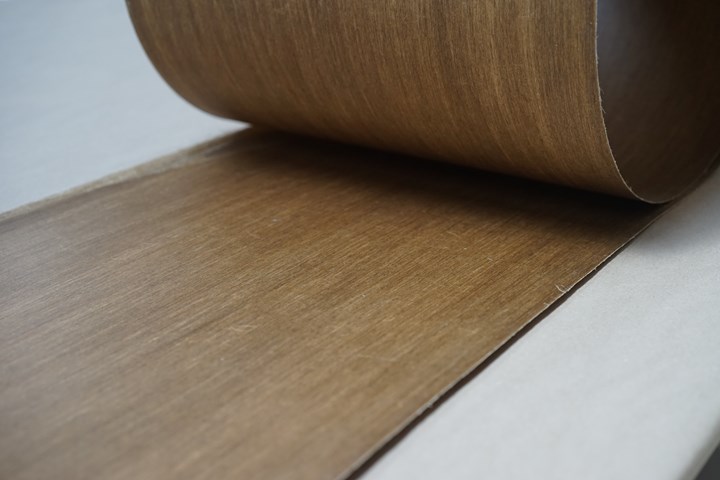
Photo Credit: Lingrove
Lingrove (San Francisco, Calif., U.S.), a materials research and design firm focused on plant-based fibers and resins, including its high-performance carbon-negative composite materials, Ekoa, has secured its Series A lead investor by Diamond Edge Ventures (DEV), with key participation from SOSV, IndieBio and Mayfield. Lingrove will use the funds to scale its operations, hire key staff and deliver increased manufacturing capacity to current customers.
“We generally invest in the top startups in a field. But with Lingrove, we selected the leader amongst companies leveraging nature’s products and novel chemistries to solve today’s sustainability issues, as well as customers’ application needs,” says Patrick Suel, president of DEV.


Ekoa, developed from plant fiber and reported to deliver a higher strength-to-weight ratio than steel, is currently being used to replace mainstream materials, including the substitution of wood in musical instruments and designer furniture. Upcoming uses in late-stage testing include instrument consoles in electric vehicles (EVs), kitchen and bath products, and acoustic panels. Ekoa, offering high endurance, moldability and general performance capabilities, is said to provide a sustainable alternative to other composites and incumbent materials, with a luxury and natural aesthetic.
“Demand for nature tech and our Ekoa has been strong and growing,” says Joe Luttwak, CEO of Lingrove. “Soon enough, every car, [piece of] furniture and product designer will be able to replace wood and plastics, and we’re ready to help deliver high-performing, beautiful, sustainable products that meet their climate commitments — and, most importantly, leave forests intact.”
According to Lingrove, for every ton of natural fiber and plant waste used, Ekoa eliminates 1.4 tons of atmospheric carbon, in addition to eliminating the need for carbon-intensive materials, like wood and plastics. The product line includes 100% plant-based options.
“The timing of our relationship couldn’t have been more perfectly aligned with the disruptive transformation towards decarbonization,” says Jeff Gerbec, director of science and technology, who led the investment from DEV.
Related Content
-
NASCAR unveils BEV prototype featuring natural fiber bodywork
Implementation of Bcomp technical flax fibers in a U.S. motorsport first represents NASCAR’s step toward more sustainable competition vehicles.
-
Bcomp ampliTex makes appearance in Cupra EV Cup Bucket seats
The entire Cupra Born VZ line-up features all-natural fiber front seats that highlight functionality, aesthetics and reduced CO2 emissions.
-
JEC World 2024 highlights: Glass fiber recycling, biocomposites and more
CW technical editor Hannah Mason discusses trends seen at this year’s JEC World trade show, including sustainability-focused technologies and commitments, the Paris Olympics amongst other topics.


