
San Diego Composites canisters complete two successful launches
San Diego Composites' Lightweight Low-Cost Canister is part of a US Army-sponsored SBIR program.

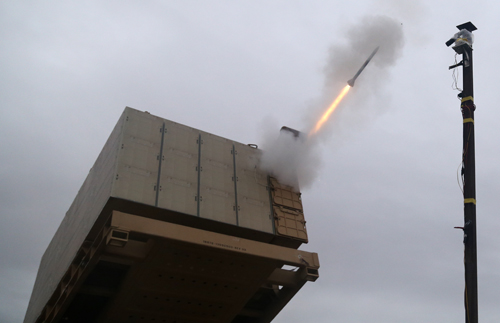
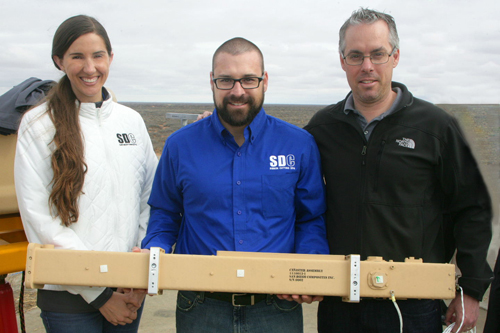


San Diego Composites Inc. (SDC, San Diego, CA, US) participated in two successful launches of Lockheed Martin’s Miniature Hit to Kill (MHTK) missile in February and March 2015 to test SDC’s Lightweight Low-Cost (LLC) Canister.
SDC’s LLC Canister is in development as part of a US Army-sponsored SBIR program for the Indirect Fire Protection Capability Increment 2 – Intercept (IFPC Inc 2-I) and Extended Area Protection and Survivability (EAPS) programs. The first launch test was conducted by AMRDEC at Redstone Arsenal in Alabama, US; the second launch test was conducted by the Army at White Sands Missile Range (WSMR) in New Mexico, US.


In both tests, Lockheed Martin’s missile launched from SDC’s LLC Canister and demonstrated successful functionality. The test at WSMR was attended by numerous representatives from the Army, Aviation and Missile Research, Development and Engineering Center (AMRDEC), and Lockheed Martin and concluded a week-long series of testing for the Army’s Multi-Mission Launcher (MML) IFPC Inc 2-I program.
“This test proved the MHTK interceptor can be successfully launched from a MML in a tactical design LLC Canister," says Roger Reed, Missiles and Fire Control’s Launcher Integrated Product Team (IPT) and Mechanical Design lead. "The missile is designed to be flexible and small enough to allow multiple MHTK interceptors to be packaged in a single MML tube, which increases the Counter – Rocket, Artillery and Mortar (C-RAM) magazine depth. All SDC LLC Canister test objectives were successful demonstrated.”
SDC developed the LLC Canister with Army-sponsored Small Business Innovative Research (SBIR) funding over the last two years. Lockheed Martin and the Army provided SDC with requirements, approved design and analysis packages, and led flight testing and integration. To reduce risk prior to the launch tests, SDC conducted several tests at its San Diego facility to verify canister performance, including drop shock, mechanism functionality, cover burst and a full system-level speed egress test, which simulated the kinematic event of the missile launching from the canister.
“Completing the LLC Canister program with two successful launch tests is a huge accomplishment," says Megan Caprio, SDC EAPS Canister program manager. "It is always our goal to integrate the technologies we develop in SBIR programs into functional platforms. The LLC Canister program marks one of SDC’s most successful SBIR programs to date and we could not have done it without the Army’s or Lockheed Martin’s support. We look forward to continuing development and providing the Army with an LLC Canister that enables IFPC Inc 2-I Mission success.”
SDC’s LLC Canister enables launching of multiple missiles from a single launcher while safely isolating adjacent missiles from plume, shock, electrical, structural, and mechanical environments.
The benefits of SDC’s LLC Canister are:
- Lightweight – The LLC Canister weighs less than 20 lb/9.1 kg, which makes the All-Up-Round weight very manageable for the warfighter. SDC used a combination of composite, metallic, and plastic parts to meet all structural, electrical, and environmental requirements.
- Low cost – In production, the LLC Canister cost is less than the budgeted amount based on SDC using several manufacturing methods to develop an affordable solution, such as filament winding for the composite outer tube, pultrusion for the composite body guides, and injection molding for the desiccant assembly housing. Also, off-the-shelf components were selected over custom parts to reduce cost.
- Low risk – SDC was able to leverage its experience with canister development and production to provide a low-risk canister solution. Military-standard parts and high Technology Readiness Level (TRL) materials and technologies were used to build mission assurance into the canister.
- High quality – SDC is AS9100 Certified and is an approved supplier for numerous aerospace industry prime contractors. SDC uses its high-standard quality system for all development and production programs, which accelerates product qualification.


Related Content

Ceramic matrix composites: Faster, cheaper, higher temperature
New players proliferate, increasing CMC materials and manufacturing capacity, novel processes and automation to meet demand for higher part volumes and performance.
Read More
Converting carbon fiber for UHTCMC to 3500°C
Advanced Ceramic Fibers LLC demonstrates ultra-high temperature ceramic matrix composites using SiC and other metallic carbides for applications in aerospace, defense, energy and more.
Read More
MATECH C/ZrOC composite is deployed in hypersonic aeroshells
Ultra high-temperature insulating CMC targets hypersonics, space heat shields and other demanding applications, tested up to 2760°C under extreme stagnation pressures.
Read More
Scaled Composites Model 437 aircraft to be flown for Beacon autonomy testbed
Northrop Grumman subsidiary part of Digital Pathfinder development of stealth aircraft with wings using continuous carbon fiber additive manufacturing and determinate assembly.
Read MoreRead Next

Cutting 100 pounds, certification time for the X-59 nose cone
Swift Engineering used HyperX software to remove 100 pounds from 38-foot graphite/epoxy cored nose cone for X-59 supersonic aircraft.
Read More
Ultrasonic welding for in-space manufacturing of CFRTP
Agile Ultrasonics and NASA trial robotic-compatible carbon fiber-reinforced thermoplastic ultrasonic welding technology for space structures.
Read More
Ceramic matrix composites: Faster, cheaper, higher temperature
New players proliferate, increasing CMC materials and manufacturing capacity, novel processes and automation to meet demand for higher part volumes and performance.
Read More