
Michelman expands surface modification solutions for technical textiles
Water-based technologies, Unyte, aim to advance form and function in woven and nonwoven materials used in the design of technical textiles and prepreg fabrics.


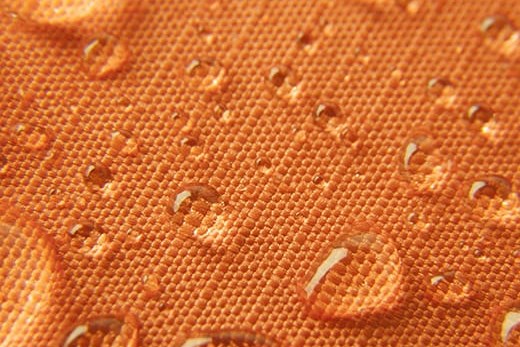
Photo Credit: Michelman
Michelman (Cincinnati, Ohio, U.S.) announced on Nov. 18 that it now helps improve the performance and functional behavior of technical textiles in applications including construction, ballistic, medical and hygiene, automotive, filtration media, prepreg and consumer products.
Unyte is Michelman’s versatile family of water-based technologies that is said to help achieve advanced form and function in both woven and nonwoven materials used in the design of technical textiles and prepreg fabrics. These solutions enhance textile products’ performance, Michelman says, by improving adhesion, binding, slip, processability and chemical and heat resistance.
The Unyte family includes:
- Unyte Bind offers multiple solutions that improve fiber-to-fiber adhesion.
- Unyte Heat solutions provide heat resistance during primary and secondary processing and impart heat resistance in end-use applications.
- Unyte Glide increases lubricity and slip and facilitates tow spreading of fibers in technical textile production. This grade of products is also used as oversizing to improve release, drape and fabric processability.
- Unyte Grip promotes the adhesion between fibers and polymeric matrices, helping to improve various functional or mechanical properties.
- Unyte Slip helps prevent fabrics, nonwovens and prepregs that need to be stacked or rolled without sticking together.
- Unyte Resist products are designed to provide excellent wet-out and moisture/chemical resistance to fabrics, wovens and nonwovens.
“Our proven expertise in formulating water-based surface treatments, including sizing, binders and film formers, strengthened by our understanding of end-use applications, provides technical textile manufacturers a set of sustainable solutions offering various functionalities that can be applied at the fiber level or as an overtreatment to the textile,” explains Jared Stonecash, global marketing manager for Fibers & Composites.
Related Content
-
Co-molding SMC with braided glass fiber demonstrates truck bed potential
Prepreg co-molding compound by IDI Composites International and A&P Technology enables new geometries and levels of strength and resiliency for automotive, mobility.
-
Cutting 100 pounds, certification time for the X-59 nose cone
Swift Engineering used HyperX software to remove 100 pounds from 38-foot graphite/epoxy cored nose cone for X-59 supersonic aircraft.
-
Prepreg compression molding supports higher-rate propeller manufacturing
To meet increasing UAV market demands, Mejzlik Propellers has added a higher-rate compression molding line to its custom CFRP propeller capabilities.


