
Arkema acquires Colorado Photopolymer Solutions, grows 3D printing expertise
The acquisition will compliment the Sartomer line’s photocure resins product offerings and move Arkema further along to become a pure Specialty Materials player by 2024.

Share
Read Next


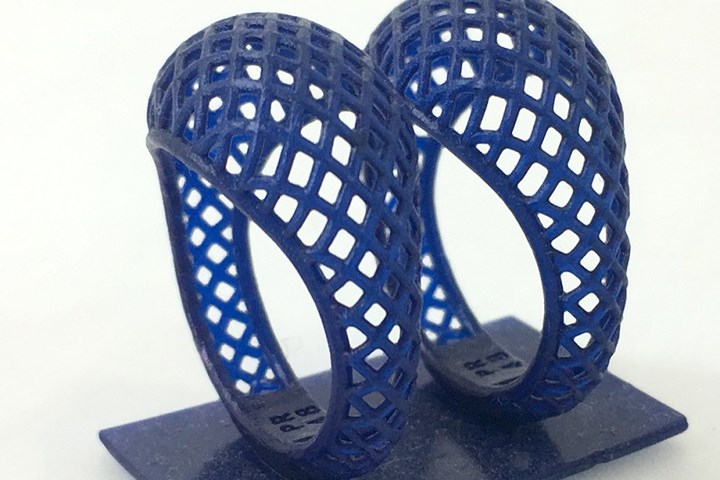
Photo Credit: Arkema
Arkema (Colombes, France) announced on Dec. 7 the acquisition of Colorado Photopolymer Solutions (CPS, Boulder, Colo., U.S.), a company with strong technical expertise in photopolymer formulation for the growing 3D printing market, with applications in the medical, composites, construction and consumer goods sectors.
Colorado Photopolymer Solutions (CPS) develops and markets a range of value-added, formulated photopolymer resin solutions for energy curing technology. Further, says, Arkema, CPS’s recognized experience formulation and materials design, supported by strong innovation capabilities, compliment’s Arkema’s Sartomer product offerings for photocure resins and photoinitiators, and will further support its customers and partners. The project will also foster the development of an integrated offering of customized and formulated additive manufacturing solutions to accelerate the design of turnkey solutions for the 3D printing market.
The acquisition, which was completed early December 2020 is in line with Arkema’s strategy to become a pure Specialty Materials player by 2024.
Related Content
-
Reinforcing hollow, 3D printed parts with continuous fiber composites
Spanish startup Reinforce3D’s continuous fiber injection process (CFIP) involves injection of fibers and liquid resin into hollow parts made from any material. Potential applications include sporting goods, aerospace and automotive components, and more.
-
FIDAMC expands composites R&D into new markets and advanced manufacturing centers
Pioneering technocenter advances RTM, thermoplastic composites, additive manufacturing, microwire, novel lighter weight LSP and more.
-
Eaton developing carbon-reinforced PEKK to replace aluminum in aircraft air ducts
3D printable material will meet ESD, flammability and other requirements to allow for flexible manufacturing of ducts, without tooling needed today.


