
Thermally conductive mandrels enhance filament winding capabilities
CAMX 2023: Acrolab features its Isomandrel technology, which redistributes high thermal energy uniformly over the entire filament winding mandrel surface, providing predictable and consistent energy input into the part and removing the need for oven cure.


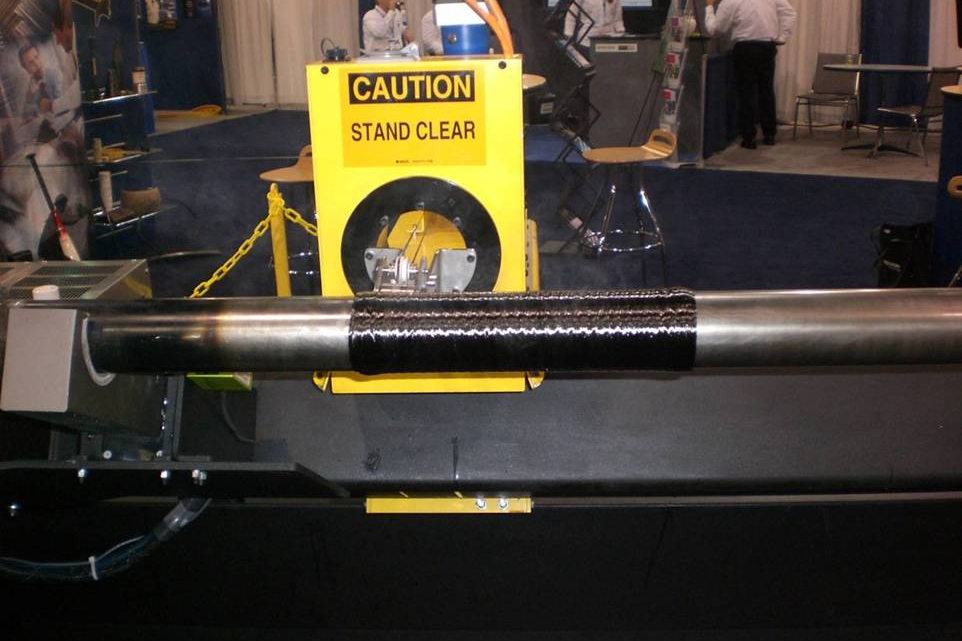
Photo Credit: Acrolab Ltd.
Acrolab Ltd.’s (Windsor, Ont., Canada) trademarked Isomandrel is an enhanced mandrel that removes the need for cure ovens by permitting the curing of filament-wound pipe and tube sections by heating the mandrel while rotating via induction heating. Enhancing the mandrel’s thermal conductivity and reactivity, the process permits heat to be applied in a localized concentration that is then rapidly and homogeneously redistributed over the complete mandrel working surface.
Benefits include a completed cure in a shorter time with less energy expenditure, all while providing a more uniform and consistent cure and resin-rich surface on the internal diameter of the cylinder/wind.


Unlike conventional isomandrels, which are typically heated at only one end with a heat source that is usually separate from the part area of the mandrel, Acrolab’s Isomandrel technology applies heat to this area and then instantly redistributes it along the mandrel’s entire length. This heating can also occur during or after winding, providing the freedom to cure while winding or on a separate station. An oven can be used, but is no longer required.
Acrolab Isomandrels are either monel or stainless steel. Many heat type sources can be incorporated, though electric resistive heaters or induction heat are the most common options. Moreover, cooling can be integrated if required. Cooling type depends on the Isomandrel design; water is one option. These Isomandrels also use an IR-style sensor to monitor temperatures.
This technology can also be used in heated rollers. When used in this type of application, Isomandrel delivers a more predictable and homogeneous temperature over the entire working surface of the roll, resulting in higher thermal recovery speeds and therefore greater line speed.
Related Content
-
Filament winding increases access to high-performance composite prostheses
Steptics industrializes production of CFRP prostheses, enabling hundreds of parts/day and 50% lower cost.
-
Composites end markets: Pressure vessels (2025)
H2 economy is set back by Trump policies, tariffs and funding pivot to defense and AI, but composite tanks remain a key segment with sales in CNG/RNG, growth in New Space and potential for H2-electric aviation.
-
ASCEND program completion: Transforming the U.K.'s high-rate composites manufacturing capability
GKN Aerospace, McLaren Automotive and U.K. partners chart the final chapter of the 4-year, £39.6 million ASCEND program, which accomplished significant progress in high-rate production, Industry 4.0 and sustainable composites manufacturing.


