
Teijin, Applied EV develop energy-efficient autonomous LS-EV for future mobility
The autonomous low-speed electric vehicle (LS-EV) incorporates Teijin Ltd.’s resins and fabrics and Applied EV’s mobility vehicle platform technology.
.jpg;width=70;height=70;mode=crop;format=webp)


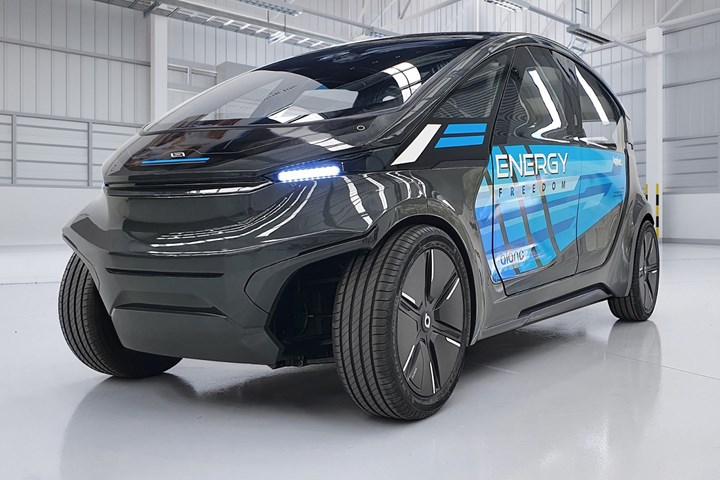
On March 30, Teijin Ltd. announced that it and partner Applied Electric Vehicles (Applied EV) have developed an energy-efficient, low-speed electric vehicle (LS-EV) prototype for autonomous driving systems and other mobility applications, targeting zero-emissions mobility.
The four-seat LS-EV embodies a “well-to-wheel zero-emission” approach that combines Teijin’s proprietary technologies and expertise in strong, lightweight materials, processing and molding technologies, with Applied EV’s technologies, specifically its Blanc Robot mobility vehicle platform (developed with Teijin Ltd.).


On the LS-EV prototype, Teijin’s Panlite polycarbonate resin glazing is used for the windows and doors, enabling light weight and impact resistance on the vehicle body while also providing infrared blocking and helping to moderate temperatures in the cabin interior. The curved roof, which has been integrally molded with a Panlite glazing, is fitted with a 330-watt solar panel and lightweight power supply module. Moreover, Teijin Frontier’s vertically oriented polyester non-woven fabric provides insulation from ambient temperatures and road noise outside of the vehicle.
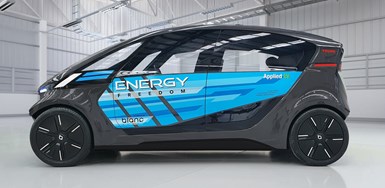
Teijin and Applied EV, which commenced their joint-development collaboration in 2019, are committed to establishing a technological foundation for supporting practical multipurpose zero-emission vehicles in future society. According to Teijin, the field of mobility is undergoing a significant transformation toward connected, autonomous, shared and electric (CASE) vehicles and Mobility as a Serivice (MaaS), all of which will help reduce environmental impact and address societal transportation needs. The company believes the shift to electric mobility is focusing attention on the benefit of the “well-to-wheel zero-emission” approach, which takes into account the total energy efficiency of vehicles, including how their electricity is sourced and how efficiently it is used during driving.
Toshiaki Hotaka, general manager of Teijin Ltd.’s Mobility Division, says, “Through our collaboration with Applied EV, we are working to realize ‘well-to-wheel zero-emission’ solutions that anticipate mobility needs in the near future. To this end, we are strengthening our technological capabilities by applying our know-how in high-performance materials, design and composites. Aiming to become a company that supports the society of the future, we have positioned environmental-value solutions as a priority field in which Teijin can contribute to circular economies and sustainability.”
Related Content
-
Airbus works to improve the life cycle of composites in future aircraft
This companion article to CW's September 2024 Airbus Illescas plant tour discusses recycling, LCA, biocomposites, Fast Track technologies, qualification and more.
-
Scaling up thermoplastic composites recycling
Thermoplastic composites are always said to be “recyclable.” Netherlands-based recycler Spiral RTC discusses the process, challenges, applications and opportunities to building a real recycling ecosystem.
-
Evolving natural fiber technology to meet industry sustainability needs
From flax fiber composite boats to RV exterior panels to a circularity model with partnerships in various end markets, Greenboats strives toward its biomaterials and sustainable composites vision in an ever-changing market.


