
Axalta Releases Global Automotive Color Popularity Report for 2022
First published in 1953, the report provides a comprehensive account detailing color popularity in the automotive industry with current data showing neutral colors remain popular.


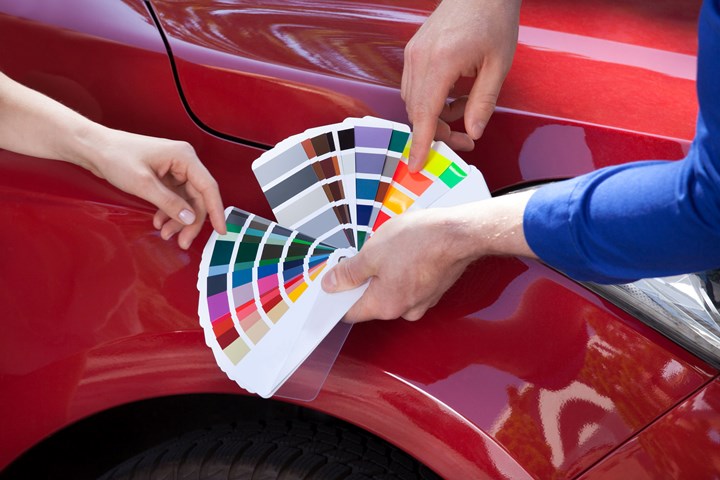
Axalta Coating Systems, a global coatings company, released its 70th annual Global Automotive Color Popularity Report, which reveals the top three automotive colors of 2022: white, black and gray. First published in 1953, Axalta’s annual color popularity report aims to provide a comprehensive account of the automotive industry’s color trends.
“Today’s vehicles are more vibrant than ever,” says Robert Schnell, vice president, global sales and product management, Axalta. “For example, compared to the white color variations of the 1950s, these whites are brighter and beam with iridescent flakes. Together, vehicles in white, black, gray and silver add up to 82% of cars on the road today.”
Globally, white shades held the lead (34% total) with pearlescent whites at 14% popularity and solid whites at 20%. Next, deep black colors radiate with sparkling effects and total 21% of vehicles on the road. Meanwhile, gray colors (19%) had sparkling effects in an assortment of colorful hues. Overall, colorful variations of blue (8%), red (5%) and green (1%) were found with high color intensity and complex sparkling effects.
The full Automotive Color Popularity Report can be accessed online. Together with Axalta’s Color Trend Report, the history and future of automotive color is compiled by Axalta’s global color experts and gives automotive original equipment manufacturers (OEMs) insights into consumer preferences, aiding them in making informed decisions about auto colors.
Related Content
-
Creating a composite battery insert-stud solution for EV trucks
Bossard worked with an OEM and Tier supplier team to meet tight electrical insulation and packaging tolerances while reducing tooling, molding and assembly costs.
-
McLaren develops aerospace-inspired ART method for volume composite super car engineering
Automated rapid tape (ART) technique, already deployed at the MCTC and to be used for future McLaren models, is capable of producing lighter, stiffer and stronger carbon fiber structures with less waste.
-
JEC World 2024 highlights: Glass fiber recycling, biocomposites and more
CW technical editor Hannah Mason discusses trends seen at this year’s JEC World trade show, including sustainability-focused technologies and commitments, the Paris Olympics amongst other topics.


