
High-speed 3D printing with fiber reinforcement
Italy-based CMS has partnered with Fraunhofer IWU to develop a high-speed, extrusion-based process for the 3D printing of fiber-reinforced thermoplastic parts. Video included.


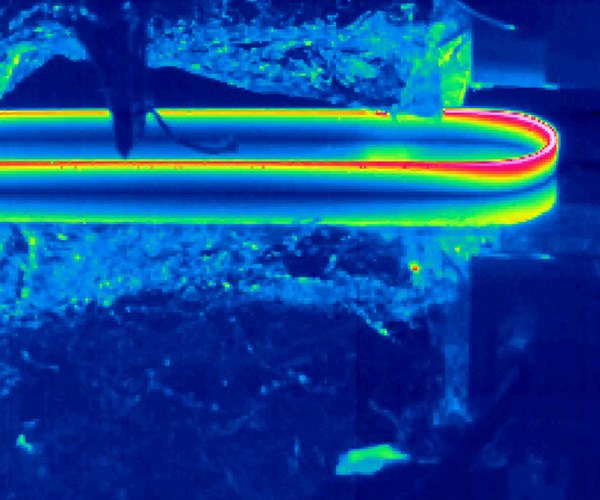
Heat map of CMS Kreator laying down fiber-reinforced thermoplastic resin.
CMS SpA and Fraunhofer IWU report that they are working on an R&D partnership focused on the development of a new hybrid system for high-speed 3D printing and machining of thermoplastic composite parts.
The new system, named CMS Kreator, will be available in several configurations and sizes, to cover a variety of industrial needs, mainly targeted toward the manufacture of prototypes and special parts. The range of materials used by CMS Kreator includes ABS, PA and high-performance polymers, mixed with short fiber carbon fiber and glass fiber to provide 40% fiber content.


Potential applications include mockups and jigs, as well as tools and molds able to withstand the cure temperatures. All materials used by the system are granulate, like that currently used in injection molding, are readily available on the market at a much lower cost when compared to the cost of standard 3D printing materials.
The process is extrusion-based and designed to lay down thin strands of material quickly (eight times faster than standard FDM processes) and immediately cooled, for the building of "birdbone" and similar structures.
The programming software tools are based on solutions available on the market. CMS also can provide the system with a 5-axis milling unit for finishing, and with a fiber placement unit for the fabrication of thermoset carbon fiber composites.
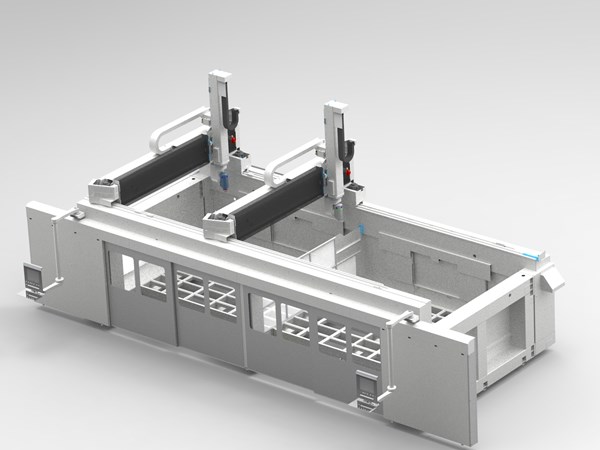
CMS Kreator.
Related Content
-
Polaris Spaceplanes receives MIRA II, MIRA III fiberglass airframes
German aerospace startup prepares next demonstrators toward reusable space launch and hypersonic transport toward routine, low-cost and safe access to space.
-
Hybrid composite architecture enables rigid wind propulsion solution for maritime decarbonization
GT Wings’ AirWing leverages aerospace engineering principles combined with hybrid glass and carbon fiber composite construction to deliver up to 30% fuel savings through compact, deck-compatible wind propulsion.
-
PUR composite sandwich panels for 3D automotive parts, high-volume panels and more
At its U.S. sites, Ascorium produces glass fiber/PUR 3D parts via semi-automated molding, high-volume flat panels via a continuous line while working toward bio-based PUR and recycling.


