
PRF Composite Materials launches Q.tool prepreg tooling system
Newly developed Q.tool combines RP800 epoxy with 1,020 g/m2 bulk plies for increased layup speed, reduced number of debulks and better surface finish.


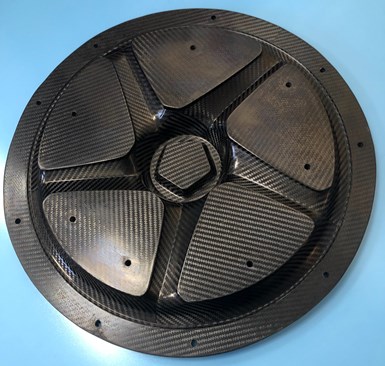
Tool constructed by Supernatural-x using PRF's Q.tool tooling prepreg system. Photo Credit: PRF Composites
PRF Composite Materials (Poole, Dorset, U.K.) is launching its new prepreg tooling system, Q.tool. Designed, developed and manufactured by PRF, Q.tool is reported to significantly reduces the time and costs of tool manufacture, while also providing an improved surface finish, all with sustainability in mind.
Using the company’s RP800 epoxy tooling system, the combination of Q.tool’s new surface and 1,020 g/m2 bulk plies replaces the 1:8:1 system in both weight and thickness, and reduces the number of debulks to as few as one. The increased speed in layup and reduced number of debulks provides an estimated cost/labor saving of up to 50%, PRF says. Q.tool also is said to decrease the amount of plastic consumables used.
According to Kevin Emmett, technical and operations director at Supernatural-x (Bognor Regis, U.K.), using PRF’s Q.tool system took half the time to produce the company’s tools, requiring only one debulk stage. It also exhibited exceptional drapeability around complex mold shapes, Emmett says.
The PRF team will be displaying tools manufactured using Q.tool at JEC World 2022 (booth E41) and will be available for more information on the tooling system.
Related Content
-
Combining multifunctional thermoplastic composites, additive manufacturing for next-gen airframe structures
The DOMMINIO project combines AFP with 3D printed gyroid cores, embedded SHM sensors and smart materials for induction-driven disassembly of parts at end of life.
-
Plant tour: Collins Aerospace, Riverside, Calif., U.S. and Almere, Netherlands
Composite Tier 1’s long history, acquisition of stamped parts pioneer Dutch Thermoplastic Components, advances roadmap for growth in thermoplastic composite parts.
-
Plant tour: Airbus, Illescas, Spain
Airbus’ Illescas facility, featuring highly automated composites processes for the A350 lower wing cover and one-piece Section 19 fuselage barrels, works toward production ramp-ups and next-generation aircraft.


