
Sigmatex renews partnership with CCM Hockey
Long-term partnership delivers high-performance carbon fiber hockey sticks for the elite sport market.


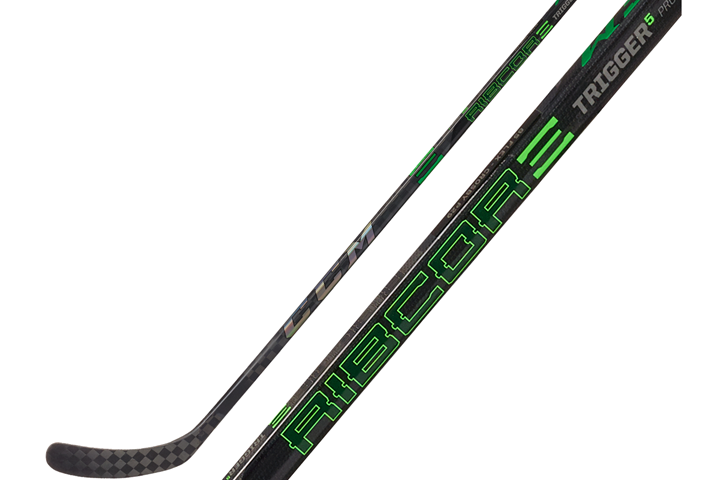
Photo Credit: Sigmatex
Sigmatex (Runcorn, Chesire, U.K.) a producer of carbon fiber textiles, has announced its renewed partnership with CCM Hockey (Quebec, Canada), a global designer, manufacturer and marketer of hockey equipment.
Sigmatex and CCM have been exclusive partners for many years. Focused on performance and innovation, the partnership has helped strengthen CCM in its leadership position for the hockey stick category and continues to position Sigmatex as a key supplier in elite sport performance.
“Sigmatex is delighted to announce an expansion of our long-term and exclusive partnership with CCM Hockey. By working together in collaboration, we have developed new innovative forms of SigmaST Spread Tow carbon fiber fabrics that will enable CCM to bring to market the most advanced hockey sticks available,” says Claudio Villalobos, global business development manager, Sigmatex Group. “Through our ‘design for performance’ ethos, innovation and collaboration are in our DNA. These new material solutions epitomize the outcome of working closely with our customers to design, develop and manufacture industry leading advanced material products for the most demanding applications.”
Related Content
-
MFFD longitudinal seams welded, world's largest CFRTP fuselage successfully completed
Fraunhofer IFAM and partners have completed left and right welds connecting the upper and lower fuselage halves and sent the 8×4-meter full-scale section to ZAL for integration with a cabin crown module and testing.
-
Plant tour: Collins Aerospace, Riverside, Calif., U.S. and Almere, Netherlands
Composite Tier 1’s long history, acquisition of stamped parts pioneer Dutch Thermoplastic Components, advances roadmap for growth in thermoplastic composite parts.
-
Composites end markets: New space (2025)
Composite materials — with their unmatched strength-to-weight ratio, durability in extreme environments and design versatility — are at the heart of innovations in satellites, propulsion systems and lunar exploration vehicles, propelling the space economy toward a $1.8 trillion future.


