
Ohoskin, ReCarbon collaborate for aesthetic, bio-based composite
Novel material to combine Ohoskin’s leather alternative made from orange and cactus byproducts with ReCarbon’s recycled carbon fiber.


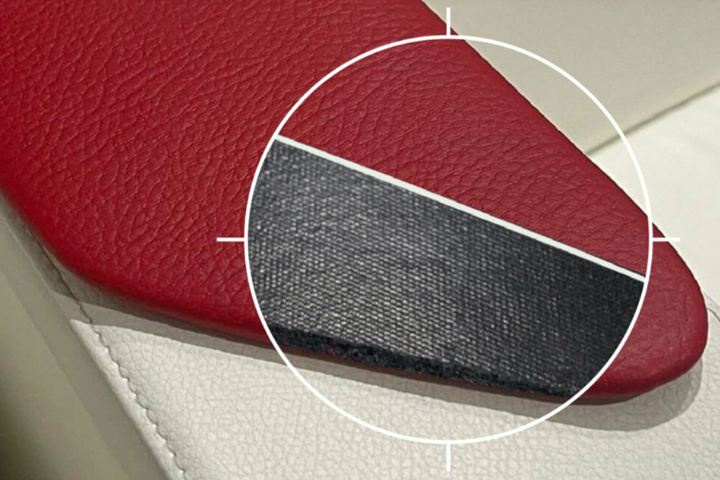
Photo Credit: ReCarbon
Ohoskin (Sicilia), an Italian manufacturer developing a bio-based alternative material to animal leather, and ReCarbon (Busto Arsizio, Italy) a company that has developed a one-stop solution for the circularity of carbon fiber, have announced a collaboration to create a new material for the automotive, marine and furniture industries.
The material, which will be produced by combining Ohoskin’s leather alternative made from orange and cactus byproducts with ReCarbon’s recycled carbon fiber, will feature high strength, light weight and sustainability.
“ReCarbon’s recycled carbon fiber is an innovative and sustainable material that fits perfectly with the sustainability values behind our innovative material,” Ohoskin COO Stefano Mazzetti says. “Together, we believe we can offer the market a unique and cutting-edge product.”
“The collaboration with Ohoskin is an important step for ReCarbon,” Luca Grati, ReCarbon CEO, emphasizes. “We are convinced that the combination of Ohoskin’s sustainable material and recycled carbon fiber can create an elegant, lightweight and sustainable product in line with the needs of modern consumers.”
Related Content
-
JEC World 2024 highlights: Thermoplastic composites, CMC and novel processes
CW senior technical editor Ginger Gardiner discusses some of the developments and demonstrators shown at the industry’s largest composites exhibition and conference.
-
“Structured air” TPS safeguards composite structures
Powered by an 85% air/15% pure polyimide aerogel, Blueshift’s novel material system protects structures during transient thermal events from -200°C to beyond 2400°C for rockets, battery boxes and more.
-
Bladder-assisted compression molding derivative produces complex, autoclave-quality automotive parts
HP Composites’ AirPower technology enables high-rate CFRP roof production with 50% energy savings for the Maserati MC20.


