
Epic receives FAA Production Certificate for carbon fiber E1000 aircraft
In light of the pandemic, the FAA and Epic devised new processes to complete the required reviews and audits prior to the final on-site assessment.


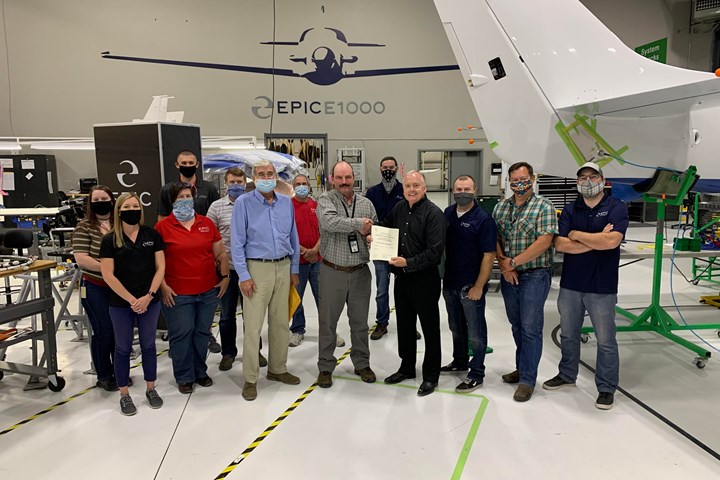
Source | Epic Aircraft
Epic Aircraft (Bend, Oreg., U.S.) announced on July 23 that it has received an FAA Production Certificate (PC) for its E1000 all-carbon fiber, six-seat, single-engine turboprop. Following the aircraft’s first completed deliveries in May, the PC enables Epic to accelerate aircraft deliveries via manufacture, flight test and issue airworthiness certificates with reduced FAA presence.
“Achieving FAA Production Certificate is a tremendous milestone,” says Epic CEO, Doug King. “It is a rigorous process involving the approval of a vast number of documents, processes and systems, with composites adding additional complexity. This approval validates the efforts of our team and the investments we have made toward the aircraft.”
The company’s pursuit of FAA Production Certification started years ago, in tandem with its Type Certification program, which concluded in November 2019. Epic says it was poised several months ago to complete the FAA Production Audit, a precursor to Production Certificate, when the COVID-19 pandemic disrupted plans.
FAA-mandated travel limitations restricted on-site visits, which are typically essential to the PC approval process. In response, the FAA and Epic collaborated to devise new processes, using remote technologies to conduct the required series of reviews and audits, prior to the final on-site assessment. The company has completed three customer aircraft deliveries so far this year, with plans to now further accelerate production schedules.
Related Content
-
Post Cure: 3D printed plastic, composite mouthstick designs assist limited-mobility users
Three M Tool and Machine has used its in-house additive manufacturing capabilities to rethink medical devices like mouthsticks, which must be stiff, lightweight and comfortable enough for everyday use.
-
Otto Aviation launches Phantom 3500 business jet with all-composite airframe from Leonardo
Promising 60% less fuel burn and 90% less emissions using SAF, the super-laminar flow design with windowless fuselage will be built using RTM in Florida facility with certification slated for 2030.
-
Troubleshooting thermoplastic composite stamp forming
Understand the basic science of TPC stamp forming, a manufacturing process steadily gaining momentum in aerospace and mobility applications thanks to its rapid forming, short cycle times and automated methods.


