
Composites Index contracts on a surprise 5-point decline
Steep contraction in both production and new orders pulled the Composites Fabricating Index to 47.4 for July 2019.
.jpg;width=70;height=70;mode=crop;format=webp)
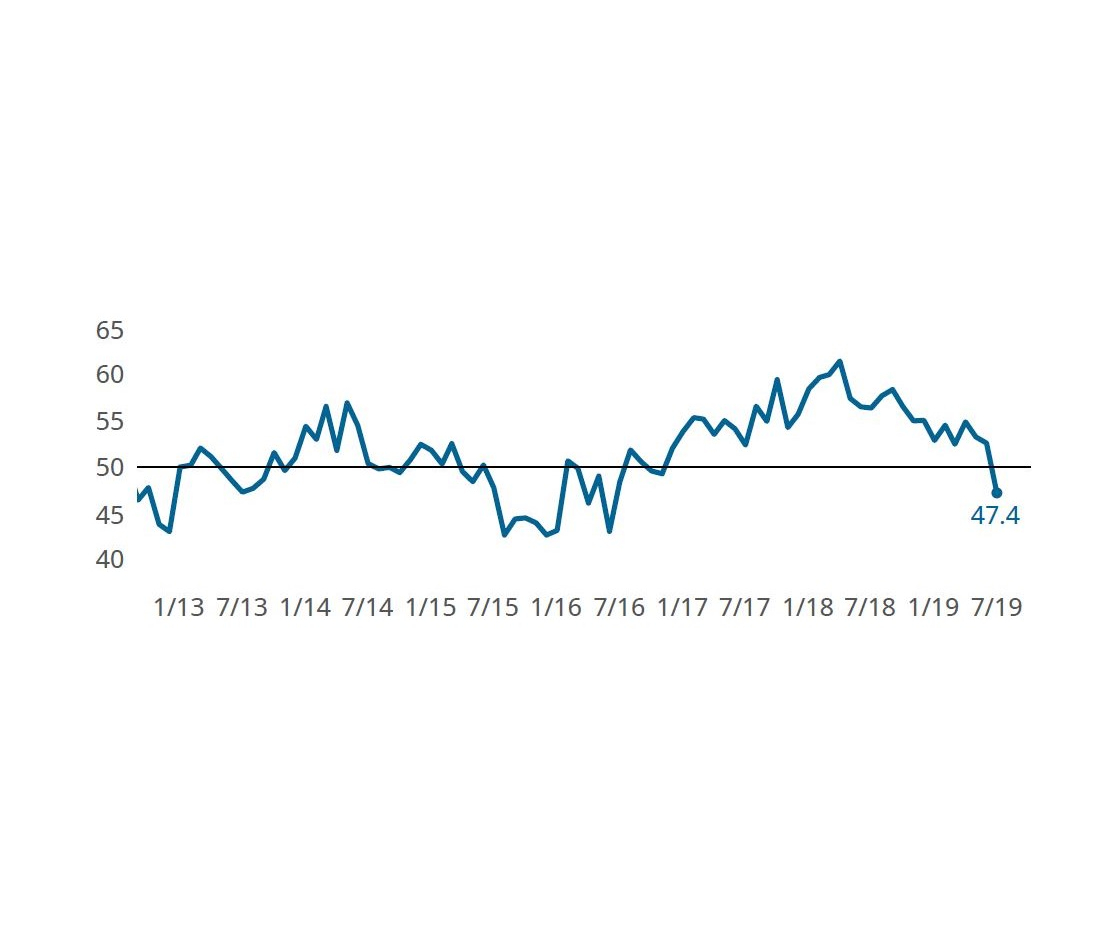
Composites Fabricating Index ends 31-month expansion. The Composites Index ended 31 months of continuous expansion with July’s 47.4 reading. Five of the six components that comprise the Index fell during the month.
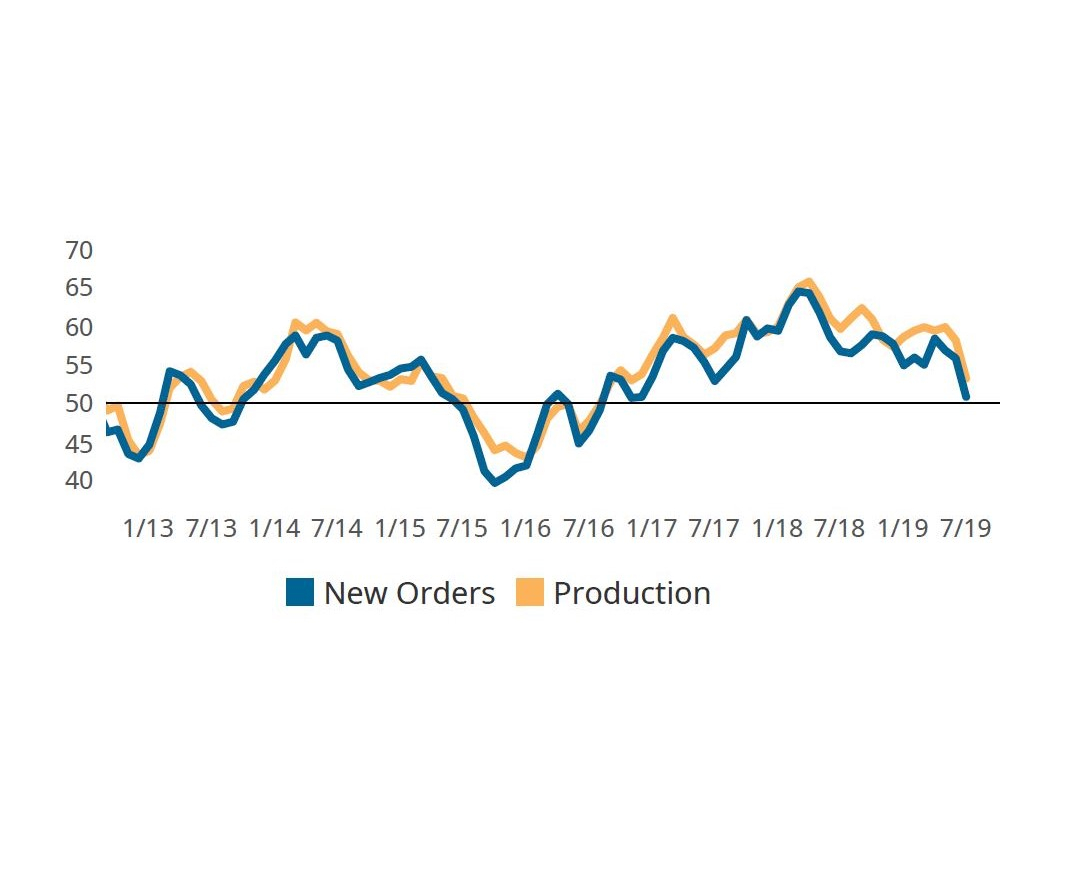
New orders and production activity end expansion record. The new orders and production components of the Composites Index are often considered the most sensitive to economic change. Past contractions have been for relatively short periods of time, around six months.


The Composites Index closed July at 47.4, ending a 31-month expansion that first started in late 2016. The duration of the expansion was the longest on record, dwarfing the last recorded expansion on record of 10 months set in 2014. The latest Index reading is 17.4% lower compared to the same month one year ago, and 10.6% lower from just the previous month. Index readings above 50 indicate expanding activity, while values below 50 indicate contracting activity. The further away a reading is from 50, the greater the change in activity. Gardner Intelligence’s review of the underlying data revealed that the Index experienced a steep contraction in both production and new orders. The Index — calculated as an average of its components — was pulled lower further by the ongoing weakness in exports. Contracting new orders and production data pressured backlog activity, which reported the lowest reading in July among all components.
Surprise declines in new orders and production activity have occurred in the past, and each time the Index was able to quickly recover. Since late 2011, there have only been two periods of sustained contraction, both of which lasted for approximately six months before the Index resumed expanding.
More information about the Composites Fabricating Index can be found at http://www.gardnerintelligence.com/.
Related Content
-
Dawn Aerospace reusable rocket-powered aircraft flies twice in one day
Eighth and ninth flights of composites-intensive Mk-II Aurora reach an altitude of 63,000 feet, demonstrates same-day reusability capability for rocket-powered systems.
-
Aerospace prepregs with braided reinforcement demonstrate improved production rates, cost
A recent time study compares the layup of a wing spar using prepreg with A&P’s TX-45 continuous braided reinforcement versus traditional twill woven prepreg.
-
Revolutionizing space composites: A new era of satellite materials
A new approach for high volumes of small satellite structures uses low-CTE, low-cost CFRP cellular core, robust single-ply skins and modular panel systems to cut lead time, labor and cost for reflectors, solar arrays and more.


