
How to patch a racecar
The current state of the art in automotive CFRP repair borrows heavily from experiences gained in the aerospace/aviation and racing fields.

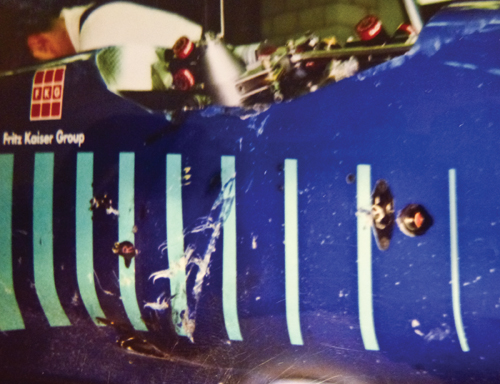
Step 1 Source: Ian Thomson
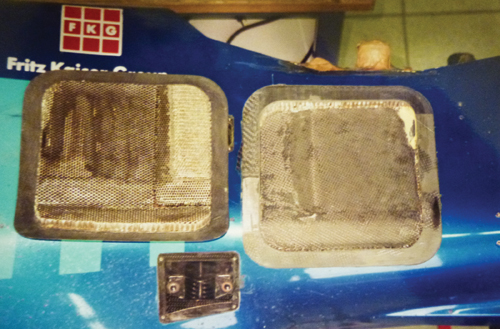
Step 2 Source: Ian Thomson
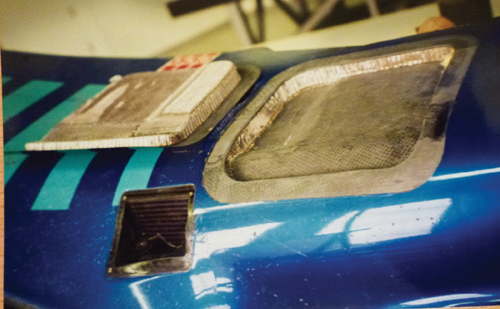
Step 3 Source: Ian Thomson
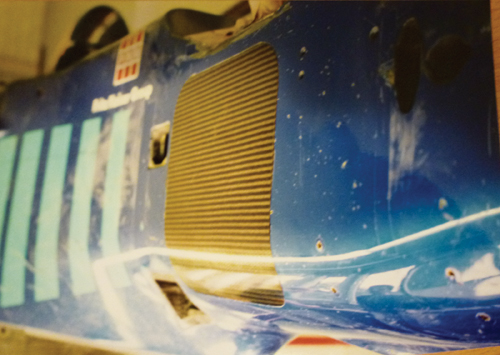
Step 4 Source: Ian Thomson


The current state of the art in automotive CFRP repair borrows heavily from experiences gained in the aerospace/aviation and racing fields. This repair was made to a car owned by the Swiss Formula 1 race team, Sauber (circa. July 1997).


Step 1
Damage (white scars/scuffs) sustained by Formula 1 car when wheel was pushed into the CFRP chassis during brush with a wall during a race.
Step 2
Outer skin and core removed from damaged area. Outer skin is chamfered with a 30-mm/1.2-inch wide beveled edge prior to being joined to patch.
Step 3
Repair patch is a precured outer skin with honeycomb that will be bonded in with a paste adhesive.
Step 4
Repair patch is a precured outer skin with honeycomb that will be bonded in with a paste adhesive.
Related Content
-
Guidance for the thermoforming process
A briefing on some of the common foam core material types, forming methods and tooling requirements.
-
Seven tips for machining composite aerospace components
Machining composite materials is a dusty, arduous and abrasive process that is hard on cutting tools, requiring the right combination of strategies and know-how to properly navigate their dynamics.
-
Ceramic matrix composites: Faster, cheaper, higher temperature
New players proliferate, increasing CMC materials and manufacturing capacity, novel processes and automation to meet demand for higher part volumes and performance.


