
Teijin aramid, carbon fibers used for museum façade panels
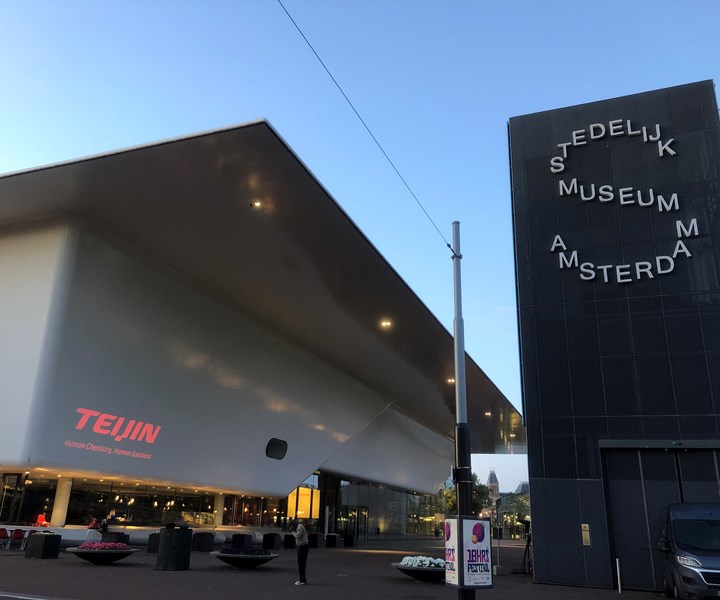
The new wing of the Stedelijk Museum Amsterdam is the first and largest composite building constructed from Teijin’s Twaron and Tenax fibers.
.jpg;width=70;height=70;mode=crop;format=webp)


Source | Teijin


The Teijin Group (Tokyo, Japan) announced that its Twaron para-aramid fiber and Tenax carbon fiber were used to build 185 composite panels for the façade and canopy of a new wing of the Stedelijk Museum Amsterdam (Amsterdam, Netherlands). Measuring 100 meters by 25 meters, it is the world’s first and largest-scale composite building using Twaron and Tenax, Teijin says.
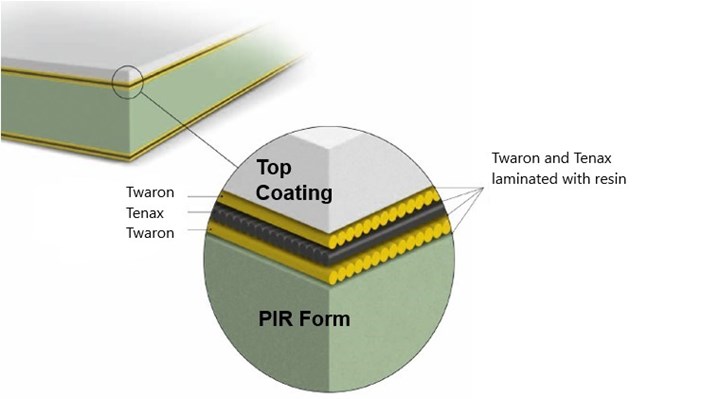
The new wing of the museum is known as the “bathtub” due to its distinctive shape. Twaron para-aramid fiber produced by Netherlands-based Teijin Aramid B.V. and Tenax carbon fiber produced by Teijin Carbon Europe GmbH in Germany were combined with vinyl ester resin in composite laminates, forming the outer skins of a composite sandwich construction with a core of PIR foam. Twaron and Tenax fibers are said to contract as temperature rises, unlike expanding resins, reportedly ensuring minimal thermal expansion of the panels while offering structural stability.
Source | Teijin
The Teijin Group has been sponsoring the Stedelijk Museum Amsterdam since 2007, as a cultural initiatives based on the company’s corporate philosophy to grow and evolve in harmony with society. Teijin is sponsoring the Colorful Japan exhibition, which opens Sept. 7, to emphasize the strong bonds between Japan, Teijin and the Netherlands.
Related Content
-
Low-cost, efficient CFRP anisogrid lattice structures
CIRA uses patented parallel winding, dry fiber, silicone tooling and resin infusion to cut labor for lightweight, heavily loaded space applications.
-
Cutting 100 pounds, certification time for the X-59 nose cone
Swift Engineering used HyperX software to remove 100 pounds from 38-foot graphite/epoxy cored nose cone for X-59 supersonic aircraft.
-
Composites end markets: Automotive (2025)
Composites manufacturing intelligence drives circular economy solutions as automotive industry balances technical demands with sustainability mandates.


