
Swancor applies EzCiclo recycling resin to Liux EV prototype
Cooperation with Spanish automotive startup has achieved automotive parts comprising EzCiclo RH512 thermoset resin and linen fiber that can be fully separated, adjusted and returned into circularity.


Liux Geko breakdown. Source (All Images) | Swancor, Liux
Swancor (Nantou, Taiwain) marks its official entry into the automotive industry with its technology’s successful application in Geko, Spanish startup Liux’s electric vehicle (EV) prototype. The vehicle incorporates EzCiclo RH512, the Swancor thermoset resin containing ≥10% bio-based raw material.
Geko’s automotive fenders, bumpers, doors and tailgate are all made using liner fiber and EzCiclo, meaning they can be fully separated and decomposed through Swancor’s CleaVER liquid at 150˚C for 4 hours. According to Swancor, the decomposition process generates no waste liquid nor exhaust and lower carbon footprint compared with incineration. The recycled liner fiber is remade into yarn after being carded, drawn and twisted; the recycled resin can be used after chemical modification and formula adjustment. During the development process, Swancor conducted numerous testing and adjustments to meet the high standard and strict quality of the automotive industry.


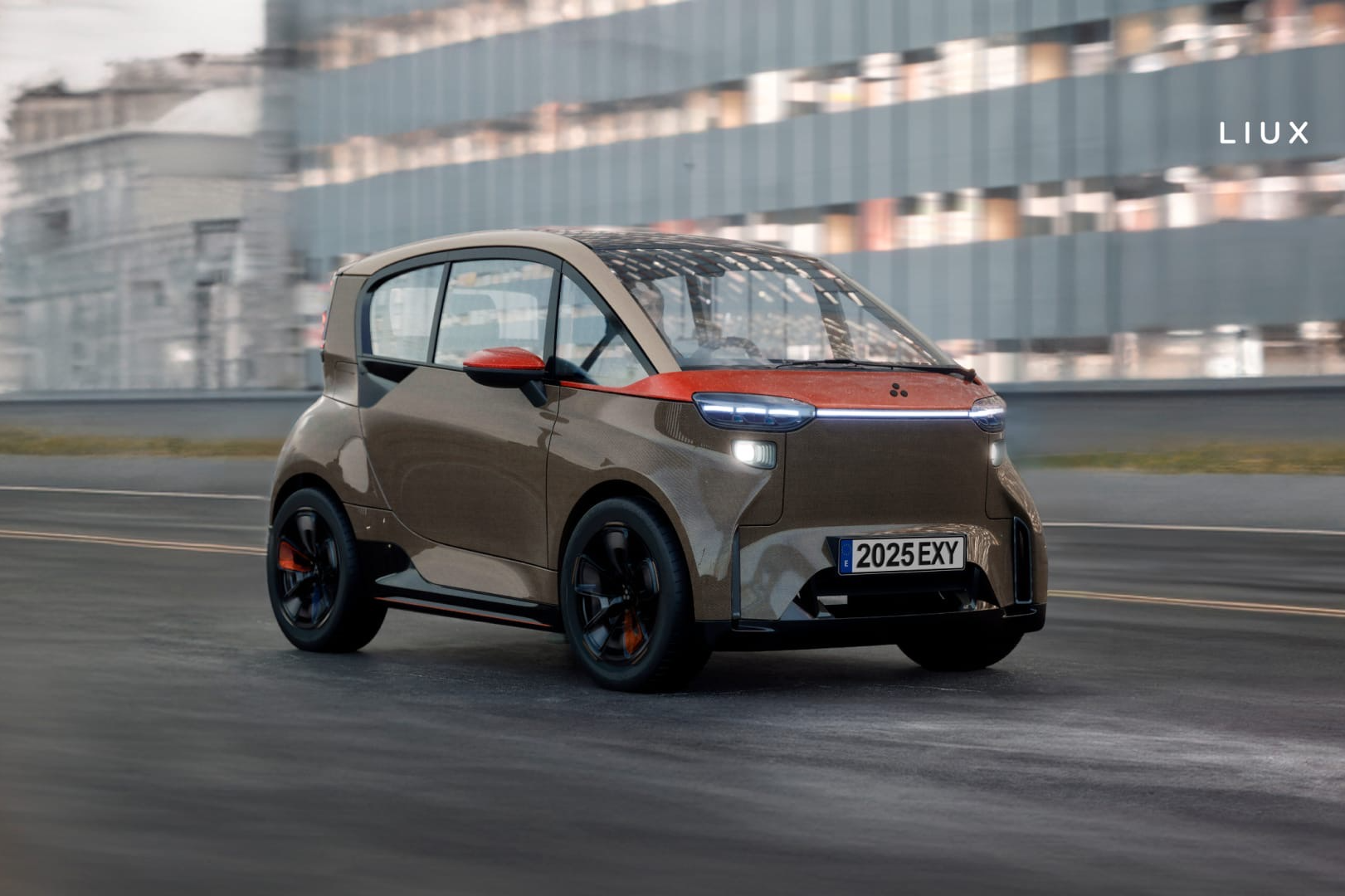
Swancor says it has applied this technology to automotive parts to provide energy efficiency and sustainable solutions for the EV industry. The resulting Liux Geko concept reportedly reduces CO2 footprint throughout its product life by 40% compared to efficient electric cars, and up to 80% compared to a gasoline SUV.
In addition to what was used for this project, Swancor EzCiclo RH512 resin offers another formula containing more than 25% recycled plastics. Both formulas are suitable for vacuum infusion and hand layup process, and can been applied in EV body parts with liner fiber.
Liux Geko will be presented at this year’s JEC World.
Related Content
-
Trends fueling the composites recycling movement
Various recycling methods are being considered for composites, from novel dismantling and processing, to building capacity and demonstrating secondary use applications.
-
AFP with very-thin plies of carbon fiber/LMPAEK prepreg for sustainable helicopter structures
DLR, Airbus Helicopters, Fraunhofer and TU Dresden work in the NATURE project for environmentally friendly aviation
-
Exel Composites adopts bio-based UPR resin at commercial scale
Purchase of Polynt bio-based resin delivers 20% cut in CO2 footprint for composites manufacturers, builds Exel’s efforts to give customers more sustainable options.


