
Sirius Aviation reveals hydrogen VTOL aircraft, the Sirius Jet
Propelled by a hydrogen-electric propulsion system, the composites-intensive vehicle will take flight in two version options by 2025.


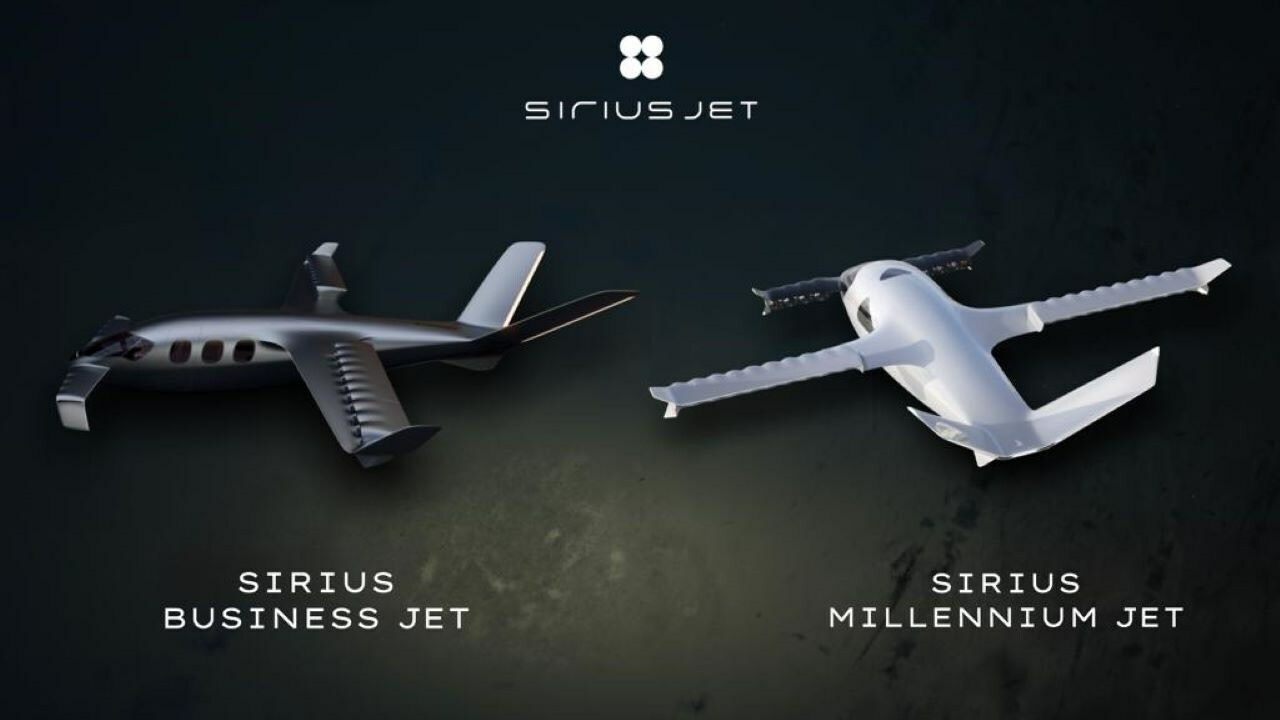
Source | Sirius Aviation AG
Swiss aviation startup Sirius Aviation AG (Zurich, Switzerland) has unveiled the Sirius Jet, a hydrogen-powered vertical takeoff and landing (VTOL) aircraft crafted and designed in collaboration with BMW’s (Munich, Germany) creative consultancy Designworks and motorsport engineering company Sauber Group, along with Alfleth Engineering AG and ALD Group.
According to Sirius Aviation’s CEO Alexey Popov, “Sirius Jet undoubtedly incorporates carbon fiber composites in its structure, along with aluminum, titanium alloys and steels. Announcing the exact proportion is premature at this stage, but the share of carbon fiber is quite significant. The fan blades also represent a combination of metals and composite materials.”
The Sirius Jet is a high-performance, zero-emission VTOL aircraft, propelled by a hydrogen-electric propulsion system. Leveraging jet aerodynamics with airplane and helicopter versatility, it achieves extended flight distances, high speeds and high altitudes at near-silent levels.
In 2025, the Sirius Jet will take flight in two versions: the Sirius Business Jet, tailored to private jet needs, and the Sirius Millennium Jet, crafted for commercial aviation. The former will feature a 1,150-mile flight range, cruise speed of 323 miles per hour (mph), altitude capability of 30,000 feet, ultra-quiet noise levels of 60 decibals and will be able to accommodate three passengers. The latter, the Sirius Millenium Jet, offers a 650-mile flight range, cruise speed of 323 mph, altitude capability of 30,000 feet, sound footprint of 60 decibals and will accommodate up to five passengers.
Related Content
-
New GTL breakthrough in composite tubing for liquid hydrogen in aircraft and space vehicles
Tests versus stainless steel tubing show 10 times faster chill down, fuel flow in 2 seconds and less boil-off for significantly faster fueling and refueling of LH2-powered space vehicles, aircraft and trucks.
-
Composite pressure vessels enable future energy storage
Q&A between Hexagon Purus, Infinite Composites and Hyosung USA delves into the future of H2 storage, including scalability and production goals, materials and application trends and other dynamics.
-
BrainDrip scales up composite technology to meet current, future energy infrastructure needs
Next-generation composite pipe development with embedded, AI-enhanced health monitoring will modernize new and aging pipelines globally.


