
Porcher Industries strengthens partnership with Terre de Lin
Technical and commercial cooperation enables Terre de Lin to deliver flax rovings to Porcher for the production of woven Polypreg Flax/TP composite reinforcements.


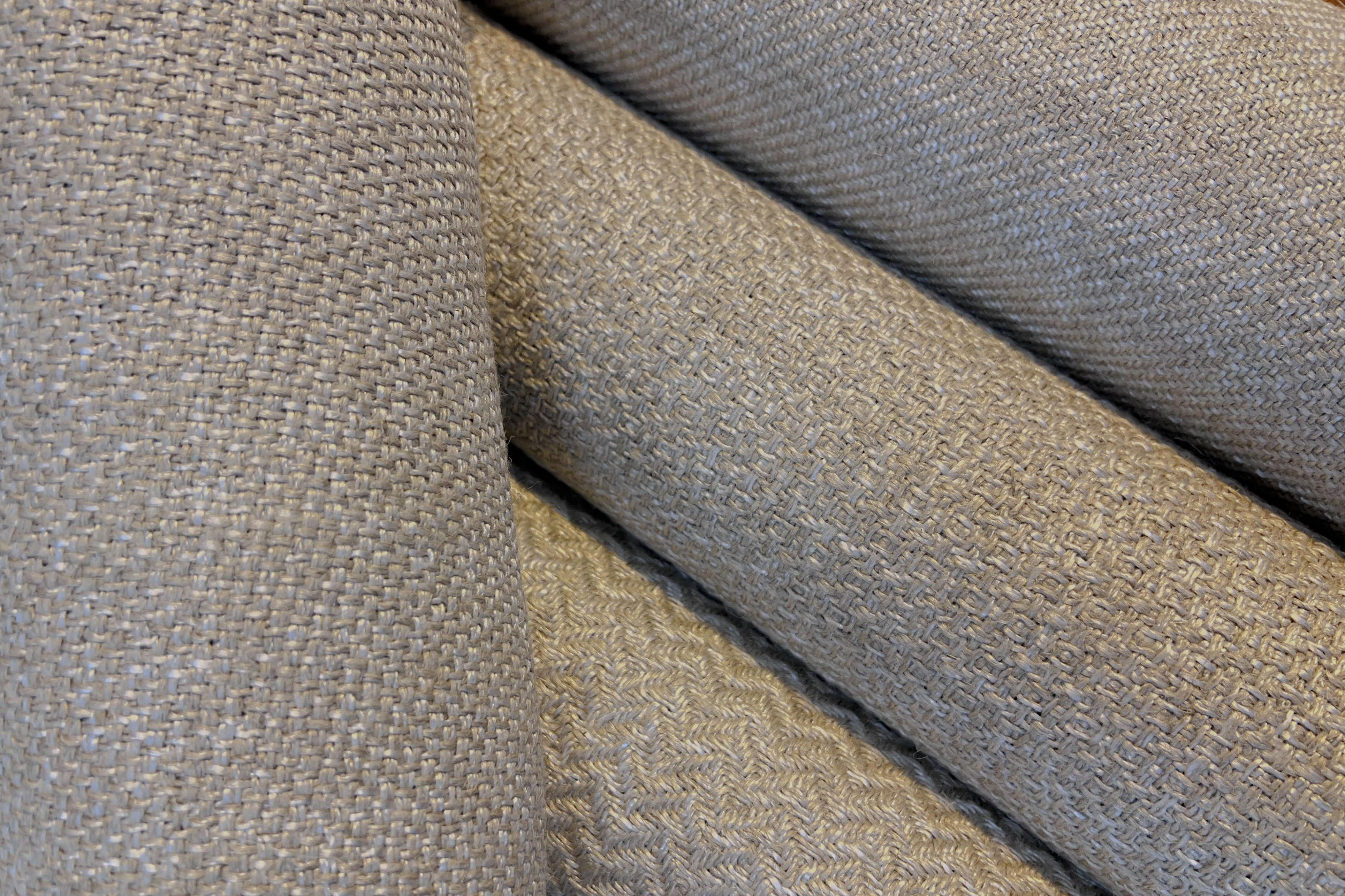
Woven flax fiber reinforcement. Photo Credit: Porcher Industries
Technical textiles and high-performance thermoplastic composites company Porcher Industries (Eclose-Badinières, France) strengthens its partnership with Terre de Lin (Normandy, France), a global flax fiber producer. This non-exclusive technical and commercial cooperation aims to develop sales of flax fiber-based reinforcements for thermoplastic composites implemented by thermocompression.
Novel Polypreg Flax/TP thermoplastic composite reinforcements, woven by Porcher Industries using flax rovings from Terre de Lin, are said to constitute lightweight bio-reinforcement options for making parts with a variety of semi-structural appearances via ultrafast thermocompression.


TDL Technique, a subsidiary of Terre de Lin, is currently developing flax/thermoplastic rovings, aiming to bring increased productivity to the use of flax fiber in composites and better manage the end of life for recycling.
Both companies believe that this environmentally conscious range of materials is the answer to increasing designer demands for composite parts that are simultaneously modern, attractive, durable and immediately recognizable as natural. By developing this type of solution, Porcher Industries wishes to contribute positively in the fields of three of its clients regarding their greenhouse gas evaluation.
“This partnership allows Porcher Industries to guarantee very large volumes for top vehicle and aeronautics suppliers, as well as sports brands seeking this high-performance thermoplastic material with a lower environmental impact and which is easily recyclable,” Pascal Joubert des Ouches, marketing director of Porcher Industries, notes.
Related Content
-
Development of a composite liquid hydrogen tank for commercial aircraft
Netherlands consortium advances cryogenic composites testing, tank designs and manufacturing including AFP, hybrid winding, welding of tank components and integrated SHM and H2 sensors for demonstrators in 2025.
-
Exel Composites adopts bio-based UPR resin at commercial scale
Purchase of Polynt bio-based resin delivers 20% cut in CO2 footprint for composites manufacturers, builds Exel’s efforts to give customers more sustainable options.
-
The need for process modeling in filament winding applications
A discussion of how temperature, mandrel material and thickness, plus other factors affect the outcome of repeatable filament-wound composite shell manufacturing.


