
Can basalt fiber bridge the gap between glass and carbon?
When I started writing about composites in the way, way back, industry innovator Brandt Goldsworthy was still alive. His article on basalt fiber was one of the most-read columns in the old Composites Technology book, and there seems to be a lot of interest in this alternative performance fiber. Mafic SA is a new player in the basalt fiber market.

Share


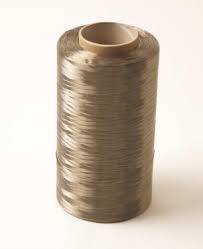
Basalt roving from Mafic SA performs better than E-glass in a new testing report.
When I started writing about composites in the way, way back, industry innovator Brandt Goldsworthy was still alive, and in fact, writing columns for us for a time. His article on basalt fiber was one of the most-read columns in the old Composites Technology book, based on subsequent reader inquiries, and there seems to be a lot of interest in this alternative performance fiber.
What is basalt fiber, anyway? As CW explained in our August 2006 story on the subject (here’s a link: http://www.compositesworld.com/articles/basalt-fibers-alternative-to-glass) Frenchman Paul Dhé was the first with the idea to extrude fibers from basalt rock, a common igneous rock material. He was granted a U.S. patent in 1923. Around 1960, both the U.S. and the former Soviet Union (USSR) began to investigate basalt fiber applications, particularly for military hardware. In the northwestern U.S., where large basalt formations are concentrated, Prof. R.V. Subramanian of Washington State University (Pullman, Wash.) conducted research that correlated the chemical composition of basalt with the conditions for extrudability and physio-chemical characteristics of the resulting fiber. Owens Corning and several other glass companies conducted independent research programs, which resulted in several U.S. patents. Around 1970, however, U.S. glass companies abandoned basalt fiber research for strategies that favored their core product, which resulted in better glass fiber including successful development of S-2 glass.


During the same period, research in Eastern Europe, which had been carried out in the 1950s by independent groups in Moscow, Prague and other locales, was nationalized by the USSR's Defense Ministry and concentrated in Kyiv, Ukraine, where technology was subsequently developed in closed institutes and factories. After the breakup of the Soviet Union in 1991, the results of Soviet research were declassified and made available for civilian applications. Basalt fiber research, production and marketing efforts initially emanated from countries once aligned with the Soviet bloc, and include Kamenny Vek (Dubna, Russia), Technobasalt (Kyiv, Ukraine), Hengdian Group Shanghai Russia & Gold Basalt Fibre Co. (Shanghai, China), and OJSC Research Institute Glassplastics and Fiber (Bucha, Ukraine). Since 2012, a new player on the market is Mafic SA (Kells, County Meath, Ireland), with offices in the US and Ireland and production in Ireland.
The igneous rock is mined and melted, with no performance additives required, and is extruded into filaments, similar to glass fiber production. The fibers have alkali chemical resistance and fire resistance reportedly better than E-glass, and, better mechanical properties as well, as documented in a new testing report from Mafic, in collaboration with the Fraunhofer Project Center (London, Ontario, Canada). Test panels were fabricated using basalt fabrics in an epoxy matrix using high-pressure resin transfer molding (HPRTM), then tested for physical properties, including tensile strength, impact strength and interlaminar shear. The results show that, when compared to E-glass panels made with the same resin, basalt has higher tensile modulus and strength, and an interlaminar shear strength midway between glass and carbon fiber comparison panels. According to the Fraunhofer report, the basalt composite showed a specific strength 40% higher than E-glass, and a specific stiffness 20% higher than the glass composite.
Basalt could be a good choice for applications needing higher performance than glass, but where the cost of carbon can’t be justified. Mafic’s marketing manager Jeffrey Thompson points out that “For a part currently using fiberglass, it would be possible to use Mafic Basalt Fiber to achieve the same part performance with reduced part mass. Alternatively, using Mafic Basalt could increase part strength and stiffness without dramatic cost increases.” Mafic will have a stand at the upcoming JEC World exhibition in Paris, March 8 – 10, and will have material and parts on display. If you can’t make it to Paris, we’ll be writing blogs and show reports, and Mafic will be covered along with the other exhibitors — hope to see you there! To get more information on Mafic's fiber, send your inquiry to this email address: info@mafic.com.


Related Content

Spanish startup to ramp up production of “recyclable” EV prototype
Liux’s BIG electric vehicle features multiple structural components manufactured via RTM from flax fabric and a thermoset resin said to enable the entire component to be recycled and reused again.
Read More
LIFT to lead new "Critical Materials Processing" program on ceramics, CMC
Multifaceted project aims to accelerate development and scale-up of ultra-high temperature material technologies including ceramic matrix composites (CMC) and carbon fiber as a precursor in CMC preforms.
Read More
All-recycled, needle-punched nonwoven CFRP slashes carbon footprint of Formula 2 seat
Dallara and Tenowo collaborate to produce a race-ready Formula 2 seat using recycled carbon fiber, reducing CO2 emissions by 97.5% compared to virgin materials.
Read More
Next-gen fan blades: Hybrid twin RTM, printed sensors, laser shock disassembly
MORPHO project demonstrates blade with 20% faster RTM cure cycle, uses AI-based monitoring for improved maintenance/life cycle management and proves laser shock disassembly for recycling.
Read MoreRead Next

Robotic computed laminography brings X-ray CT resolution to large composite structures
Omni NDE collaborative robots, X-ray end effectors and Voxray’s reconstruction approach enables 5-micron inspection of aerospace parts without size constraints.
Read More
From PMCs to sandwich composites: Tracing the path of test method standardization
Over the decades, progression of PMC and sandwich composite test method development and standardization has been shaped by the requirements of the composites industry.
Read More
Thermoplastic composite materials and processing interactions
Selection of product material formats and their interactions with various process methods heavily influence a final TPC part’s properties and fabrication options.
Read More