
3D printing composites with continuous fiber
New composite manufacturing technology for multimaterial, multifunctional composite structures.

Share
Read Next


CW has written about continuous fiber-reinforced 3D printed composites since 2014, when MarkForged released the Mark One printer at the SolidWorks World conference (Jan 26-29, 2014). We then covered Arevo and its development of multi-axis printing using continuous fiber, including in the z-direction and along contours via a robotic arm. This year, we wrote about Orbital Composites and its work with the Composites Technology Center in printing continuous fiber composites.
However, there is a company that has been printing in continuous composites since 2012. CW actually published a short sidebar on Continuous Composites (Coeur D’Alene, ID, US) in Jan 2017 but its achievements deserve a lengthier discussion:


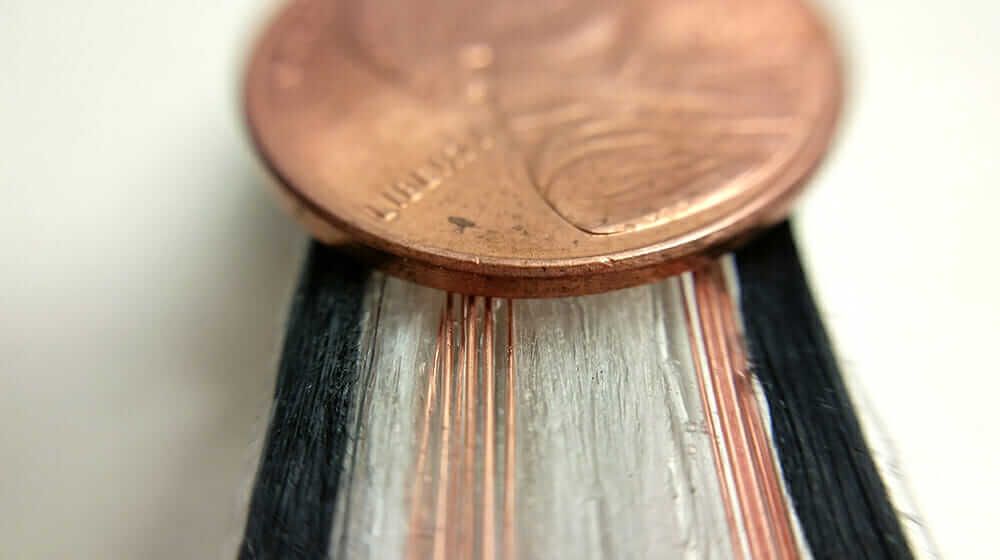
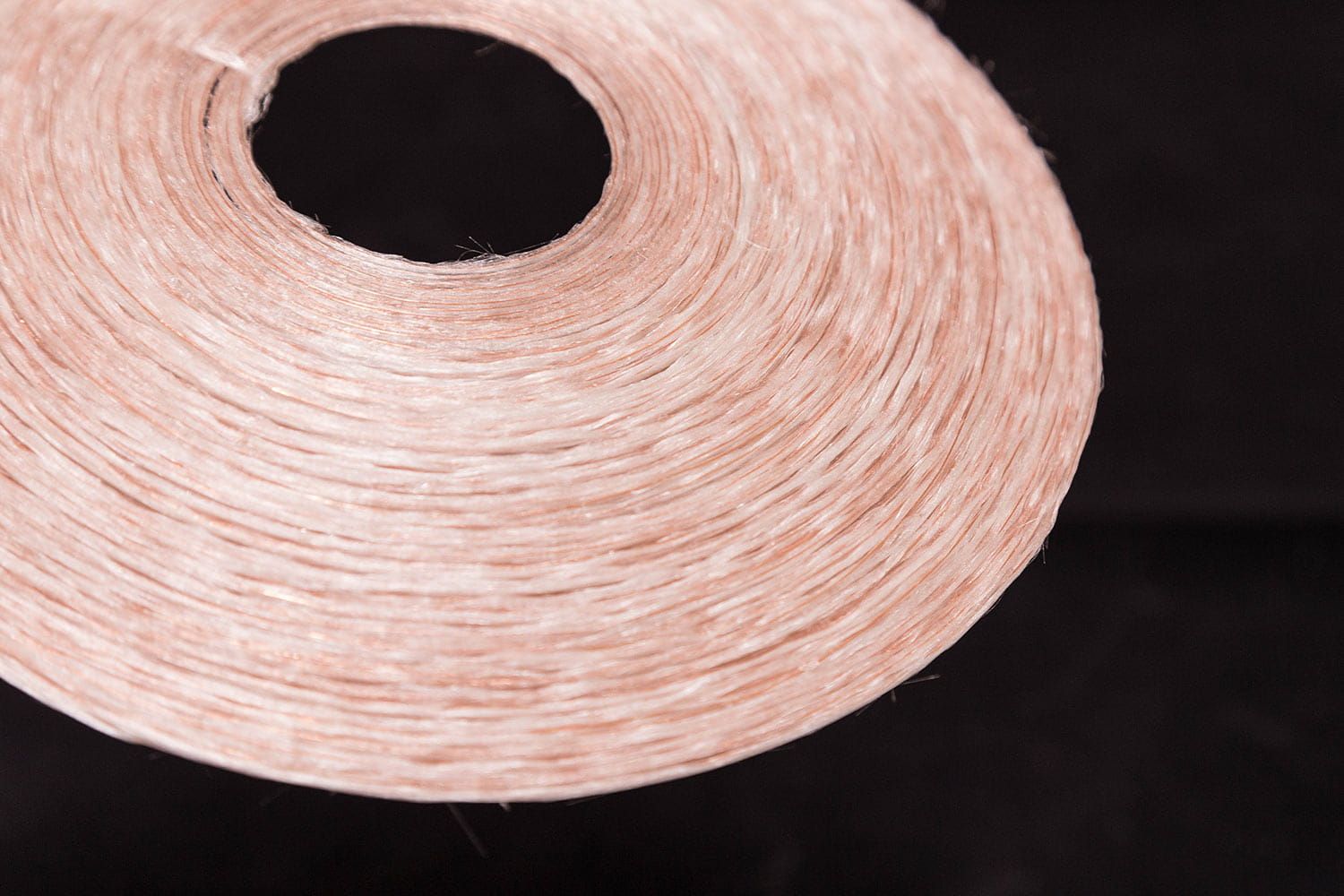
- Printing in three dimensions with any continuous fiber including aramid, glass (GF) and carbon fiber (CF), copper, nichrome wire and fiber optics.
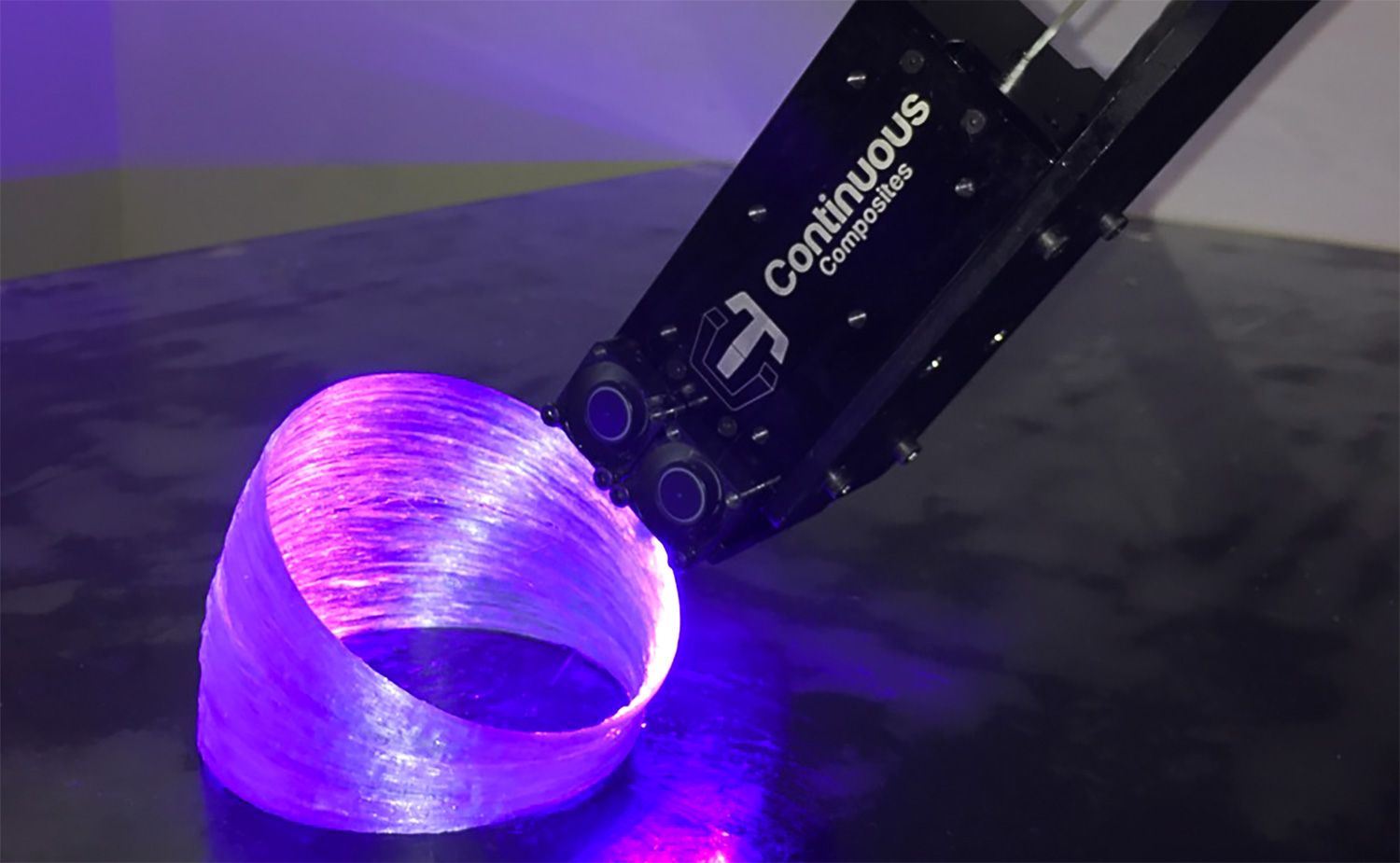
- Uses UV-cure thermoset resins to enable high-speed printing and printing unsupported into space.
- Enables moldless, out of autoclave composite manufacturing and load path optimization
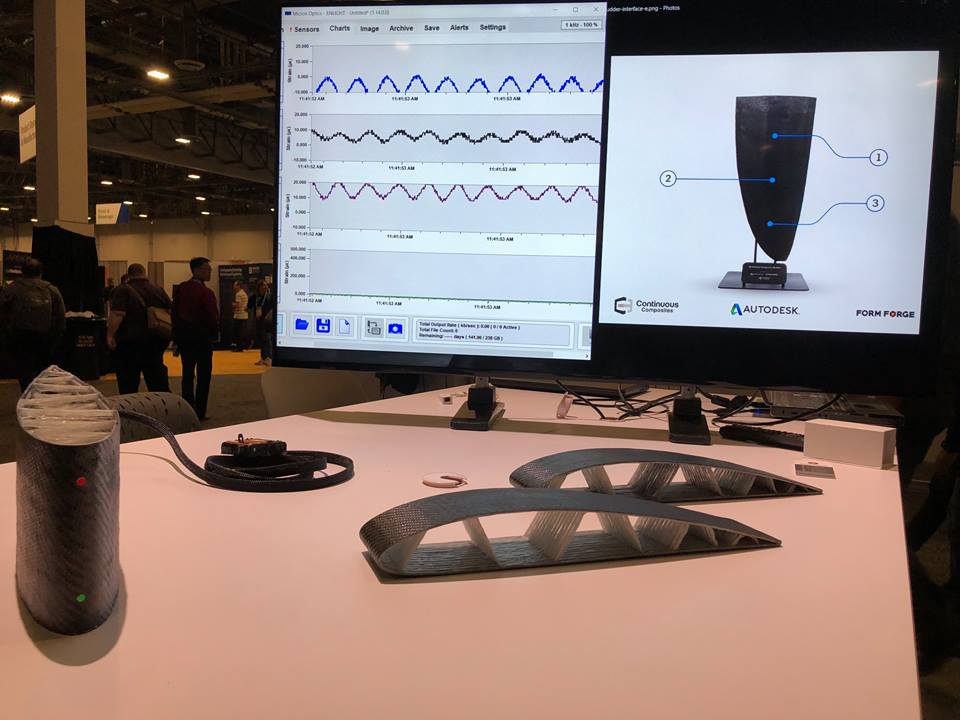
- Demonstrated at AutoDesk University 2017 a 3D-printed, multimaterial (chopped CF/ABS shell, continuous GF/epoxy truss frames) rudder complete with printed fiber optics that can sense and communicate changes in temperature, pressure, acceleration and electrical conductivity.
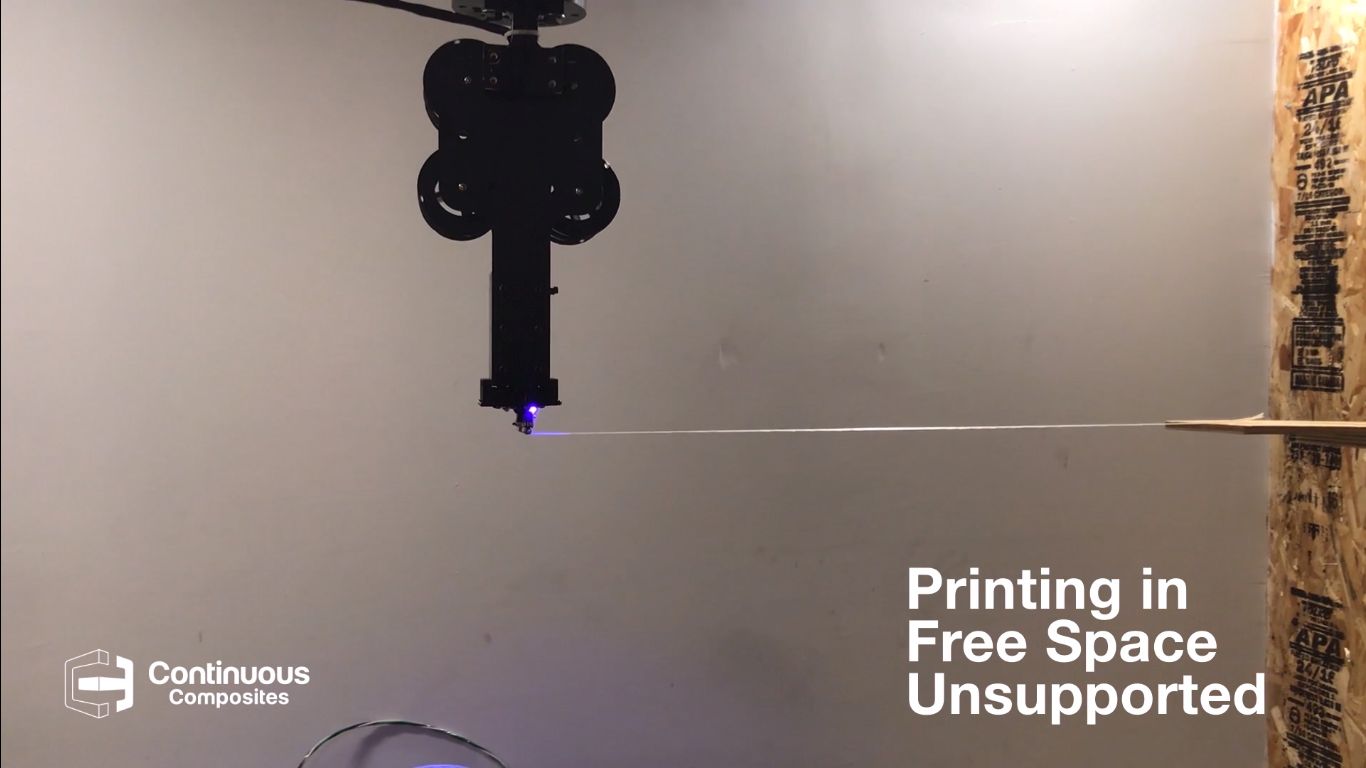 |
 |
SOURCE for all images: Continuous Composites
CF3D
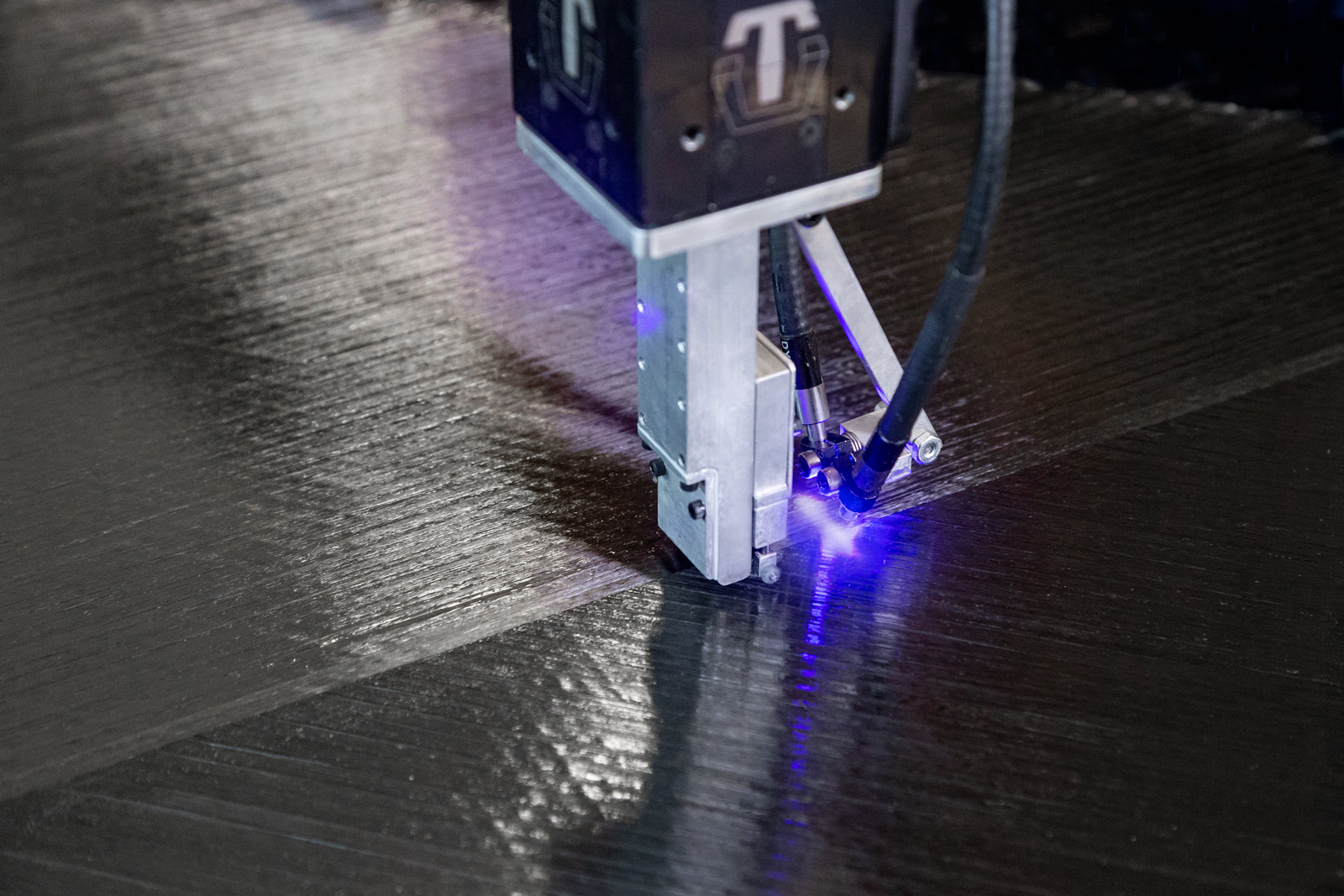
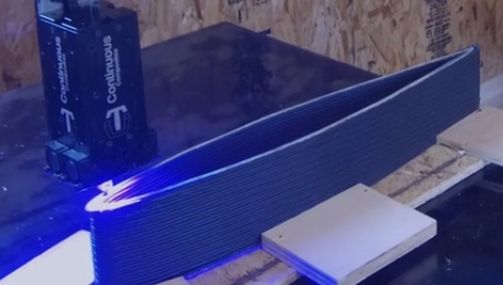
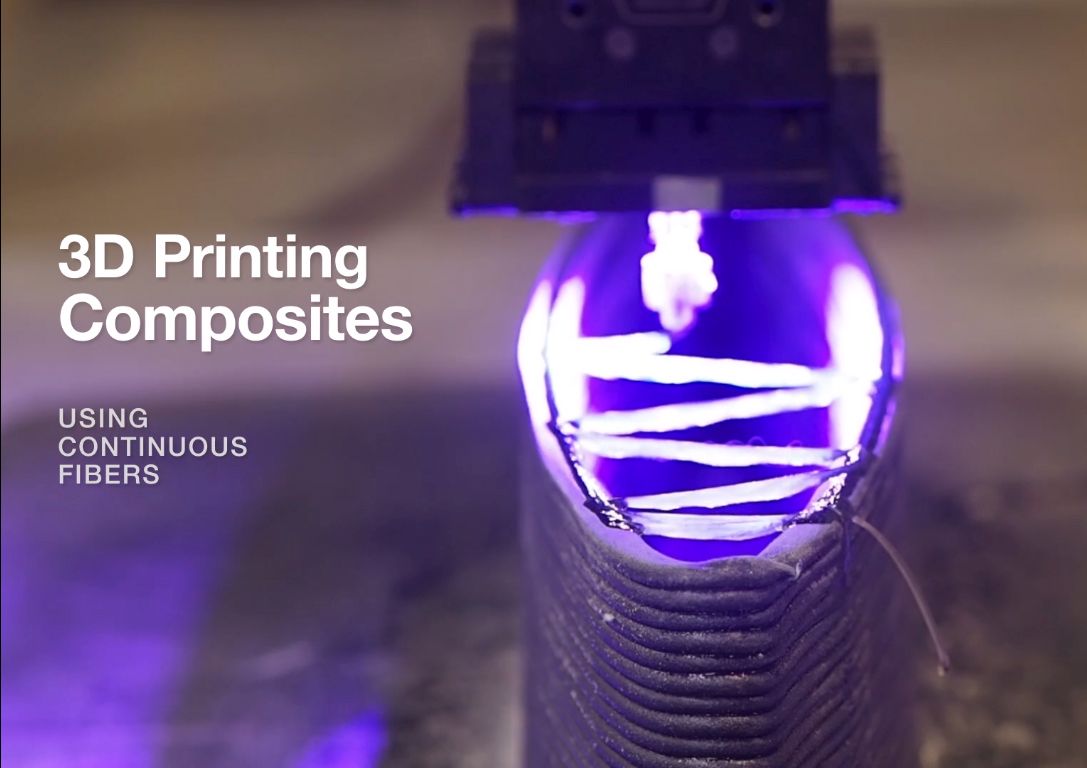
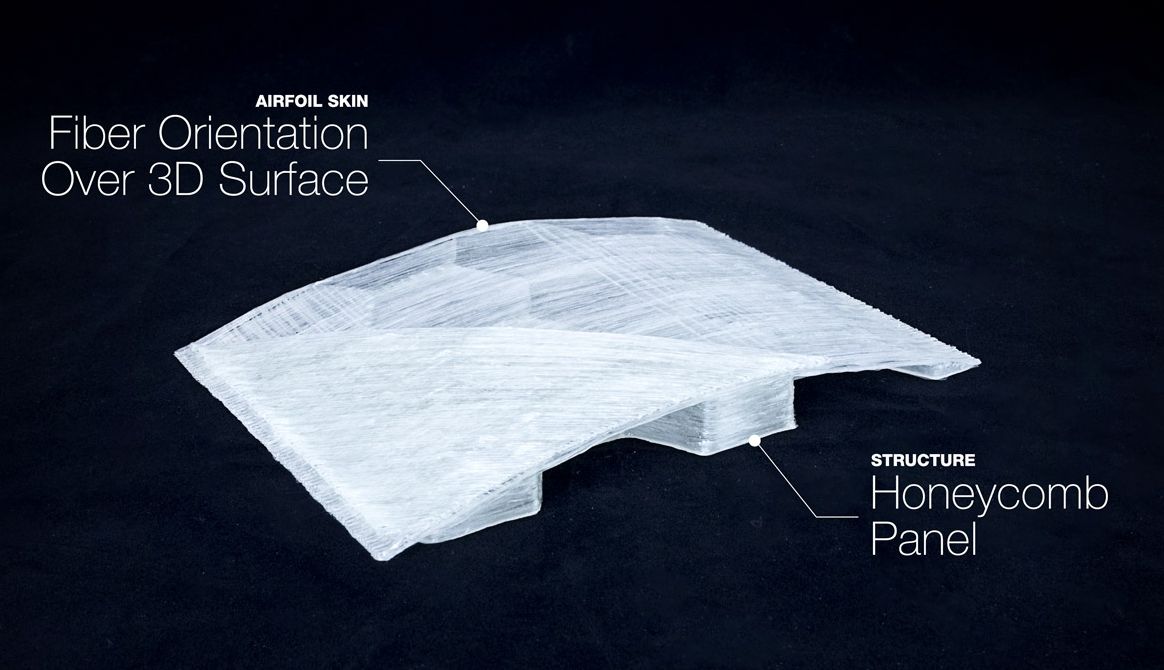
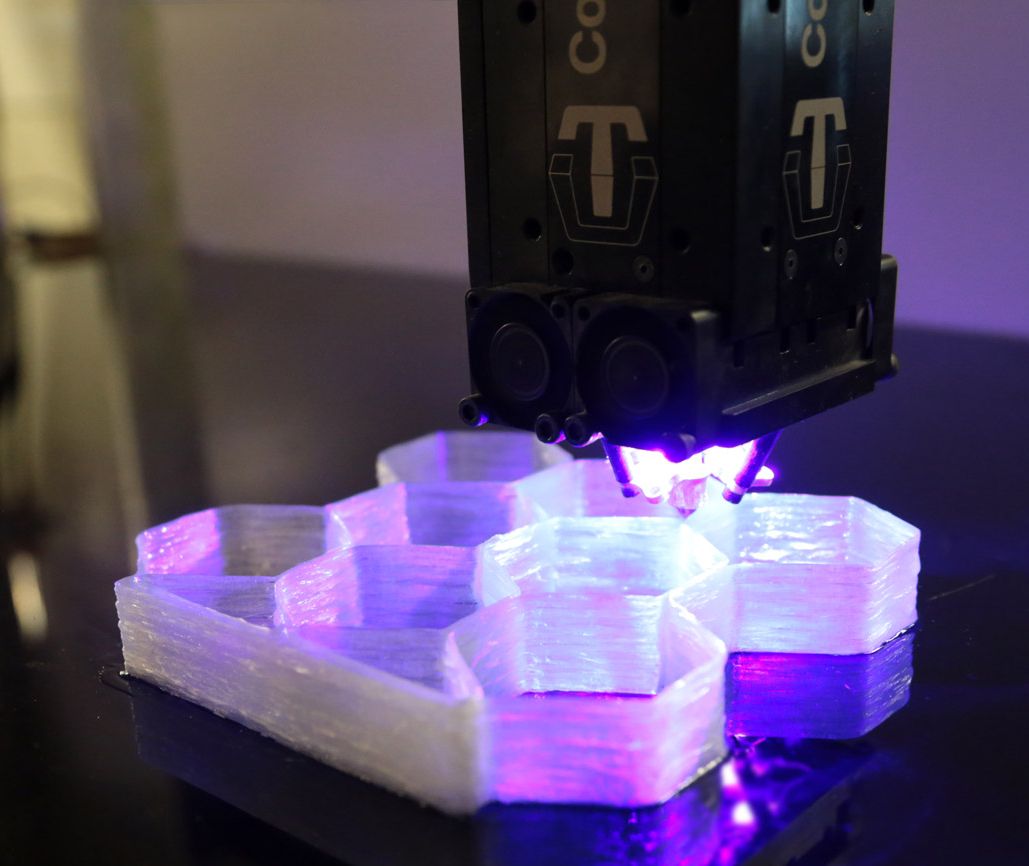
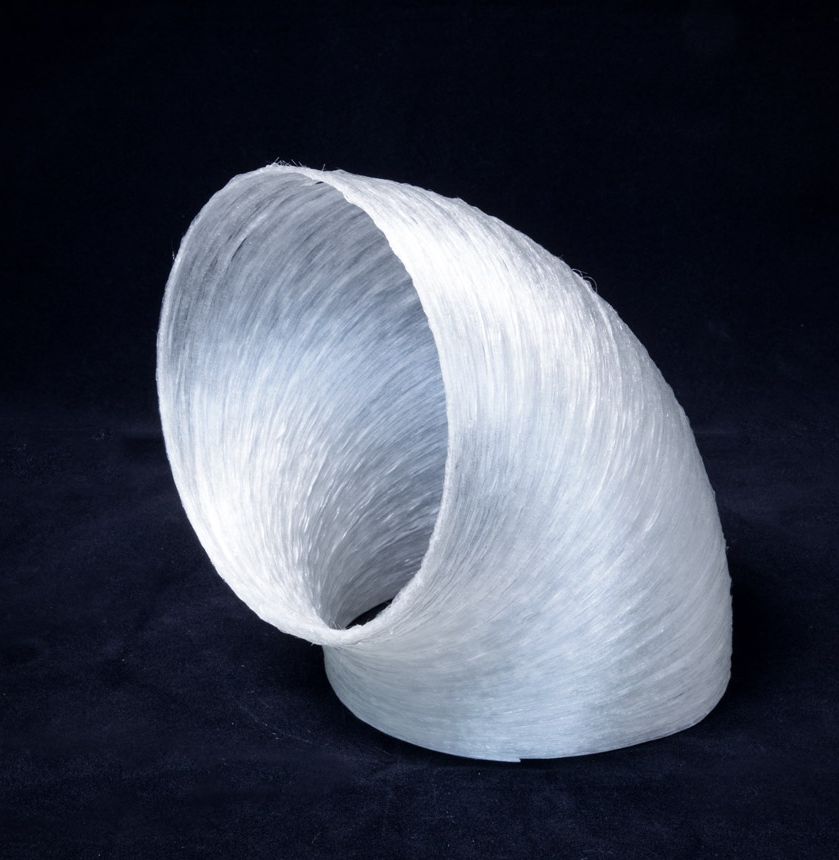
“We are combining the power of composite materials with a 3D printing process using advanced robotics,” says Continuous Composites CEO Tyler Alvarado. The company has trademarked its Continuous Fiber 3D Printing as CF3D. “CF3D impregnates the fiber within the head and cures immediately after material deposition,” he explains. “We are not limited to printing via 2D slices so we can take full advantage of the anisotropic properties of composite materials by discretely orienting fibers in every direction.”
Alvarado notes it is also possible to tune thermoset resins for each customer’s application, for example, boosting modulus, or alternatively, toughness, or even fire resistance properties. CF3D is also amenable to printing with thermoplastic resins and Continuous Composites has demonstrated printing with both thermoset and thermoplastic materials in the same structure.
“We are achieving 50-60% fiber volume,” says Alvarado, who adds that variable compaction of the printed laminate has been incorporated into the print head. “When we are printing a structure in free space, we are not compacting against a tool, so consolidation is different. The first path for a structure is unsupported, and therefore, needs little pressure because there is nothing to press against. Subsequent layerrs, however, can have pressure applied for compaction.”
In 2016 and 2017, Continuous Composites built a robotic manufacturing cell with increased motion control and build volume. As with all 3D printing, software generates the code for machine movement. However, because tool path generation is much different in CF3D, Continuous Composites is developing its own software. “Off-the-shelf solutions do not work for continuous fiber tool-path generation since we are no longer limited to stacking 2D slices,” Alvarado explains. The CF3D software also automates UV lights for resin curing, cutting of the print filament when necessary and control of compaction pressure.
 |
 |
“The new print head we developed is much more active,” says Alvarado. “Our new end effector has adaptive tensioning and dynamic control of resin delivery.”
Alvarado says CF3D can print 16 tows wide using 12K carbon tow and epoxy resin. It has produced 3-layer thick samples with less than 1% porosity and an average tensile strength of 111 ksi. This mechanical testing was done as part of a 2017 project for a US Dept. of Defense contractor. “We are continuing to improve and expect to exceed 200 ksi soon,” Alvarado asserts. “We also have completed fire, smoke and toxicity (FST) testing for aerospace interior applications,” he adds.
Sensing structures
The CF3D technology facilitates printing multifunctional composite structures. For example: continuous copper wire can be printed to power electronics, continuous nichrome wire can be printed to embed heat for anti-icing applications or continuous fiber optics can be printed for real-time structural health monitoring (SHM) and performance optimization of a composite structure.
 |
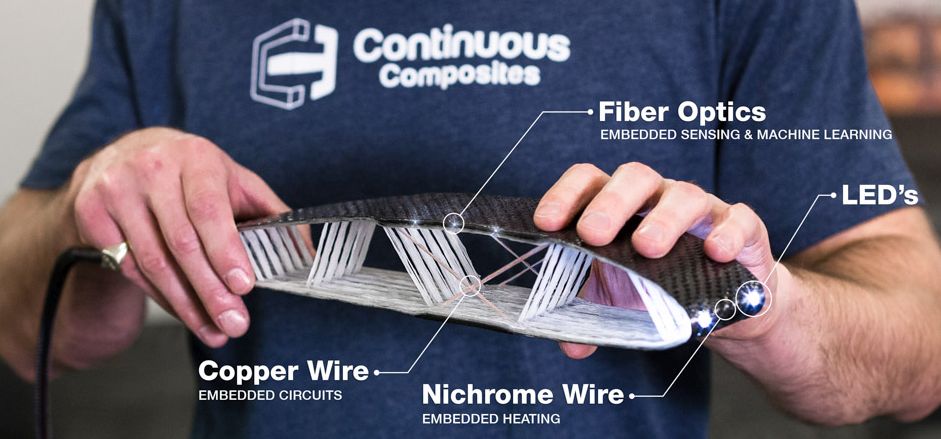 |
Continuous Composites printed the demo airfoil above in 2017 including:
- Continuous glass fiber support trusses printed unsupported from the top to bottom of the airfoil.
- Continuous copper wire powering LED lights on leading edge.
- Nichrome wire for anti-icing on the leading edge.
- Fiber optics on the upper skin which can be used to collect data.
 |
 |
 |
 |
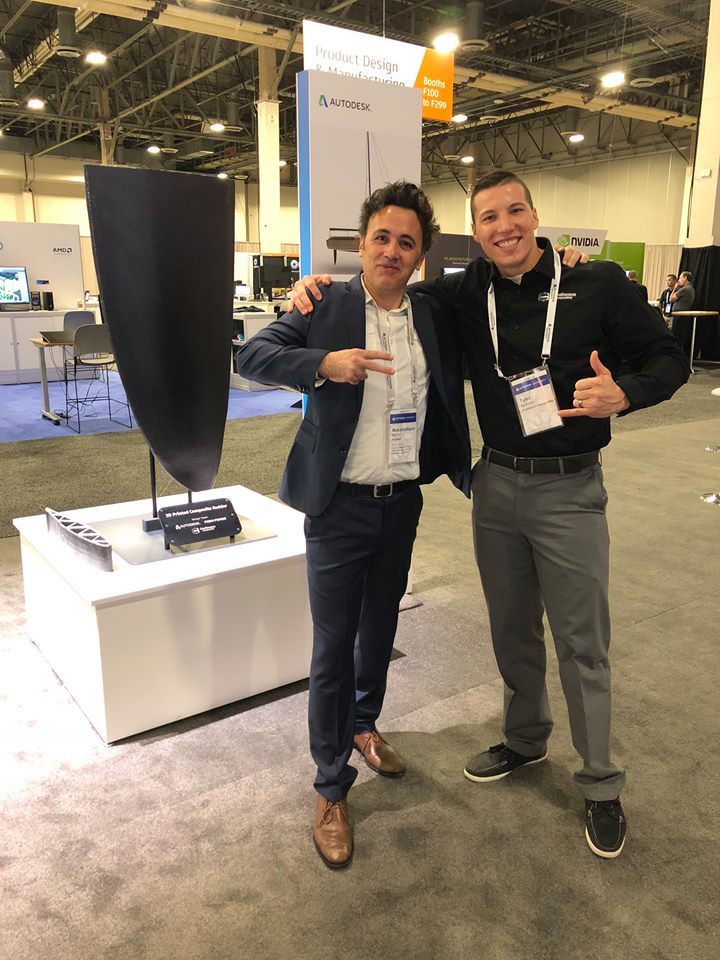
In Nov 2017, Continuous Composites, Form Forge (Portland, OR, US) and AutoDesk collaborated to produce a sensing composite rudder as part of the “Making Waves” exhibit with Livrea Yacht (Palermo, Italy) at the annual AutoDesk University conference.
The rudder was roughly 4.5 ft tall, printed with 20% chopped carbon fiber-reinforced ABS (acrylonitrile butadiene styrene) thermoplastic for the shell or skin, and continuous glass fiber for the structural truss supports. The team also printed advanced fiber optics into the rudder.
The finished rudder was displayed on-stand at AutoDesk U. “We let the audience touch it, and the rudder’s sensors collected 5 Gigabytes of data over 2 days, tracking temperature, acceleration and stress changes,” Alvarado recounts. “By embedding this functionality, we can collect and analyze the structure’s performance for real-time health monitoring and peformance optimization.”
So think for a minute, the rudder and foils on your racing yacht can now feed actual data back into your computation fluid dynamics (CFD) analysis and design software to intelligently optimize the individual structure’s design and overall boat performance. And, of course, the rudder and foils could instead be aircraft or automotive structures.
“We wanted to demonstrate our ability to combine CF3D technology with multiple materials and multiple modes of additive manufacturing in one cell,” says Alvarado. He notes the flexibility to tune thermoset resins was also demonstrated by modifying the resin used with the continuous fiber to adhere to the chopped fiber/ABS.
 |
 |
 |
 |
The Future of Manufacturing
Continuous Composites is bold in its future vision for CF3D. It sees the technology as enabling local manufacturing and a resurgence in American manufacturing, but also a path toward more sustainable production processes. “Our technology solves many problems found in traditional composite manufacturing methods,” says Alvarado. “We have automated the laying of fiber in all directions, opening design possibilites as well eliminating the need for costly molds, autoclaves, and ovens.” He adds that by removing these constraints, CF3D can combine multiple components into a single printed part and embed functionality, all in a single manufacturing process. “Our technology is a new, emerging manufacturing method that will disrupt many industries.”
Alvarado says Continuous Composites is working with a variety of companies to develop a technology ecosystem including OEMs, machine vendors, robotics integrators, materials suppliers and software companies. “We have 7 granted patents with 76 non-provisional patent applications pending and an additional 11 provisional patent applications pending, covering over 250 patented and patent pending concepts. We are continuing to develop our technology and seeking to deploy our technology to companies across all industries, including aerospace, automotive, defense, construction, etc.”


Related Content

Post Cure: 3D printed plastic, composite mouthstick designs assist limited-mobility users
Three M Tool and Machine has used its in-house additive manufacturing capabilities to rethink medical devices like mouthsticks, which must be stiff, lightweight and comfortable enough for everyday use.
Read More
Aerospace prepregs with braided reinforcement demonstrate improved production rates, cost
A recent time study compares the layup of a wing spar using prepreg with A&P’s TX-45 continuous braided reinforcement versus traditional twill woven prepreg.
Read More
Cutting 100 pounds, certification time for the X-59 nose cone
Swift Engineering used HyperX software to remove 100 pounds from 38-foot graphite/epoxy cored nose cone for X-59 supersonic aircraft.
Read More
Composites end markets: New space (2025)
Composite materials — with their unmatched strength-to-weight ratio, durability in extreme environments and design versatility — are at the heart of innovations in satellites, propulsion systems and lunar exploration vehicles, propelling the space economy toward a $1.8 trillion future.
Read MoreRead Next

Advancing bonding, coating and sealing to 4.0 systems for composites, metals and more
Brighton Science uses decades of experience, 2-second surface measurements and a framework of data-based specs and KPIs to help manufacturers advance toward reliable, predictable bond quality for faster, high-performance production.
Read More
Post Cure: 3D printed plastic, composite mouthstick designs assist limited-mobility users
Three M Tool and Machine has used its in-house additive manufacturing capabilities to rethink medical devices like mouthsticks, which must be stiff, lightweight and comfortable enough for everyday use.
Read More
Industrial ultrasonic NDT adaptation permits accessible composite bicycle inspection
Cycle Inspect's ASNT-aligned certification program employs affordable twin-crystal ultrasonic testing equipment and standardized inspection methods to detect damage in composite bicycle components.
Read More


