
Thermoplastic tape friction tester completed at TPRC
Delivered and implemented at Toray Advanced Composites, the setup seeks to eliminate defects during hot press forming thermoplastic tapes.


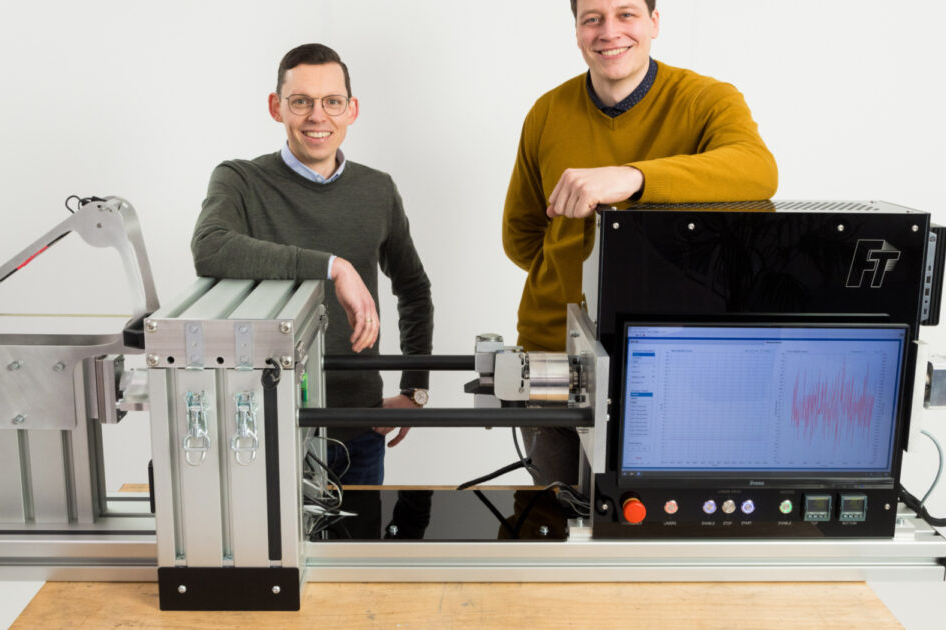
Source | TPRC
The ThermoPlastic composites Research Center (TPRC, Enschede, Netherlands) has recently highlighted the completion and delivery of a novel friction tester for thermoplastic matrix composite tape in melt to Toray Advanced Composites (Nijverdal, The Netherlands). The completed setup provides a better understanding of the friction behavior of thermoplastic composites in melt, to avoid the occurrence of defects during hot press forming of the material.
The development of the friction tester was achieved by TPRC doctoral student Rens Pierik and University of Twente researcher Sam Benou as part of the press forming without defects (PERFECT) project. The test setup measures the resistance against sliding of adjacent plies to simulate what happens during press forming of thermoplastic composites.


Earlier research, as part of the PERFECT project, revealed insights into the ply-ply friction of UD C/PAEK tapes, to be used as a basis for future constitutive modeling. More about this work can be viewed here.
The Dutch Research Council (NWO) supports this research project.
For related content, also read:
- TPRC research project investigates thermoplastic composite structure repair strategies
- TPRC research studies void removal mechanisms in VBO processing
Related Content
-
Composites in India: A market forecast for 2025-2030
India is the world’s fastest-growing market for composites, with a comprehensive ecosystem pivoting toward self-sufficiency in production and 200% growth in its carbon fiber value chain.
-
Plant tour: Collins Aerospace, Riverside, Calif., U.S. and Almere, Netherlands
Composite Tier 1’s long history, acquisition of stamped parts pioneer Dutch Thermoplastic Components, advances roadmap for growth in thermoplastic composite parts.
-
Exel Composites adopts bio-based UPR resin at commercial scale
Purchase of Polynt bio-based resin delivers 20% cut in CO2 footprint for composites manufacturers, builds Exel’s efforts to give customers more sustainable options.


