
SGL Carbon delivers composite materials for Airbus Helicopter rotor blades
SGL Carbon’s glass fiber noncrimp fabrics enable the composite rotor blades for the 5 blade Airbus H145 rotor configuration.


Source | Airbus
In August 2019, SGL Carbon (Wiesbaden, Germany) began delivering two special glass fiber noncrimp fabrics for the new version of Airbus Helicopters’ (Marignane, France) model H145. The materials are used in the new helicopter’s five-blade rotor. Developed in close collaboration with Airbus Helicopters, the material has been qualified for the application for the foreseeable future.


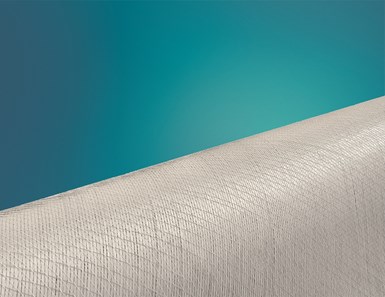
SGL Carbon’s glass fiber noncrimp fabrics enable the composite rotor blades for the 5 blade H145 rotor configuration. Source | SGL Carbon
Because of their unidirectional fiber orientation, the fabrics offer good resistance and support for the new geometry of the especially long H145 rotor blades. The fabrics are manufactured at the SGL Carbon site in Willich near Düsseldorf in a multi-stage process and delivered to Airbus Helicopters in Paris.
“The order emphasizes our growing presence in the aerospace business. With the fabrics for Airbus Helicopters, we have realized, qualified, and started serial production for a material concept for primary structural components for the first time,” says Dr. Andreas Erber, head of the aerospace segment in the business unit Composites – Fibers & Materials at SGL Carbon.
The current deliveries are part of a framework contract with Airbus Helicopters, intended to gradually intensify collaboration.
The new composite 5 blade rotor configuration for the H145 is said to offer 150 kilograms of additional useful load while also enhancing in-flight comfort, simplicity and connectivity.
Related Content
-
Owens Corning to sell glass fiber business to Praana Group
Transaction with India-based holding group completes Owens Corning’s previously announced strategic review of the business, strengthens its focus on residential and commercial building products.
-
ZEBRA project demonstrates closed-loop wind recycling system
Consortium partners have proven the complete recycling of thermoplastic wind turbines via two manufactured wind blades, featuring reduced operating cost, CO2 emissions.
-
Composites in India: A market forecast for 2025-2030
India is the world’s fastest-growing market for composites, with a comprehensive ecosystem pivoting toward self-sufficiency in production and 200% growth in its carbon fiber value chain.


