
Thermoplastic composites in flight ... for decades
Thermoplastic composite airframe components parts have a surprisingly long history. Here's one of the earliest applications.

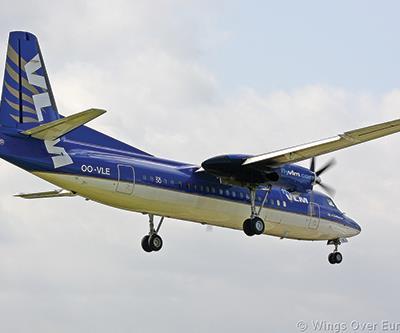
The Fokker 50’s thermoplastic composite outer wing-trailing-edge skin panel replaced an epoxy-based panel that did not have sufficient temperature resistance for its location between turboprop engine exhaust ports and the wing flaps. Source: Wings over Europe.com


Today, flying thermoplastic composite flight-critical parts include the main wing leading edges on the Airbus (Toulouse, France) A380 superjumbo passenger jet and the A340-500/600-series airliners that preceded it, as well as the Gulfstream Aerospace (Savannah, GA, US) G650’s rudder and elevators. Aerospace thermoplastic composites application developers include Fokker Aerostructures (Papendrecht, The Netherlands, now part of GKN Aerospace, Redditch, UK) — the key manufacturing partner in the Airbus wing leading edge effort — plus Technocampus (Nantes, France; read more located under “Editor’s Picks” on the top right), Premium AEROTEC GmbH (Bremen, Germany) and DAHER-Socata (Tarbes and Nantes, France), among others.
But thermoplastic composite aircraft parts have accrued some history, too: Applications date back to the US military’s F-22 jet fighter’s landing-gear and weapons-bay doors in the 1980s. And Arnt Offringa, director of R&D at Fokker Aerostructures, recalls that in the early 1990s, Fokker developed a thermoplastic composite outer wing trailing edge skin panel or shroud (two per aircraft, left and right) for the Fokker 50 passenger aircraft.
The panels were located behind the wing torsion box, in front of the flaps and right next to the turboprop engine exhausts (see photo). They were curved parts, 2.15m long by 0.46m wide and made with carbon fiber/ polyetherimide (PEI) prepreg supplied by TenCate Advanced Composites (Nijverdal, The Netherlands). The panels flew on all Fokker 50 aircraft, replacing a more conventional thermoset composite. Says Offringa, “The epoxy-based composite that was used at first did not have the temperature resistance needed, right next to the engine exhaust.”
This short article is a Side Story to a feature article titled, "Thermoplastic wings on the horizon?" To read the main feature, click on its title under "Editor's Picks" at top right.
Related Content
-
Cutting 100 pounds, certification time for the X-59 nose cone
Swift Engineering used HyperX software to remove 100 pounds from 38-foot graphite/epoxy cored nose cone for X-59 supersonic aircraft.
-
An outlook on China’s carbon fiber market
This analysis sheds additional light on the insights, observations and data shared in ATA Industrial Group’s carbon fiber market report on global and Chinese industry players.
-
Prepreg compression molding supports higher-rate propeller manufacturing
To meet increasing UAV market demands, Mejzlik Propellers has added a higher-rate compression molding line to its custom CFRP propeller capabilities.


