
Composites Index contraction slowed in August
The Index indicated expansionary readings in production, supplier deliveries and exports, but was pulled lower by employment, new orders and backlogs.
.jpg;width=70;height=70;mode=crop;format=webp)
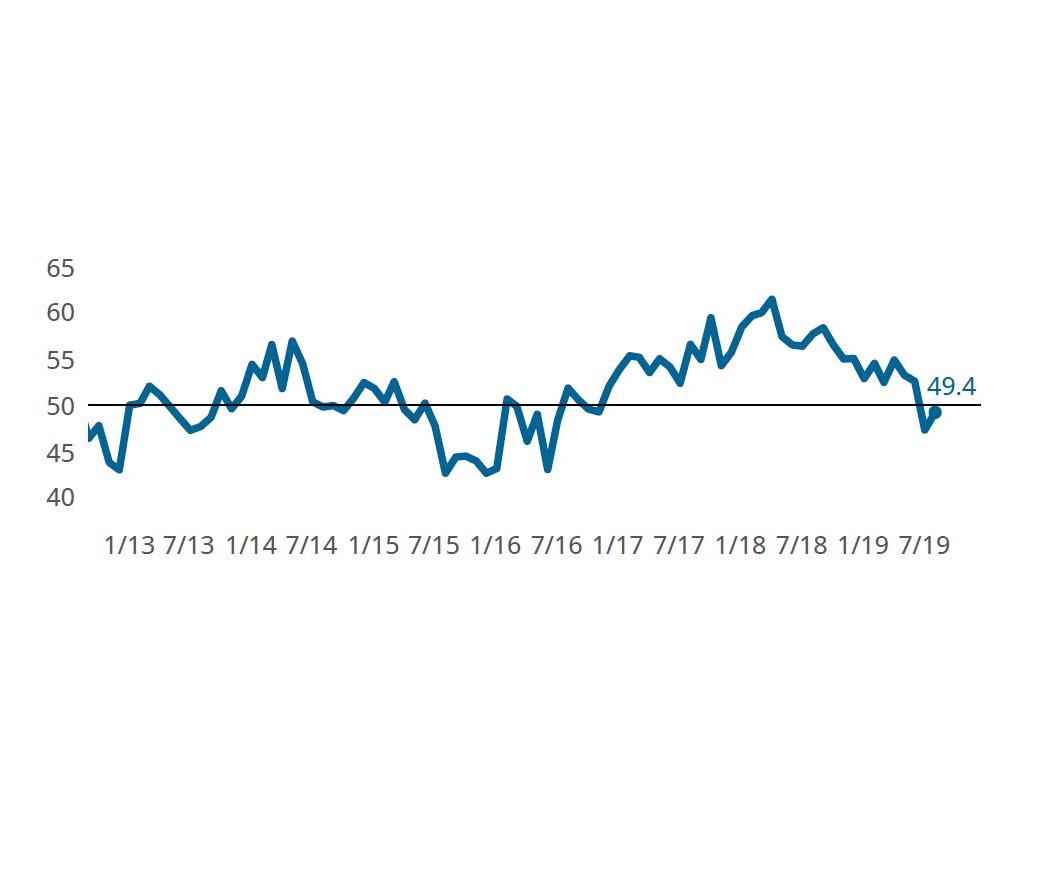
Slowing contraction. The Composites Index registered slowing contraction during the month as the Index moved higher towards a ‘no change’ reading of 50. Exports and production along with supplier deliveries all reported expanding activity.
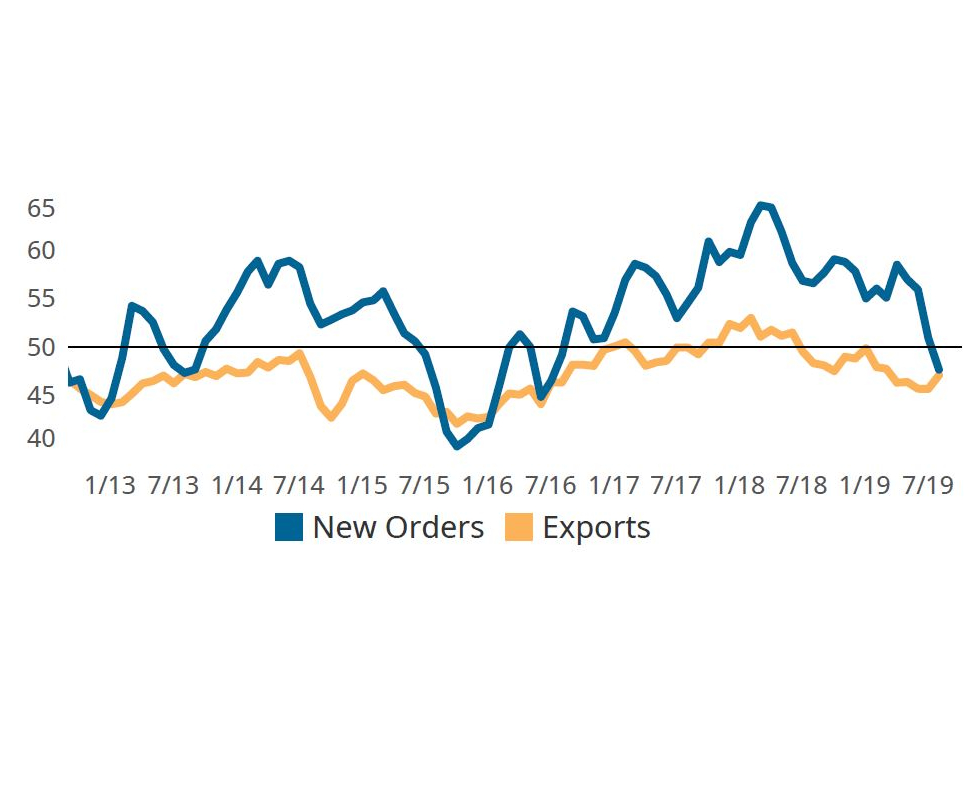
Exports supported total new orders for first time since 2017. Exports expanded faster than new orders for the first time since mid-2017, which has rarely occurred since records began in 2011. Increasing trade tensions since 2018 have depressed export activity, making fabricators more dependent on domestic orders.


The Composites Index registered 49.4 in August, which indicates slowing contraction over the prior month. Index readings above 50 indicate expanding activity, while values below 50 indicate contracting activity. The further away a reading is from 50, the greater the change in activity. Gardner Intelligence’s review of the underlying data revealed a surprise expansionary reading in export business activity in August. The Index — calculated as an average of its components — was raised higher by expansionary readings in production, supplier deliveries and exports, and was pulled lower by employment, new orders and backlogs.
The August Index indicated an unusually large eight-point spread between production and new orders. Since records began in 2011, the spread between new orders and production has often been very small, as fabricators often quickly adjust production to new orders. The combination of increased production despite weak new orders activity was apparent in August’s backlog data, which reported another month of contraction.
Lastly, it should be noted that August’s combination of an expansion in exports coupled with a quickening contraction in total new orders is rare, as it suggests that domestic demand for composite goods contracted during the month. Since mid-2018, the Composites Index has regularly reported the opposite, that contracting exports have typically been offset by expanding domestic demand.
More information about the Composites Fabricating Index can be found at http://www.gardnerintelligence.com/
Related Content
-
GFRP Tech launches South African facility for GFRP rebar production
Said to be the first of its kind in this region, GFRP Tech will manufacture, test and supply flagship EnviraBar and EnviraMesh products to support South Africa’s infrastructure modernization.
-
BrainDrip scales up composite technology to meet current, future energy infrastructure needs
Next-generation composite pipe development with embedded, AI-enhanced health monitoring will modernize new and aging pipelines globally.
-
UNIST develops CFRP droplet-based electricity generator
Researchers have validated the S-FRP-DEG system’s ability to accurately convert the impact of falling rain into electrical signals, achieving an autonomous power source for drainage control.


