
SeaTwirl is granted European patent for offshore wind turbines
SeaTwirl, a Swedish floating offshore wind turbine developer, says the patent helps protect technical solutions that make its wind turbines cheaper to build and maintain.
.jpg;width=70;height=70;mode=crop;format=webp)


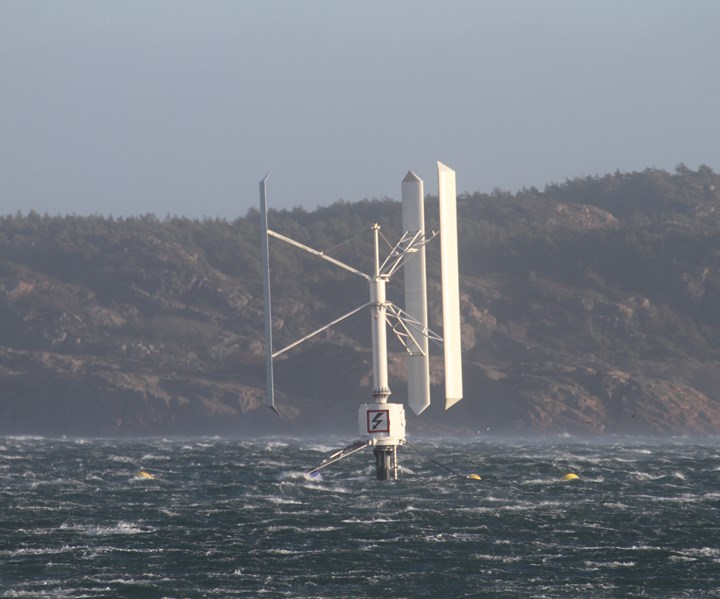
Source | SeaTwirl


Floating offshore wind turbine developer SeaTwirl (Gothenburg, Sweden) reported on Jan. 14 that it will be granted a patent for a divisible wind by turbine by the European Patent Office (EPO). SeaTwirl has already been granted the same patent in Sweden, the U.S. and China.
According to the company, the patent protects a solution where the wind turbine is divisible above and below the house that holds the generator and bearing, which means that the entire generator and bearing housing can be replaced just above the water surface by boat. It reduces costs for both installation and maintenance and minimizes downtime.
SeaTwirl is working strategically to build a broad patent portfolio. By protecting technical solutions that make the wind turbines cheaper to build and maintain, the company plans to strengthen its market position. The corresponding patent was approved in Sweden in 2017 and in the U.S. and China in 2019. The notice from the European Patent Office is dependent on SeaTwirl paying the required fees.
In a project first announced in 2018, SeaTwirl aims to become a leader in floating wind power and a key for reaching that goal is cost-efficiency through a robust design, meaning lower maintenance and a possibility to place the turbines in areas that may have rough conditions while still being excellent sources of wind.
As a part of this effort, SeaTwirl is developing a design methodology for fatigue assessment of vertical axis wind turbines, with a focus on the turbine and its composite material and structure.
“We’re happy to now be able to broaden our patent protection for this technical solution that reduces the cost of service and maintenance by simplifying installation and replacement of entire modules,” says CEO Gabriel Strängberg.
Related Content
-
Ceramic matrix composites: Faster, cheaper, higher temperature
New players proliferate, increasing CMC materials and manufacturing capacity, novel processes and automation to meet demand for higher part volumes and performance.
-
Hybrid composite architecture enables rigid wind propulsion solution for maritime decarbonization
GT Wings’ AirWing leverages aerospace engineering principles combined with hybrid glass and carbon fiber composite construction to deliver up to 30% fuel savings through compact, deck-compatible wind propulsion.
-
Plant tour: Hexagon Purus, Kassel, Germany
Fully automated, Industry 4.0 line for hydrogen pressure vessels advances efficiency and versatility in small footprint for next-gen, sustainable composites production.


