
Arrival announces plans to establish first U.S. microfactory
The South Carolina-based microfactory will be the London-based company’s approach to bring down the cost of electric vehicles and accelerate mass adoption. Operations are expected to begin Q2 2021.


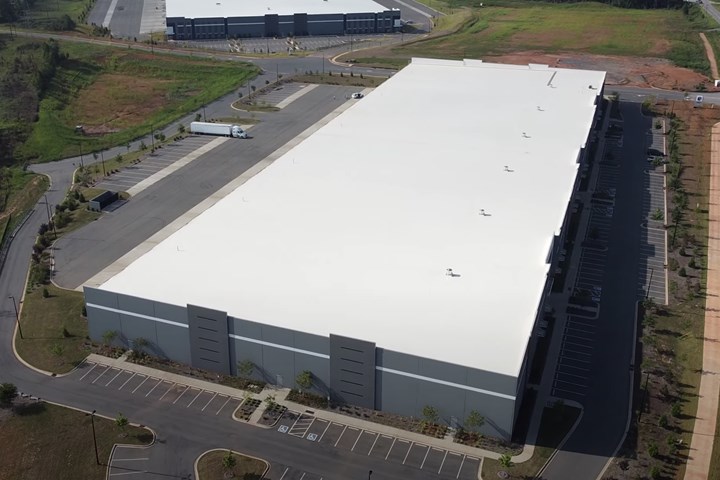
Photo Credit: Arrival
Arrival (London, U.K.), a global electric vehicle company, announced on Oct. 13 plans to establish its first U.S. microfactory in Rock Hill, South Carolina. The $46 million investment into the region will create 240 new jobs.
Founded in 2015, Arrival works with cities around the world to create zero-emission mobility solutions for today's transportation challenges. The company says its South Carolina operations will use a new cell-based assembly method to produce vehicles rather than a traditional automotive production line, allowing the production of any vehicle from Arrival’s portfolio. With this model, Arrival says it occupies a smaller footprint, hence the name "microfactory." The microfactory design is key to Arrival’s approach to bringing down the cost of electric vehicles to accelerate mass adoption.


According to Arrival, the company’s new operations will initially focus on building electric buses with Arrival's vertically integrated approach to vehicle production, which uses the company’s in-house developed components, materials and software. Materials for the electronic vehicles will be sourced from surrounding regions through a localized supply chain, which will also help to reduce the environmental impact; currently, Arrival’s buses incorporate composites.
Arrival is expected to begin operations in the second quarter of 2021, with the start of production in the fourth quarter of 2021. Individuals interested in joining the Arrival team should visit the company’s hiring website at www.readysc.org/arrival.
The Coordinating Council for Economic Development has approved job development credits related to this project.
Related Content
-
Alformet white paper examines untapped potential of TPC electric motor sleeves
The resource, geared toward electric motor and composites specialists, discusses rotor and stator sleeve design considerations, manufacturing insights and more.
-
SMC composites progress BinC solar electric vehicles
In an interview with one of Aptera’s co-founders, CW sheds light on the inspiration behind the crowd-funded solar electric vehicle, its body in carbon (BinC) and how composite materials are playing a role in its design.
-
The new Slate truck costs less than $20,000, uses PP composite body panels
Stylish vehicle EV pickup model is supported by a simplified manufacturing process. It is also capable of customization from two seats to five seats.


