


“We were building molds using CNC machined polyurethane foam and hand layup GRP (glass fiber-reinforced plastic), but that approach involved too much labor and waste,” explains György Juhász, owner of Rapid Prototyping (Budapest, Hungary), which bought a CEAD Robot Extruder in December. “We are now 3D printing molds using 30% short glass fiber-reinforced polypropylene and cutting our labor time by 50%.”

Rapid Prototyping assisted with the development of Como Yachts and Narke, both designed by naval architects Akos Reder and Tamas Reder. SOURCE | Como Yachts.
Juhász began working with composites as a boatbuilder. His projects include Como Yachts and the Narke Electrojet, which claims to be the world’s first all-electric personal watercraft in series production. “In Hungary, you cannot use petroleum-based fuels on any lakes, and we have the second largest lake in Europe,” he explains. “We are developing more electric boat models for companies. I needed a faster, cheaper way to create plugs and molds for these projects.”


The CEAD Robot Extruder was Juhász’ Christmas present last year. “I already had a 5-axis CNC machine,” he says, “so we just bought the Robot Extruder print head and attached it.” The CNC machine measures 4850 by 2635 by 1460 millimeters and uses stepper motors with Mach3 motion controller software. Designed and built by Juhász six years ago, it was available to convert to a 3D printer when he purchased a new Hungarian-built CNC system last year to take over milling and machining.

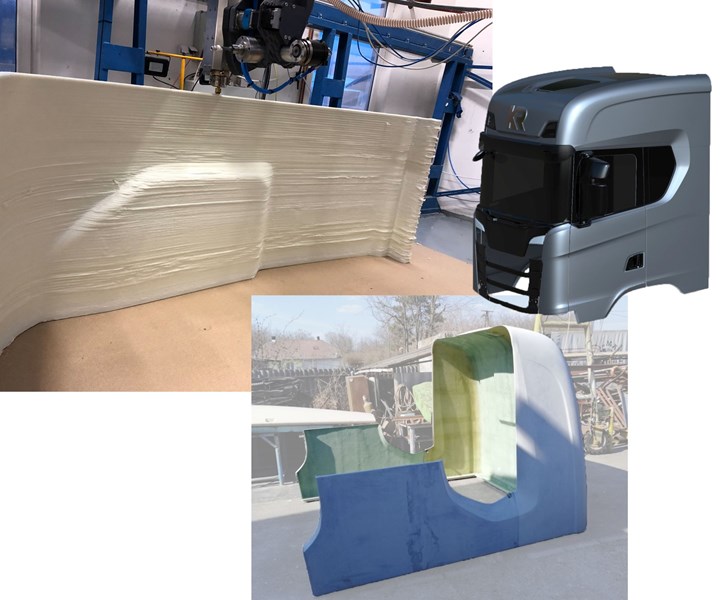
Rapid Prototype 3D printed the composite mold used to produce a composite shell structure, which will be transformed by its customer, Krismar, into a customized heavy truck sleeper cab. SOURCE | Krismar.
One of the first projects completed with this new 3D printing system is a fiberglass mold for a composite sleeper cab for custom truck and trailer manufacturer Krismar (Waardamme, Belgium). “This is quite a big component, measuring 2550 by 2200 by 1200 millimeters,” says Juhász. “We wanted to print the maximum thickness possible in order to avoid warping and deformation when cooling down.” The 30-millimeter thickness was printed in two layers of 15 millimeters each and used almost 400 kilograms of glass fiber-reinforced polypropylene pellets.
The mold was printed in four pieces, including separate left and right sideskirts. “We CNC milled the molding faces of each piece separately,” he explains, “and then screwed and clamped them together before applying sandable gelcoat and hand-laminating with four layers of 300 grams/square meter chopped strand mat and polyester resin.”
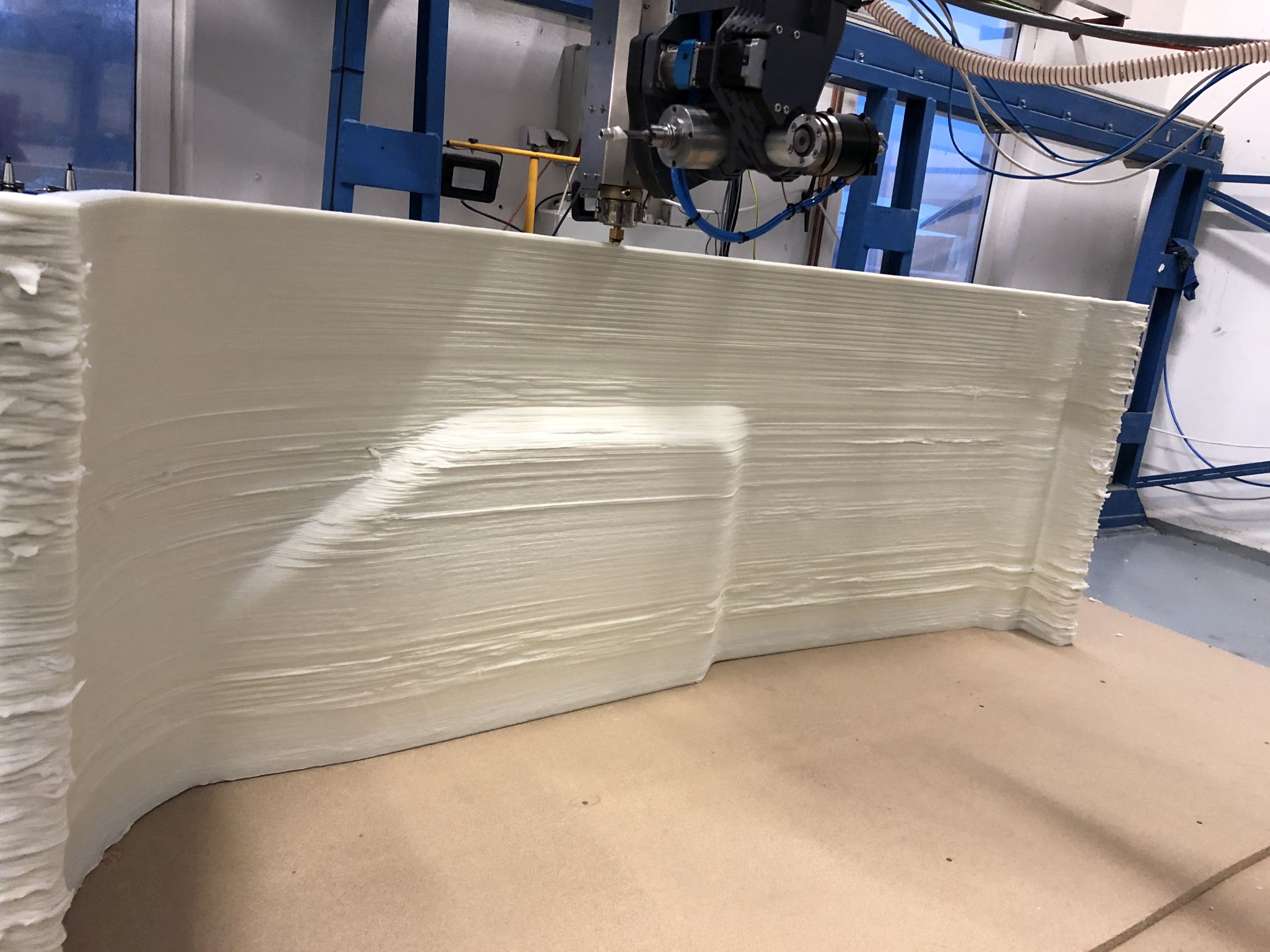
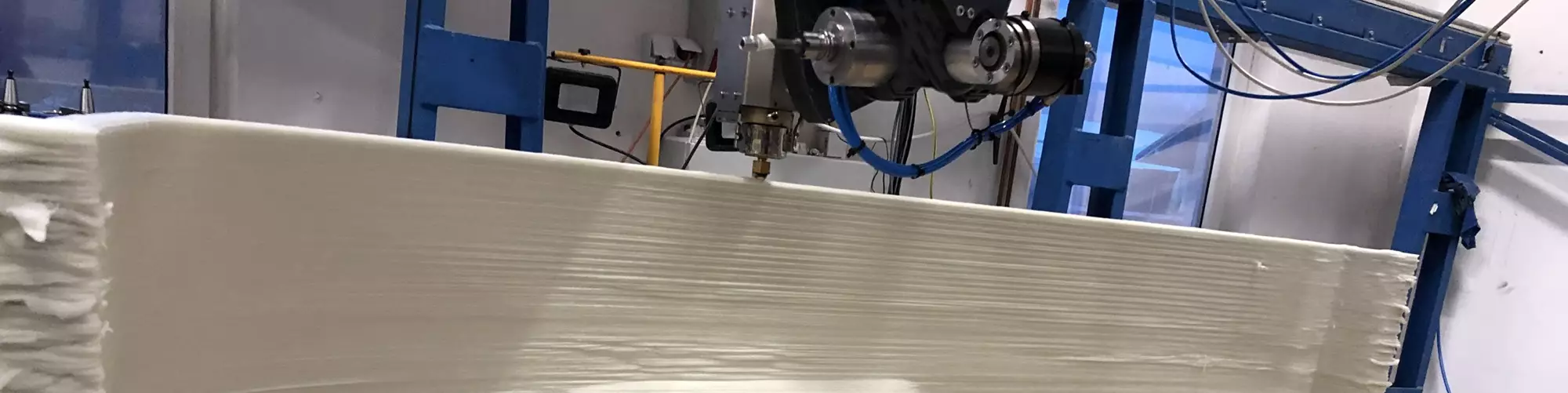
Rapid Prototyping printed the mold using its CEAD Robot Extruder mounted into a CNC machining system.
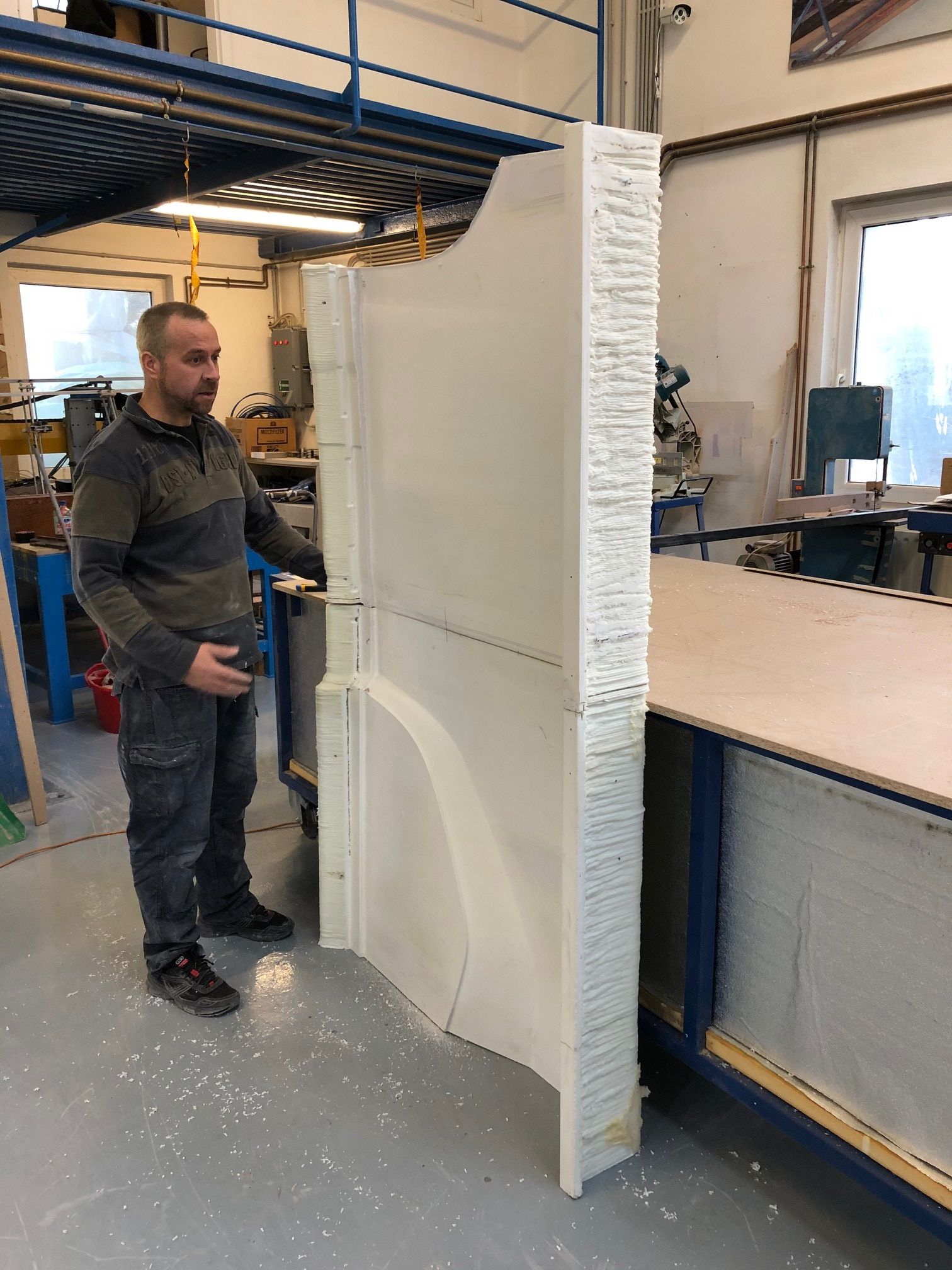
The mold was printed in four pieces, including right side piece and left side piece (shown here).
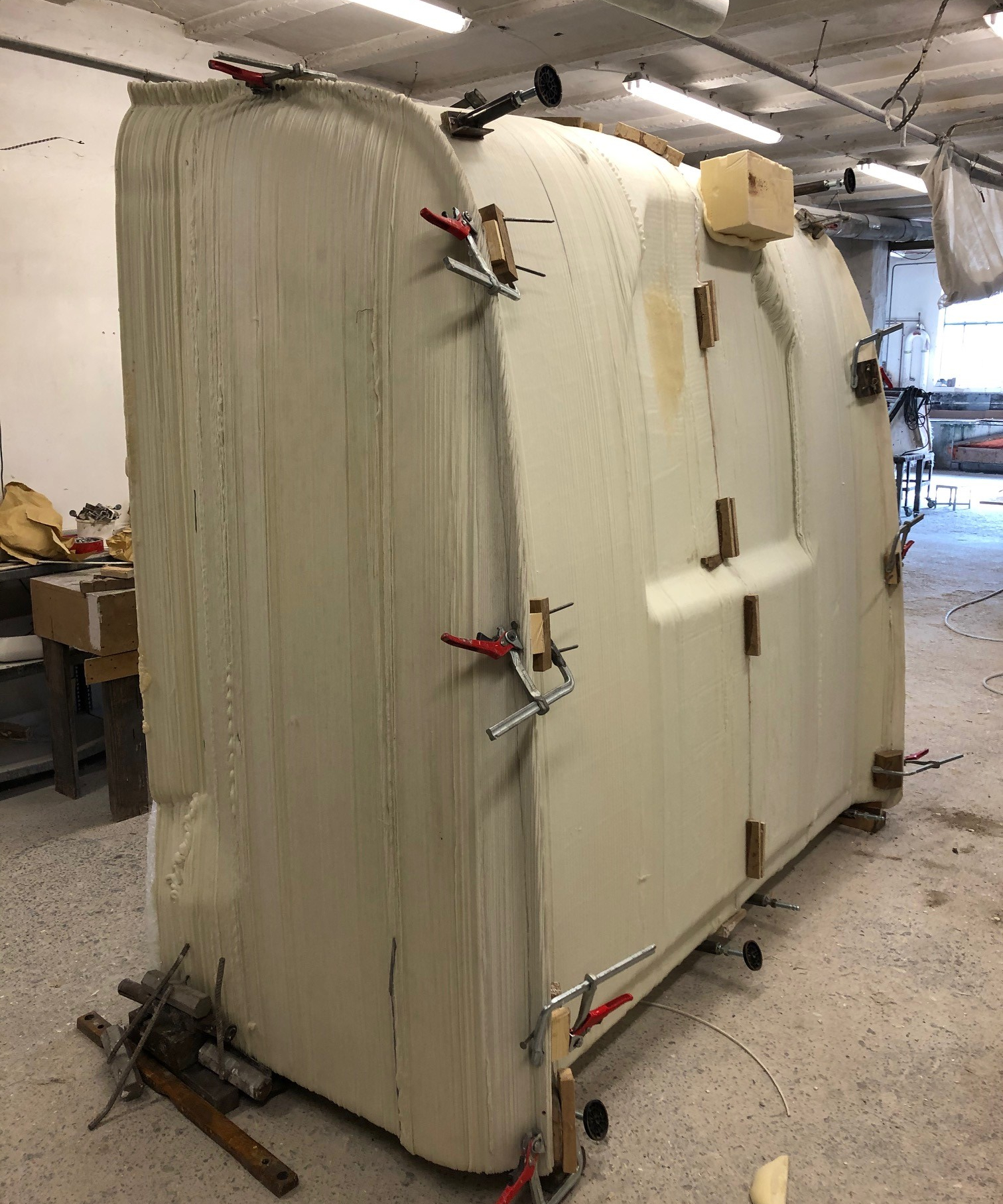
After each piece’s molding surface was machined, the four pieces were screwed together and clamped to provide a surface for laminating.
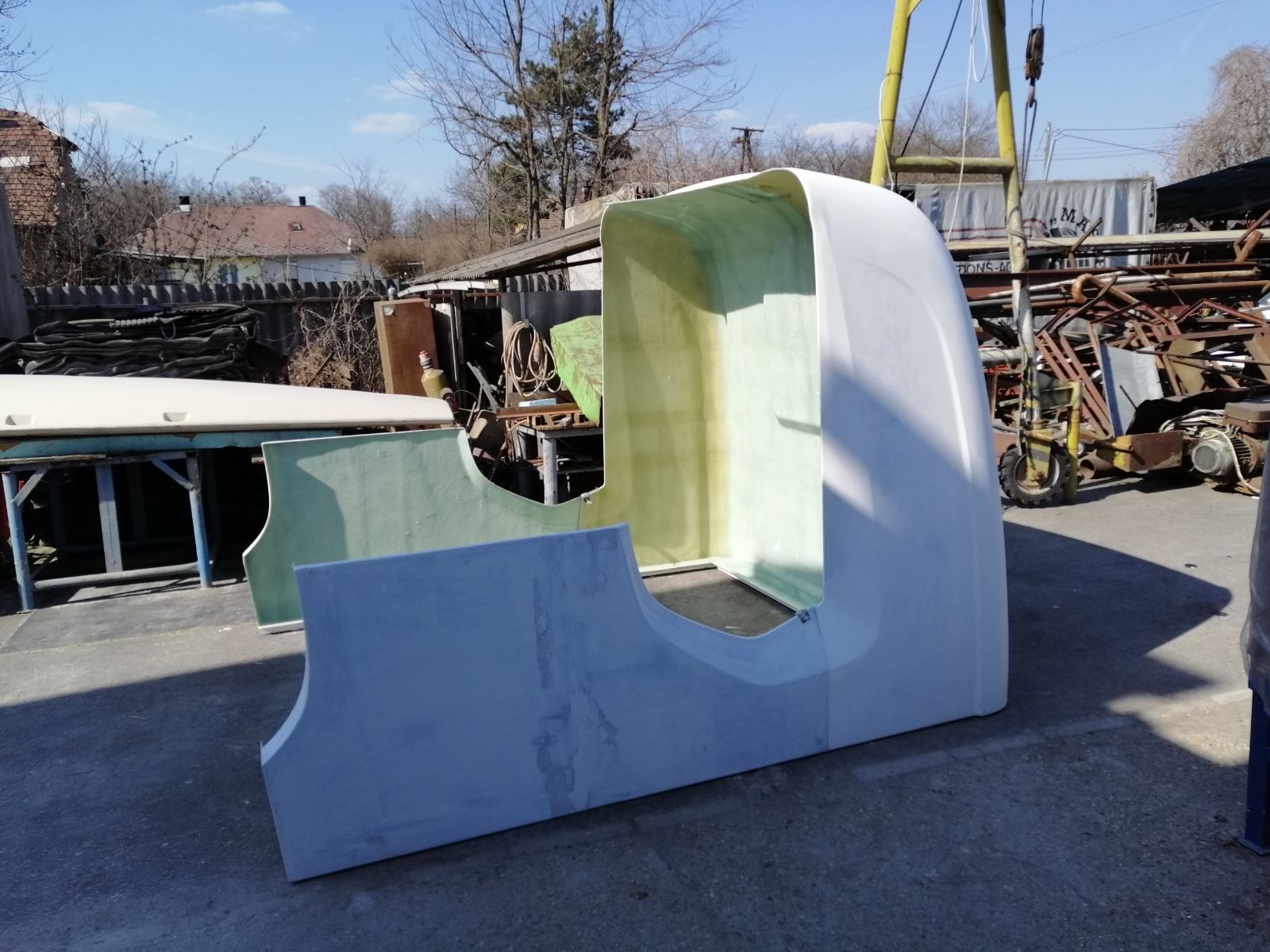
The sleeper cab shell was then laminated onto the 3D-printed mold surface.
Though the project was successful and 3D printing saved time, Juhász admits there is a lot to learn. “One of the biggest challenges with this approach is after the printing we need to find a 0 point (origin) with the milling machine and software. We do the printing vertically and the milling horizontally — so, the starting point and the direction of each operation is different.” It also seems expensive to print solid instead of using an infill? “For this project, we were at the beginning,” he explains. “An extruder head using pellets is cheaper than a large-format filament printer, but not as easy for printing infill. But we are planning to print a piece of furniture with infill in the future, so we will adapt the lessons learned to our tool making.”


Related Content

Next-gen fan blades: Hybrid twin RTM, printed sensors, laser shock disassembly
MORPHO project demonstrates blade with 20% faster RTM cure cycle, uses AI-based monitoring for improved maintenance/life cycle management and proves laser shock disassembly for recycling.
Read More
Active core molding: A new way to make composite parts
Koridion expandable material is combined with induction-heated molds to make high-quality, complex-shaped parts in minutes with 40% less material and 90% less energy, unlocking new possibilities in design and production.
Read More
Carbon fiber, bionic design achieve peak performance in race-ready production vehicle
Porsche worked with Action Composites to design and manufacture an innovative carbon fiber safety cage option to lightweight one of its series race vehicles, built in a one-shot compression molding process.
Read More
Optimized rib-reinforced hollow composites via printed molds
Addyx topology optimization and water-soluble mandrel enables simultaneous rib and skin layup for one-shot, high-strength, lightweight structures.
Read MoreRead Next

Thermoplastic composite materials and processing interactions
Selection of product material formats and their interactions with various process methods heavily influence a final TPC part’s properties and fabrication options.
Read More
Cutting engine weight via thermoplastic composite guide vanes
Greene Tweed replaces metal stator vanes with its DLF material co-molded with a metal leading edge that meets performance, cost and high-rate production targets while cutting 4 kg per engine.
Read More
Composite trends gaining industrial traction for 2026
Startups & Investors topics over the last year show the industry is rapidly gaining maturity while benefiting from macro-trends in circularity, AI and TPC and high-rate manufacturing, all potential gains for investors.
Read More