
YG-1 solid-carbide routers designed for faster composites machining
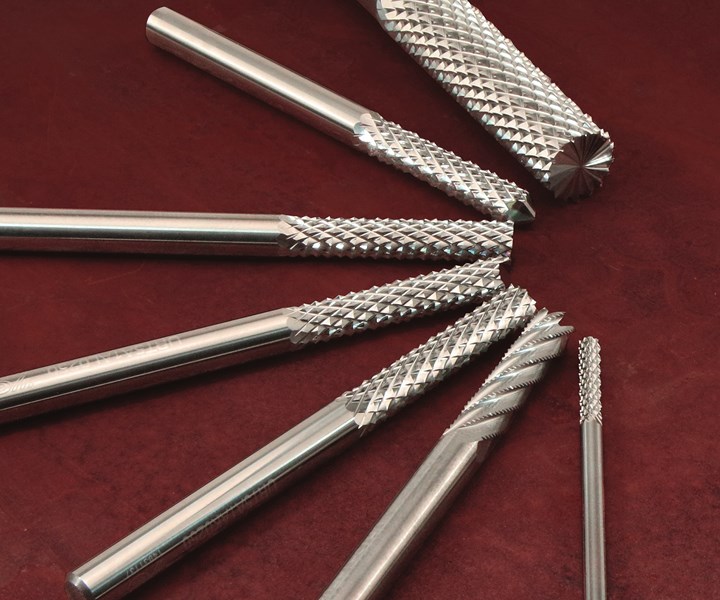
Four new solid-carbide fiberglass routers have been launched for CNC or hand routers to handle everyday composite machining.
.jpg;width=70;height=70;mode=crop;format=webp)


Source | YG-1
YG-1 (Incheon, South Korea) has launched four new solid-carbide fiberglass routers for CNC or hand routers to handle every machining for fiberglass and other high-performance fibers.
The company says the new routers are optimized in composition, cutting angles, flute strength and stability for longer life and lower cost per part. Four distinctive cutting ends make these fiberglass/composites routers ideal for roughing, finishing, edge trimming, slotting, grooving, drilling or interpolation, achieving the same quality results on a CNC machining center or hand routing, YG-1 says.
The four routers include:
- Type I (NC end). Mostly for side milling, roughing or finishing passes for high-quality finish
- Type II (burr end). Suited for plunging without damaging side flutes
- Type III (mill end). Best for surface milling molds or grooving with surface finish requirements
- Type IV (drill end). Use as a router and a drill; said to be suited for interpolation to achieve final hole diameter or slotting with a corner radius
More applications include machining in carbon fiber, Kevlar and other aramid blends, natural fiber-based composites and thermoset resin/thermoplastic blends.
YG-1’s router designs are intended to resolve the challenges of machining composites and stacked materials, enabling shops and production facilities to help customers maximize the cost and weight reductions and other benefits of composites use. YG-1 says its routers are made with best-in-class solid carbide and feature special CVD coating for superior cost and time savings. The company’s engineering teams developed the routers’ double-angle point geometry specifically to counteract or eliminate the machining problems typically encountered with composites. The CVD coating is said to increase abrasion resistance from the fibrous materials and extends tool life by a factor of five to 10, at minimum.
Combined with guidance margins and open flutes, these specialized routers are also said to drill holes with no dust jams or pressure overload. Suited to manual hole-making, countersinks and counterbores, hand drilling reduces delamination and fiber pullout, and increases opportunities for dust-free drilling, improving operator comfort, health and safety.
The company’s fiberglass/composite routers are available in a range of sizes, including market standards and specials designed for unique applications.
Related Content
-
Advancing mold release technology for aerospace composites manufacturing
Chem-Trend’s water-based, silicone-free mold release agent eliminates release curing time and provides easy tool cleanup.
-
Understanding the difference between bonding and welding
Composites bonding and welding are two similar but distinct processes that overcome challenges related to fasteners or drilling. Here are some resources to get you started.
-
Carbon fiber, bionic design achieve peak performance in race-ready production vehicle
Porsche worked with Action Composites to design and manufacture an innovative carbon fiber safety cage option to lightweight one of its series race vehicles, built in a one-shot compression molding process.


