
The changing shape of future aircraft
"Morphing" is no longer just for the birds.


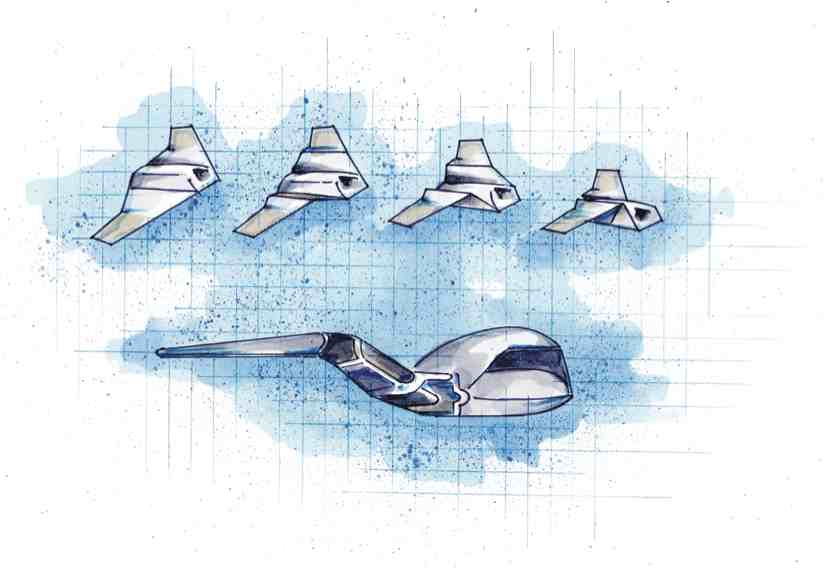
Lockheed Martin's (Palmdale, Calif.) half-span wind tunnel model of a morphing wing, developed during the DARPA Morphing Aircraft Structures (MAS) program. Top left to right, the drawings show the wing in "loiter" position, and then the "morph" stages to "attack" position. Larger image shows the fold areas where flexible skins enable changes in wing shape. Illustration: Karl Reque
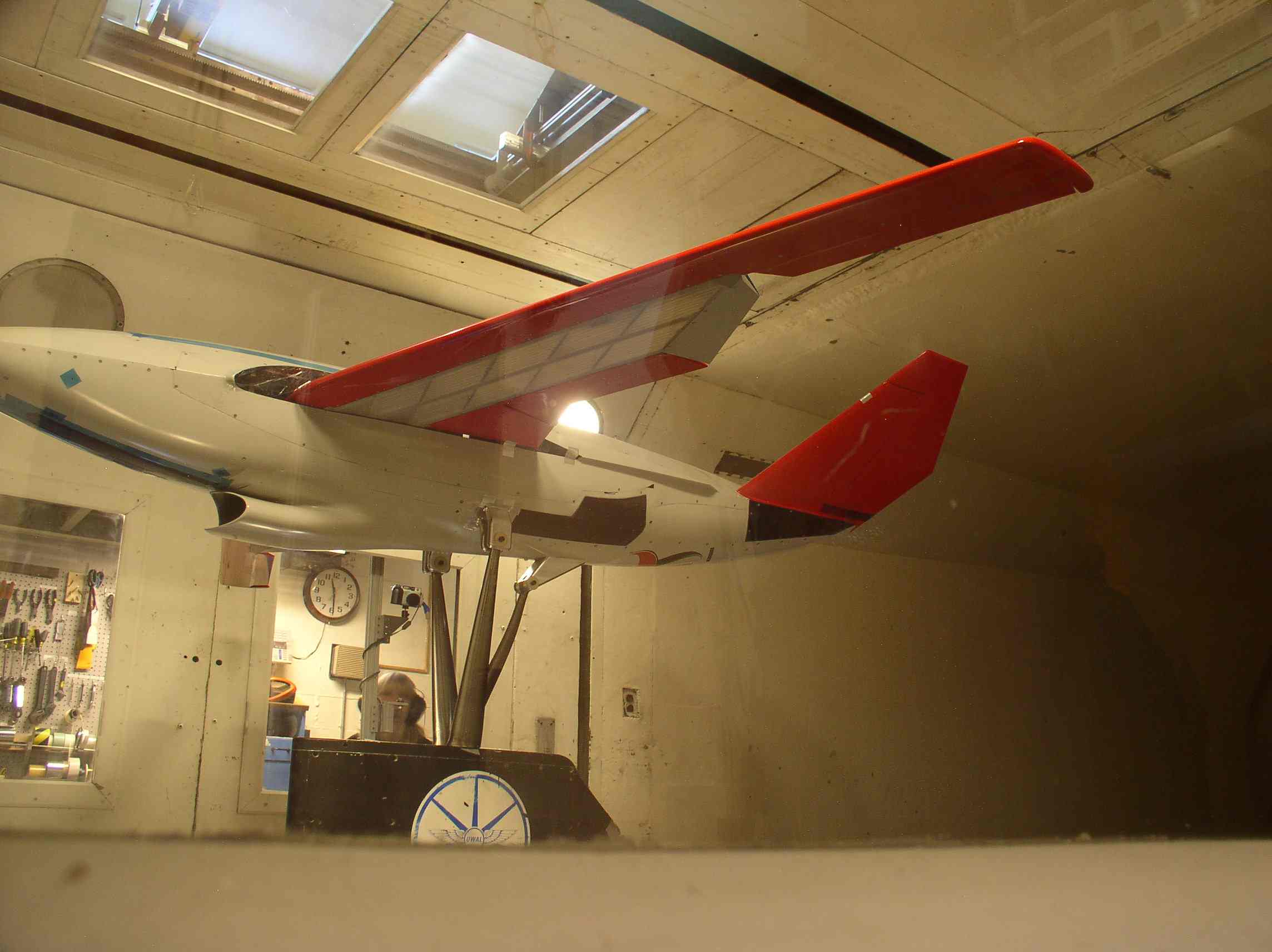
NextGen Aeronautics' (Torrance, Calif.) Batwing morphing unmanned prototype changes wing sweep and chord length (note changed wing shape in following photo). The design uses an aluminum articulated substructure that moves with a scissors-like motion, powered by small hydraulic actuators. A stretchy silicone skin with metal reinforcement accommodates the movement. Source: NextGen
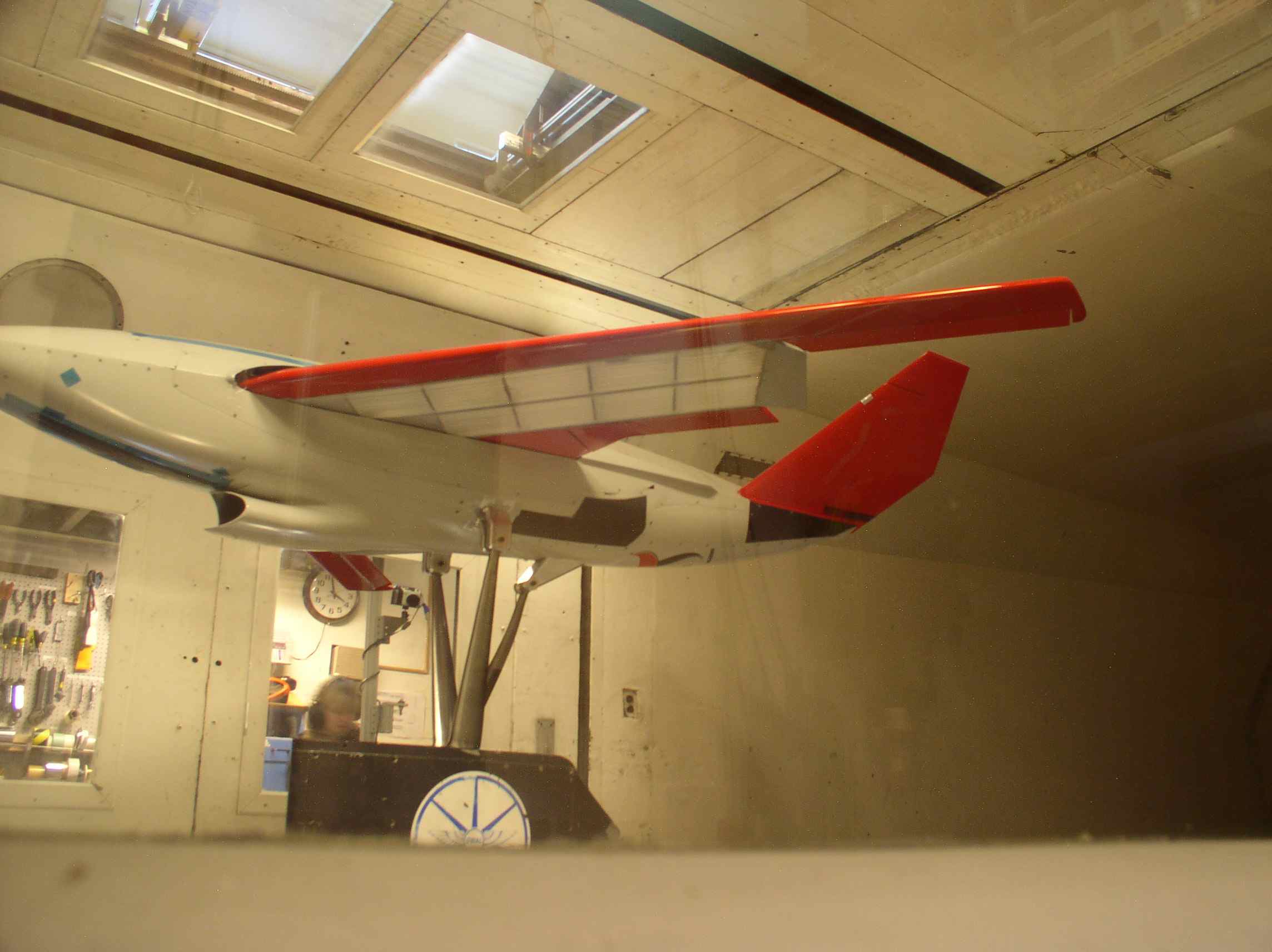
This photo shows NextGen Aeronautics Batwing morphing unmanned prototype's changed wing sweep and chord length. Source: NextGen
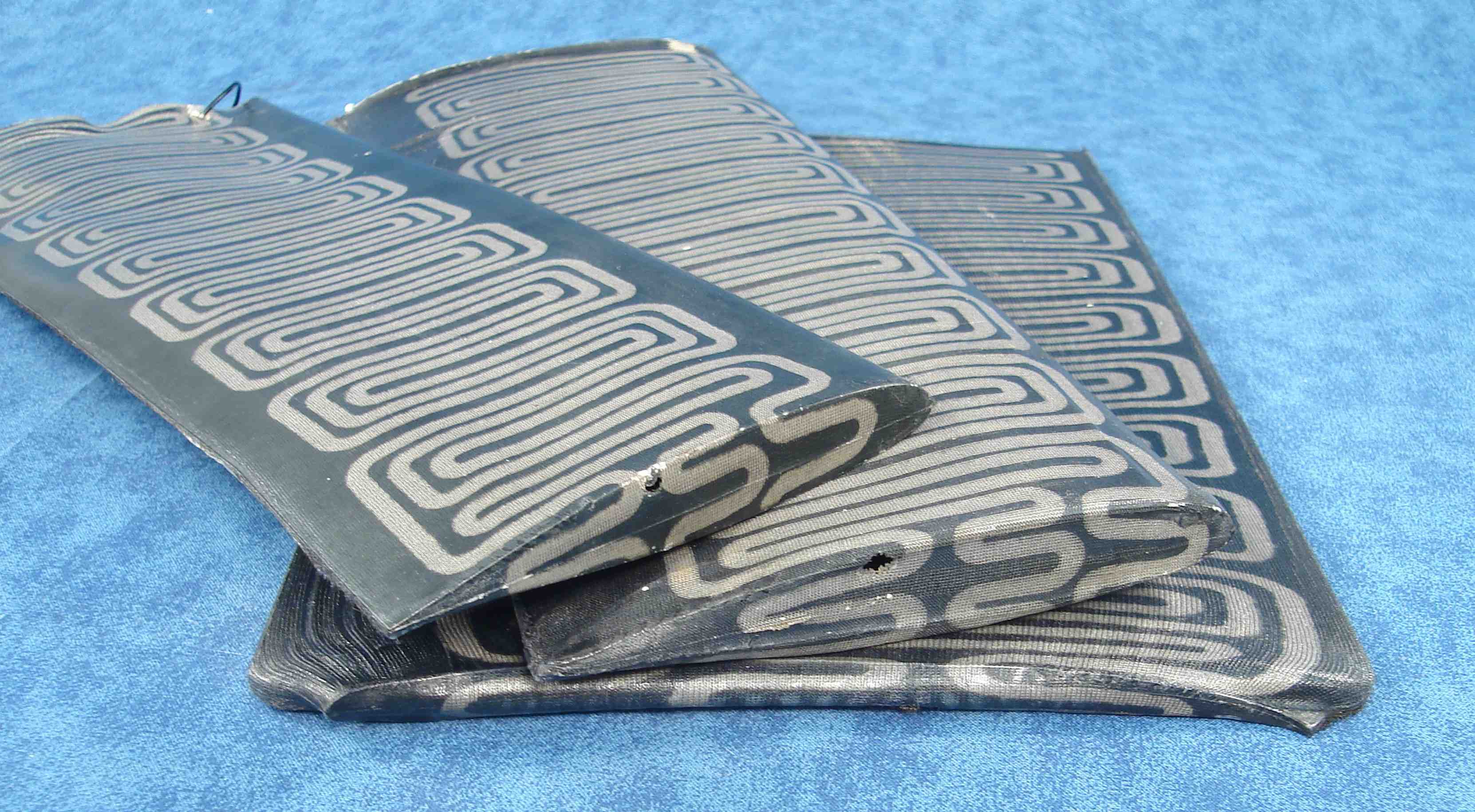
Cornerstone Research Group has developed a shape memory polymer (SMP) wing skin with embedded elastic electrodes that heat the polymer to enable skin elongation as the wing chord length increases. Source: CRG
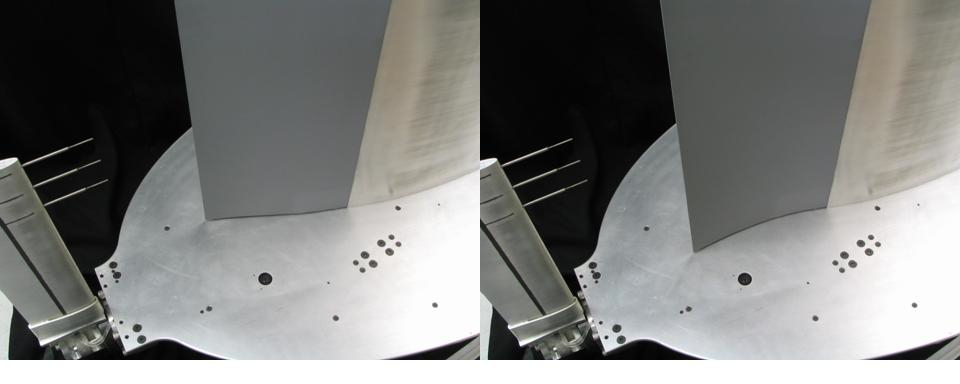
The Air Force Research Laboratory's work on adaptive compliant wing structure has focused on morphable leading edge and trailing edge designs for better aerodynamic performance. FlexSys Inc. (Ann Arbor, Mich.) is AFRL's technology partner. Source: AFRL
Design Results:
- Reconfigurabele wing areas that enable infligh changes in aircraft capabilities.
- Shape memory polymers that facilitate wing shape change with the aid of mechnical actuators and either heat or light.
- "Smart" actuators that provide the lightweight mechanisms used to alter wing shape.


Traditional aircraft wing designs create a shape and configuration with optimal performance for a single flight condition. When the vehicle moves away from that set condition, performance can decline dramatically. For example, short, swept wings work best for fast supersonic cruise, but are not efficient when an aircraft is performing high G-force maneuvers at large angles of attack; wide, broad wings are great for high-altitude loiter, but don't handle high speeds at lower altitudes.
"The next level is a multipoint or even an infinite point design," says Ernie Havens, Cornerstone Research Group Inc.’s (CRG, Dayton, Ohio) chief engineer. "A single morphing aircraft could do the job of several, because it would have large reconfigurable areas that change shape in flight, to change the mission." That reality may not be far off — at least for unmanned aerial vehicles (UAVs). Research has been ongoing for at least a decade into shape-changing designs, at the Air Force Research Laboratory (Wright-Patterson Air Force Base, Ohio), the Defense Advanced Research Projects Agency (DARPA, Arlington, Va.) and at military contractors Lockheed Martin (Palmdale, Calif.), Northrop Grumman (Los Angeles, Calif.), NextGen Aeronautics (Torrance, Calif.), Raytheon (Waltham, Mass.), Vought Aircraft Industries (Dallas, Texas) and at Cornerstone Research Group.
Shape-changing concepts aren't entirely new: the Wright brothers conceived of wing warping for roll stability in their 1903 Wright Flyer aircraft. "Swing-wing" designs — planes with moveable wings — have been employed on a handful of aircraft, including the Grumman F10F Jaguar; the General Dynamics F-111, which emerged from the Tactical Fighter Experimental program in the 1960s; several Russian aircraft, such as the Sukhoi Su-17; and the B-1B Lancer bomber and F-14 Tomcat, which still fly today. While most had heavy and complex mechanical pivoting systems, the F-14 swing-wing is 5,000 lb/2272 kg lighter than its original fixed wing design and provides a real aerodynamic advantage.
How morphing works
In contrast to a mechanically-hinged swing-wing, state-of-the-art morphing implies flexibility in the wing structure itself, says AFRL's Adaptive Structures team leader Brian Sanders: “We define it as shape control for aerodynamic performance — and it has to be a significant, unconventional shape change to the structure.” DARPA's Dr. Terry Weisshaar, program manager for Morphing Aircraft Structures (MAS) adds, "Large-area change and a new shape are required — changes larger than 50 percent of total aircraft area."
DARPA began a three-phase program in January 2003 to design, build and control active, variable-geometry wing structures that can change substantially in flight, says Weisshaar. AFRL's Multi-Disciplinary Technologies Center of Excellence has been investigating the technology even longer. Both groups agree that a morphing wing requires three specific elements: 1) A movable substructure with an array of linkages, 2) flexible, compliant wing skins to cover the joints, and 3) actuators to create movement. Reliable computer control of the various elements is key for rapid and accurate change, notes Weisshaar. Some type of "activator" — in current concepts, normally heat, but potentially light or some other stimulus — starts the process; small "actuators" that push, pull or rotate in response provide the force to move the substructure; sensors detect when the correct shape has been achieved; and locking mechanisms hold the wing in the new shape. Concepts include wings that morph in chord, sweep, span and thickness.
Moving the substructure without resorting to heavy, bulky hydraulic systems is a huge challenge. Numerous research programs at AFRL, DARPA and NASA Langley Research Center are zeroing in on small, lightweight piezoelectric or electro-active polymer (EAP) actuators, which have the ability to transform electrical energy into motion. EAPs expand when heated with an electrical current, a phenomenon that can be exploited to create small movements throughout a structure. Sanders is careful to point out that while EAPs and other "smart" materials, such as lead zirconium titanate (PZT), can act as actuators, "we're not just going to distribute PZT patches over a wing — the idea has been tried and does not work. Our design solutions for distributed actuation have progressed and we are now using actuators that have appropriate force and stroke."
"There's definitely a need for new materials," says AFRL's Jeff Baur, senior material engineer in the materials and manufacturing directorate, particularly for wing skins. Stretchy elastomers like rubber, while flexible enough, are too soft to handle high-pressure air loads without some type of reinforcement to prevent puckering. "Ideally, the reinforcement could be 'turned off' during shape change so that less actuator power would be needed to deform the skin," notes Baur. "It's a key challenge in this research."
One promising material for flexible skins is reinforced shape memory polymer (SMP). SMPs consist of "multiphase" thermoset polymer networks that can be elongated up to 200 percent into a new shape when subjected to heat. If restrained while cooling, it retains the elongated shape. When reheated above a specific, tailorable “trigger temperature,” the material relaxes to its original shape, due to the elastic energy stored during the temporary deformation.
The process is possible because of the controlled mix of proprietary monomers and reactive modifiers. A polymer's crosslinking density can be varied from a dense, rigid thermoset to something approaching a linear thermoplastic. The degree of crosslinking determines the strain recovery properties and the Tg of the material. CRG has, over the past several years, developed families of SMPs, trademarked Veriflex, for a number of applications and offers the material for sale. Reconfigurable wing skins have been a major focus since 2001, says Havens (see "Tooling and toolmaking innovations continue," under "Editor's Picks," at top right, regarding the use of SMPs in another application, as reconfigurable tooling mandrels).
Currently working on DARPA’s MAS project as a partner with Lockheed Martin, CRG has developed a reinforced SMP wing skin that can soften within seconds of heating thanks to small, stretchy electrode heaters embedded within the carbon fiber laminate. The heated, softened skin moves in concert with the underlying substructure joint as it morphs to the desired position and shape. Once cooled in the new, stretched configuration, the polymer “rigidizes” in the new shape. Havens reports that this SMP, used in a wing designed to morph in chord (that is, elongating the distance between leading edge and trailing edge) weighs less than DARPA’s baseline wing design and recent wind tunnel tests have shown that it can deliver 80 percent increased lift. With an SMP-based gel coat, the wing maintains a smooth aerodynamic surface at strains up to 100 percent.
“We’re now working on a new material system that is an order of magnitude faster,” reports Havens. The new system uses light rather than heat as the activating trigger, and softening occurs in micro-seconds, as compared to the several seconds needed for heat-activated SMP. Photo-crosslinking and photo-cleaving are the chemical mechanisms that make it possible, according to Havens.
Making the improbable realistic
All of these elements have come together in actual demonstration projects that show the viability of morphing wings. AFRL's current project is the Adaptive Compliant Wing, whereby a wing's leading edge, trailing edge, or both can be moved during flight to improve aerodynamic performance, says AFRL’s manager for the Adaptive Compliant Wing program Peter Flick. FlexSys Inc. (Ann Arbor, Mich.), AFRL's technology partner on the project, has developed a proprietary design methodology to optimize a structure that deflects to a desired shape when subjected to actuator and aerodynamic forces, says Flick. An elastomeric wing skin material combined with small conventional electro servo-motors create the movements. Wind tunnel tests of Flexsys’ leading edge have shown a 25 percent increase in lift coefficient and a 51 percent increase in lift-to-drag ratio, thanks to small changes to leading edge camber (i.e., the amount of curvature of the wing). One potential application might be sequential wing morphing as fuel is consumed from a commercial jet’s wing tanks, which will reduce aerodynamic drag and save airlines millions of dollars in fuel costs applied over entire fleets, says Flick. Another could be morphable engine nacelles to reduce noise.
Lockheed Martin and NextGen have built working unmanned vehicle models under DARPA's MAS program, which involve much larger changes. Lockheed Martin's folding wing design has hinges driven by large-throw actuators that fold the wing from a flat, loiter-efficient shape into a much smaller, swept wing, within 10 to 30 seconds. Flexible silicone skins reinforced with a metal mesh that can tolerate 150 percent elongation cover the hinge areas. The company has investigated EAP actuators as one source of motive force — an EAP actuator powers a small flap on the wing's inboard leading edge, which deploys against the fuselage to block airflow along the fold, the first use of such an actuator, says Weisshaar. The company also elected to build a larger drone demonstrator of a similar design — the Hunter/Killer UAV — using its own funding. In 2005, Brad Baughman, chief engineer for revolutionary technology programs at Lockheed Martin Skunk Works, described the 21,000 lb/9545 kg drone with a 41-ft/12.6m wingspan that morphs to a 24-ft/7.4m wingspan, with wings tucked against the fuselage. SMP skins from CRG were investigated but not used in the demonstrator, although they are a possibility for future iterations. The drone has not flown, and at present, the project is "on the back burner," according to Skunk Works' spokeswoman Diane Knippel.
The second company downselected by DARPA for MAS Phase II is NextGen, a small, innovative startup that has conceived the Batwing prototype. It uses an aluminum “kinematic articulated substructure” with scissor-like joints moved by a distributed array of small hydraulic actuators that both sweep the wings and change chord length. A stretchy silicone skin reinforced with a proprietary metallic mesh and attached at the scissor joints provides enough rigidity to prevent puckering under air loads. Carbon/epoxy leading and trailing edges give the wings torsional stiffness and help support the flexible skins, says NextGen's president Dr. Jay Kudva: “The skins are designed with in-plane flexibility and out-of-plane rigidity.” His company is in the process of building a small jet-powered demonstrator, which it plans to flight test “very soon,” he notes.
Half-span scale models of both designs were tested at NASA Langley's Transonic Wind Tunnel in September 2005, in high speed, high-pressure conditions above Mach 0.9, says Weisshaar: "These highly loaded wing surfaces repeatedly changed area and aerodynamic performance substantially, under realistic conditions, and demonstrated performance and durability."
Under DARPA's MAS Phase III, both companies will build and fly small protoypes to test extreme maneuvers while morphing. Far-reaching impacts on aircraft design as well as other fields are likely — imagine smart wind turbine blades that can morph to handle changing winds, or shape-changing cars to maximize fuel economy. Concludes Weisshaar: "We do not feel that this concept is size-limited or restricted to unmanned aircraft."


.jpg;maxWidth=300;quality=90;format=webp)
Related Content

PEEK vs. PEKK vs. PAEK and continuous compression molding
Suppliers of thermoplastics and carbon fiber chime in regarding PEEK vs. PEKK, and now PAEK, as well as in-situ consolidation — the supply chain for thermoplastic tape composites continues to evolve.
Read More
A new era for ceramic matrix composites
CMC is expanding, with new fiber production in Europe, faster processes and higher temperature materials enabling applications for industry, hypersonics and New Space.
Read More
Carbon fiber in pressure vessels for hydrogen
The emerging H2 economy drives tank development for aircraft, ships and gas transport.
Read More
Infinite Composites: Type V tanks for space, hydrogen, automotive and more
After a decade of proving its linerless, weight-saving composite tanks with NASA and more than 30 aerospace companies, this CryoSphere pioneer is scaling for growth in commercial space and sustainable transportation on Earth.
Read MoreRead Next

Tooling And Toolmaking Innovations Continue
New products and practices advance the efficiency and economy of advanced composite part production.
Read More
CW’s 2024 Top Shops survey offers new approach to benchmarking
Respondents that complete the survey by April 30, 2024, have the chance to be recognized as an honoree.
Read More