Carbon/epoxy guitar: Competitive in quality and price
When former aerospace engineer and guitar aficionado Ellis Seal set out to design a composite acoustic guitar, he believed the inherent properties of carbon fiber could produce sound, playability, durability and consistency impossible in a wooden instrument.
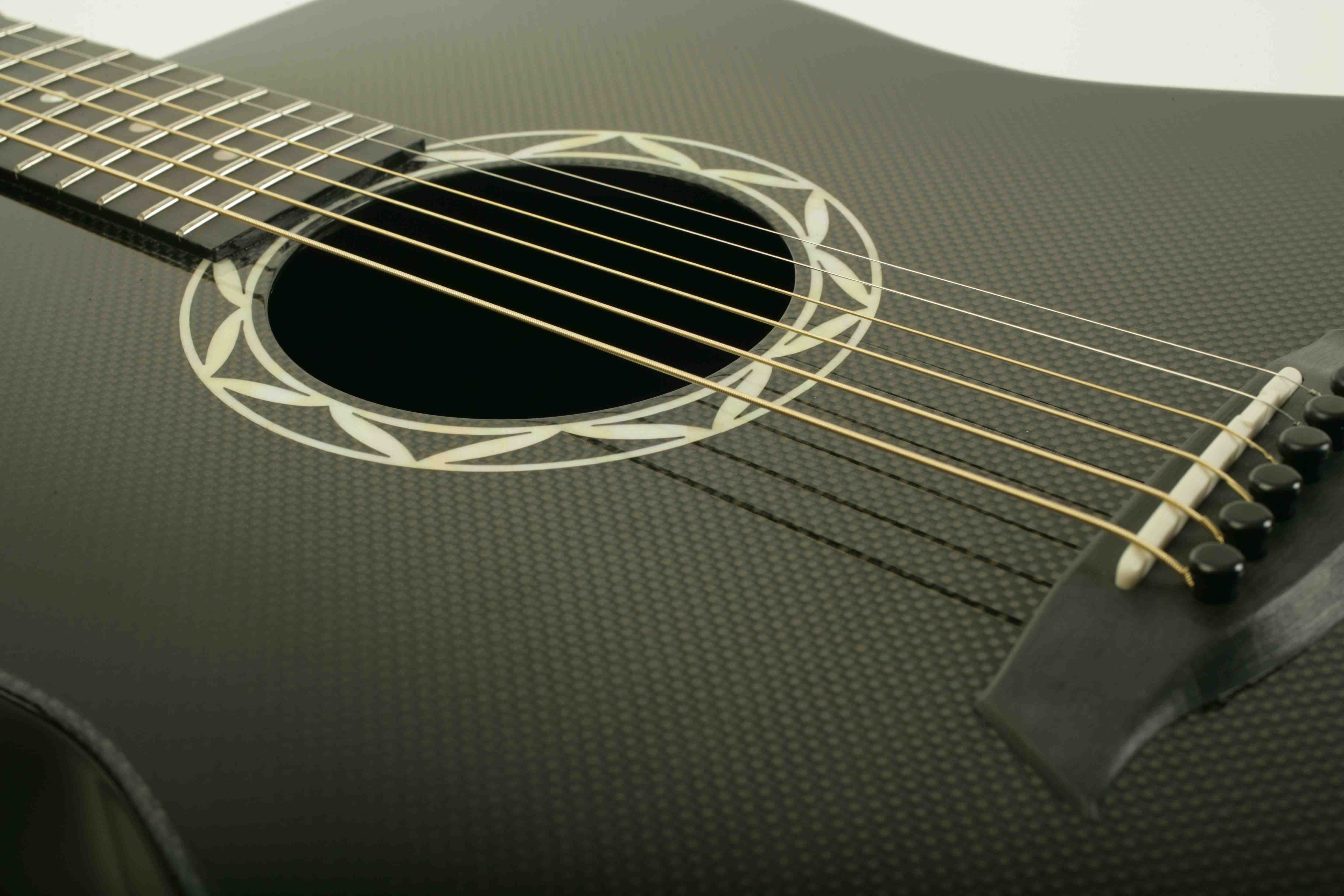
Composite Acoustics (Lafayette, La.), produces a line of carbon composite guitars that benefit from owner Ellis Seal's Seal’s AcousticTailoring process,
Source: Composite Acoustics
Although wooden acoustic guitars are assembled from body and neck components formed separately, Seal’s designs feature a one-piece body and neck.
Source: Composite Acoustics
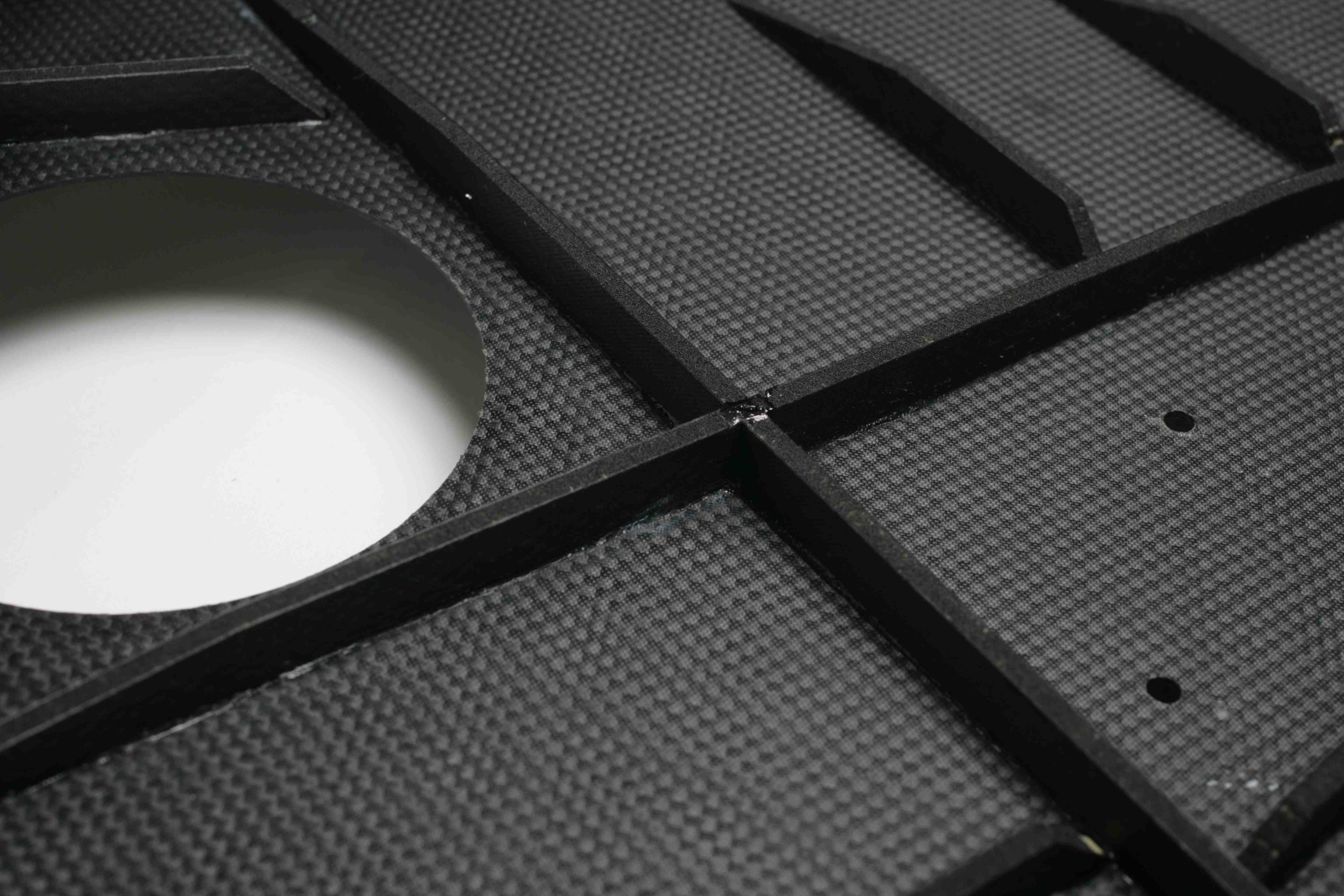
A closeup of the carbon fiber bracing on the back of the soundboard.
Source: Composite Acoustcis
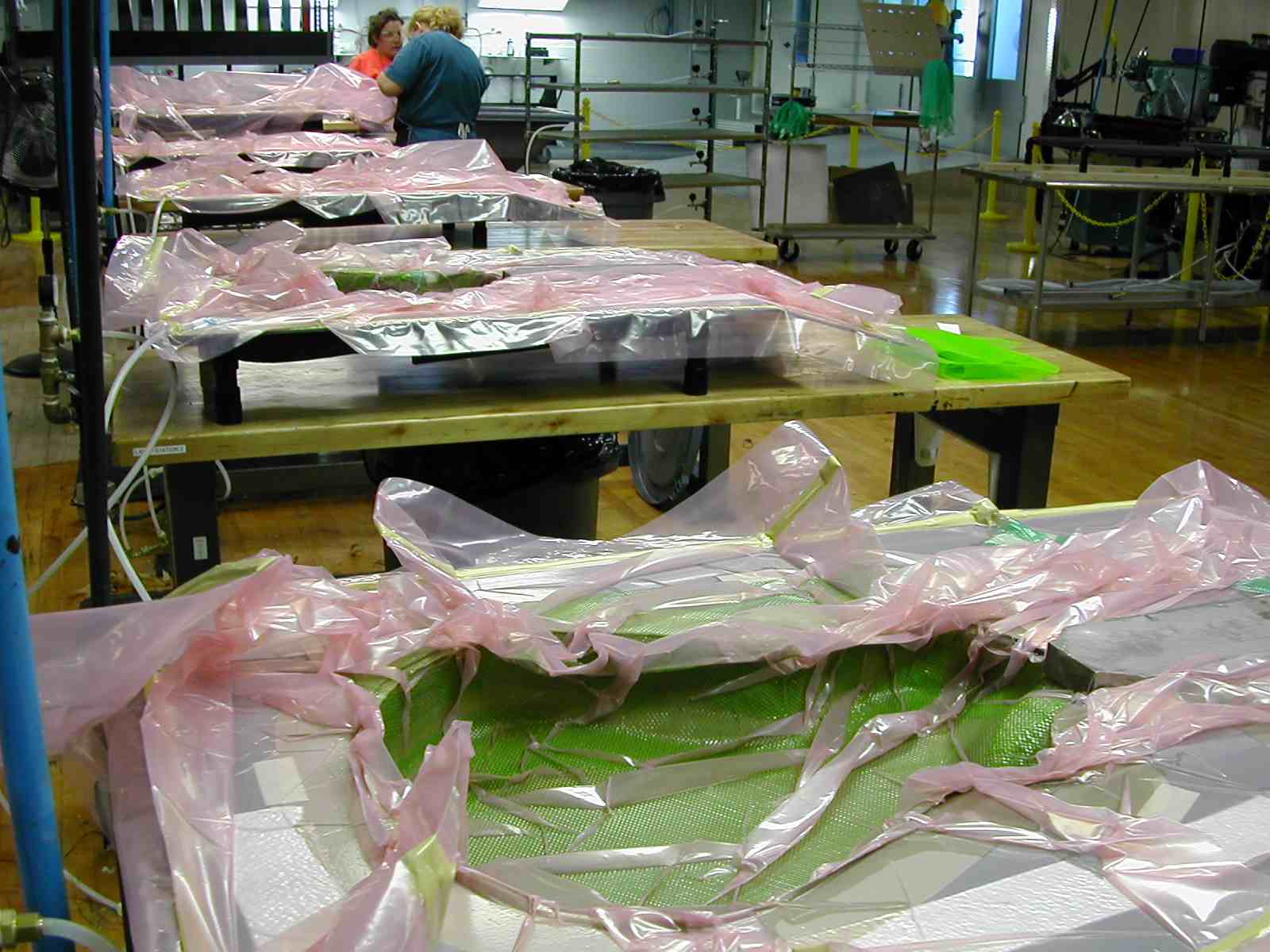
These back/neck layups are bagged and vacuum infused with epoxy resin, and then oven cured.
Source: Composite Acoustics
When former aerospace engineer and guitar aficionado Ellis Seal set out to design a composite acoustic guitar made from composites, he believed the inherent properties of carbon fiber could produce sound, playability, durability and consistency impossible in a traditional wooden instrument. Today, his company, Composite Acoustics (Lafayette, La.), produces a line of guitars that his customers claim justifies his work. The secret? Seal’s AcousticTailoring process, which permits customization of each model’s tonal properties. Seal says body and neck stiffness and damping properties; soundboard thickness, resin/fiber ratio, bracing materials and brace placement; bridge construction and materials; and even the finish contribute to the unique sound signature. Although wooden acoustic guitars are assembled from body and neck components formed separately, Seal’s designs feature a one-piece body and neck.
Instrument shapes are generated as 3D CAD models and master plugs for each component is CNC-machined from aluminum, based on the CAD file. Resin-infused carbon/epoxy molds are pulled from the plugs. Reinforcements are cut on a CNC cutting table from Eastman Machine (Buffalo, N.Y.) and kitted. “We use 5.7-oz woven fabric, a 9-oz. unidirectional and some 30-oz stitched unidirectional material,” says Seal, who specifies 30-35 MSI modulus, 500-600 ksi strength fiber from several suppliers.
When dry reinforcements and core for the body/neck are positioned into the mold, a special core and comolded stiffening bars make the neck many times stronger, stiffer and more resonant than a wood neck, says Seal. Its resistance to moisture and very low CTE permit the company to dispense with the conventional truss-rod adjustment mechanism. The layup is bagged, vacuum infused with epoxy resin supplied by Jeffco Products (San Diego, Calif.) and oven cured.
For the critical soundboard, ultralightweight braces are CNC waterjet cut by Hydrocut (Baton Rouge, La.) from carbon plates produced by Composite Acoustics in-house. The soundboard, braces and laser-cut rosettes (inlaid sound hole decorations) are layed up on a flat plate, bagged, infused and oven cured.
The fretboard and bridge, critical to tonal quality and sustain, are injection molded from a specially compounded carbon fiber-reinforced thermoplastic. “Much research went into the exact blend for porosity, density, appearance and texture,” says Seal.
Parts are dry fit to ensure alignment, then joined with toughened cyanoacrylate adhesive, sanded and primed in multiple phases. The company’s automotive-grade CarbonBurst paint scheme is spray-applied, using an innovative nitrogen-fed process. “Painting with nitrogen instead of compressed air reduces overspray waste, shortens flash-off intervals and reduces ‘orange peel,’” says Seal. Finally, multistep fine sanding and buffing produces a distinctive mirror finish.
The retail price, ~$3,000 (USD),is competitive with upper midrange U.S.-made wooden guitars from the likes of Martin and Taylor.
Metromont’s C-GRID-reinforced insulated precast concrete’s high strength, durability, light weight and ease of installation improve data center performance, construction time and sustainability.
GFRP eliminates risk of corrosion and increases durability fourfold for reinforced concrete that meets future demands as traffic, urbanization and extreme weather increase.